- Physical Examination
- Surgical Examination
- Ophthalmology
- Clinical Skills
- Orthopedics
- Surgery Videos
- Laparoscopy
- Pediatrics
- Funny Videos
- Cardiothoracic Surgery
- Nursing Videos
- Plastic Surgery
- Otorhinolaryngology
- Histology and Histopathology
- Neurosurgery
- Dermatology
- Pediatric Surgery
- Urology
- Dentistry
- Oncology and Cancers
- Anatomy Videos
- Health and Fitness
- Radiology
- Anaesthesia
- Physical Therapy
- Pharmacology
- Interventional Radiology
- Cardiology
- Endocrinology
- Gynecology
- Emergency Medicine
- Psychiatry and Psychology
- Childbirth Videos
- General Medical Videos
- Nephrology
- Physiology
- Diet and Food Health
- Diabetes Mellitus
- Neurology
- Women Health
- Osteoporosis
- Gastroenterology
- Pulmonology
- Hematology
- Rheumatology
- Toxicology
- Nuclear Medicine
- Infectious Diseases
- Vascular Disease
- Reproductive Health
- Burns and Wound Healing
- Kidney Zone Podcast
- Other
Hair
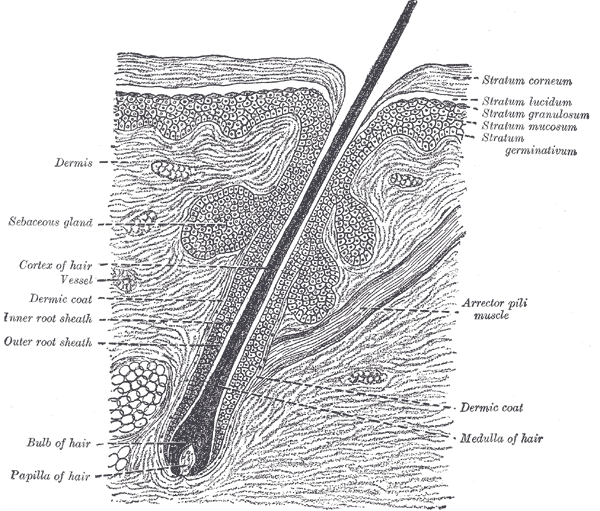
Gray's Anatomy (1918) plate, public domain
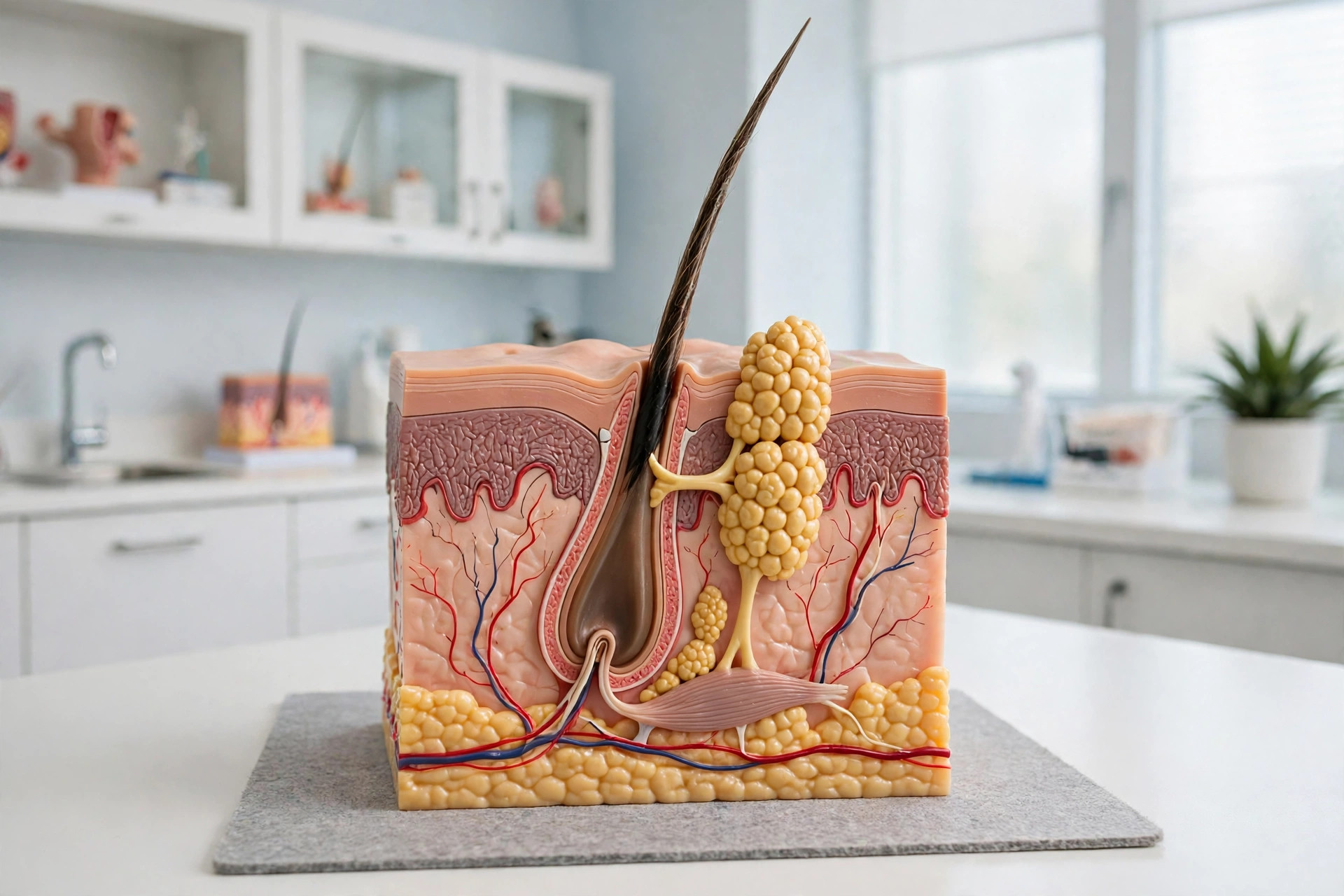
Hair grows from follicles — deep pockets of the epidermis reaching into the dermis — where cells at the base (the bulb) multiply, keratinise and die to form the shaft. Each follicle cycles through growth (anagen, years on the scalp), regression (catagen) and rest (telogen) phases before shedding. A tiny muscle (arrector pili) can raise the hair — goosebumps — and an oil gland opens into each follicle.
Key facts
- A scalp carries about 100,000 follicles, and losing 50-100 hairs a day is normal shedding.
- Hair colour comes from melanin made at the bulb; greying reflects its gradual loss.
- The growth phase on the scalp lasts 2-7 years, which sets the maximum length hair can reach.
- Hair is dead once it leaves the skin — treatments coat the shaft, they cannot feed it.
What can go wrong
Hair loss (alopecia) has many patterns: inherited thinning (androgenetic) driven by hormone sensitivity of follicles, patchy autoimmune loss (alopecia areata), shedding after illness or childbirth (telogen effluvium), and scarring conditions that destroy follicles. Excess hair growth can reflect hormone disorders. Scalp problems — dandruff, fungal infection, psoriasis — are assessed by examination, and blood tests check iron, thyroid and vitamin levels when shedding is unexplained.
Related procedures & tests
Related symptoms
Watch: related videos
Frequently asked questions
Why does hair fall out a few months after an illness or baby?
Stress pushes many follicles into the resting phase at once; the hairs are shed when new growth resumes about 2-3 months later — a temporary pattern called telogen effluvium.
Can hair turn white overnight?
Not literally, but rapid loss of pigmented hairs in alopecia areata can leave the white hairs behind, creating the impression of sudden greying.
Educational information only. This atlas explains normal anatomy and describes conditions in general terms; it is not medical advice and does not replace assessment by a qualified clinician. If you have symptoms that worry you, seek medical care.