
- Physical Examination
- Surgical Examination
- Ophthalmology
- Clinical Skills
- Orthopedics
- Surgery Videos
- Laparoscopy
- Pediatrics
- Funny Videos
- Cardiothoracic Surgery
- Nursing Videos
- Plastic Surgery
- Otorhinolaryngology
- Histology and Histopathology
- Neurosurgery
- Dermatology
- Pediatric Surgery
- Urology
- Dentistry
- Oncology and Cancers
- Anatomy Videos
- Health and Fitness
- Radiology
- Anaesthesia
- Physical Therapy
- Pharmacology
- Interventional Radiology
- Cardiology
- Endocrinology
- Gynecology
- Emergency Medicine
- Psychiatry and Psychology
- Childbirth Videos
- General Medical Videos
- Nephrology
- Physiology
- Diet and Food Health
- Diabetes Mellitus
- Neurology
- Women Health
- Osteoporosis
- Gastroenterology
- Pulmonology
- Hematology
- Rheumatology
- Toxicology
- Nuclear Medicine
- Infectious Diseases
- Vascular Disease
- Reproductive Health
- Burns and Wound Healing
- Kidney Zone Podcast
- Other
Acute Kidney Injury
Acute kidney injury is a sudden drop in kidney function that develops over hours or days. This page explains its symptoms, causes, and treatment in plain language, with videos to help you follow the key points.
✓ Medically reviewed by Dr. Mohamed Ibrahim, MD, PhD — physician-scientist · Last reviewed: November 2026
In short: In acute kidney injury, the kidneys suddenly filter blood less well, so waste and fluid build up. It often follows severe illness, dehydration, or certain medicines. Care focuses on treating the cause, careful fluids, and reviewing medicines while the kidneys recover.
Watch: Acute Kidney Injury videos


Read: the plain-language guide
Overview
The kidneys filter waste and excess fluid from the blood and help control blood pressure and body chemistry. In acute kidney injury, this filtering drops suddenly, over hours or days, rather than gradually as in long-term kidney disease. Waste products and fluid can build up, and blood chemistry can become unsafe if the problem is severe or prolonged. It most often develops in people who are already unwell, in hospital or at home. Many kidneys recover well once the cause is treated, especially when the problem is recognised and acted on early.
Symptoms
Early acute kidney injury often causes no specific symptoms, and is first found on blood tests. As function worsens, people may pass much less urine than usual, develop swelling of the legs or face, and feel tired, nauseated, or short of breath from fluid build-up. Confusion can occur in severe cases. Often the dominant symptoms are those of the underlying illness, such as fever, vomiting, or diarrhoea. Because symptoms are unreliable, blood and urine tests are what detect the problem, which is why monitoring during serious illness matters.
Causes & risk factors
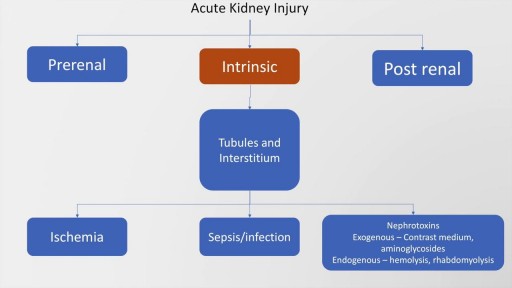
Common causes fall into three groups. Reduced blood flow to the kidneys, from dehydration, severe infection, blood loss, or heart problems, is the most frequent. Direct kidney damage can result from severe infection, inflammation, or certain medicines and substances that strain the kidneys, especially when combined with dehydration. Blocked urine drainage, for example from an enlarged prostate or a stone, is the third group. Often several factors combine in someone who is acutely unwell. Reviewing fluid intake, recent illness, and all medicines is therefore a central part of assessment.
How it's diagnosed
Diagnosis rests on blood tests showing a rise in waste products compared with previous results, together with urine tests and measurement of urine output. Blood chemistry, including potassium and acid levels, shows how serious the effects are. The assessment looks for the cause: examination, fluid status checks, a medicine review, and sometimes an ultrasound scan to rule out blocked drainage. Comparing with older blood results helps distinguish a sudden injury from long-standing kidney disease. Monitoring continues until blood tests clearly improve.
Treatment overview
Treatment focuses on the cause and on supporting the kidneys while they recover. Fluids are given carefully when dehydration is a factor, and adjusted or restricted when fluid overload is the problem. Medicines that strain the kidneys are paused or changed, and doses of other medicines are reviewed. The underlying illness, such as infection, is treated directly, and a blocked urinary tract is relieved. Blood tests are repeated to track recovery and blood chemistry. In severe cases, dialysis may be needed temporarily to do the kidneys' filtering work until function returns.
When to seek care
Seek urgent help for passing very little or no urine, breathlessness, marked swelling, confusion, or severe nausea during or after an illness. People recovering from acute kidney injury who become unwell again, or cannot keep fluids down, should be assessed the same day.
Frequently asked questions
Can kidneys recover after acute kidney injury?
Often yes. Many kidneys recover well once the cause is treated, especially when the problem is found early. Recovery can take days to weeks, and some people are left with reduced kidney function or a higher risk of future kidney problems, so follow-up blood tests matter.
How is acute kidney injury different from chronic kidney disease?
Acute kidney injury develops suddenly over hours or days and is often reversible, while chronic kidney disease develops gradually over months or years and is usually permanent. An episode of acute injury can, however, increase the later risk of chronic kidney disease.
Which medicines can strain the kidneys?
Some painkillers, certain antibiotics, and some blood pressure medicines can strain the kidneys, particularly during dehydration or acute illness. Never stop prescribed medicines on your own; instead, ask the care team to review all medicines, including over-the-counter ones, during any serious illness.
Will I need dialysis after acute kidney injury?
Most people do not. Dialysis is used only when the kidneys cannot control fluid or blood chemistry safely despite other treatment, and it is often temporary while the kidneys recover. The care team monitors blood tests closely to judge whether it is needed.
More in Kidneys & Urinary
Related topics on MedicalVideos.com
Sources & further reading
Authoritative references for readers who want to go deeper:
- MedlinePlus: Acute Kidney Failure (MedlinePlus)
- NHS: Acute Kidney Injury
- National Kidney Foundation: Acute Kidney Injury
This page is for general education only and is not medical advice. Passing very little or no urine with breathlessness or confusion during an illness can signal severe acute kidney injury and needs emergency care.