
- Physical Examination
- Surgical Examination
- Ophthalmology
- Clinical Skills
- Orthopedics
- Surgery Videos
- Laparoscopy
- Pediatrics
- Funny Videos
- Cardiothoracic Surgery
- Nursing Videos
- Plastic Surgery
- Otorhinolaryngology
- Histology and Histopathology
- Neurosurgery
- Dermatology
- Pediatric Surgery
- Urology
- Dentistry
- Oncology and Cancers
- Anatomy Videos
- Health and Fitness
- Radiology
- Anaesthesia
- Physical Therapy
- Pharmacology
- Interventional Radiology
- Cardiology
- Endocrinology
- Gynecology
- Emergency Medicine
- Psychiatry and Psychology
- Childbirth Videos
- General Medical Videos
- Nephrology
- Physiology
- Diet and Food Health
- Diabetes Mellitus
- Neurology
- Women Health
- Osteoporosis
- Gastroenterology
- Pulmonology
- Hematology
- Rheumatology
- Toxicology
- Nuclear Medicine
- Infectious Diseases
- Vascular Disease
- Reproductive Health
- Burns and Wound Healing
- Kidney Zone Podcast
- Other
Trigger finger release: What to Expect & Recovery
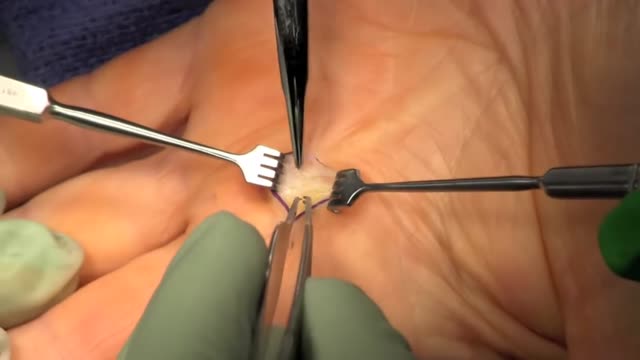
Trigger finger release divides the tight pulley that the flexor tendon catches on, through a small cut in the palm. It is a short day-case procedure under local anaesthetic, and recovery is mostly about keeping the hand moving so it does not stiffen.
Before surgery: how to prepare
- No fasting is usually needed for local anaesthetic — confirm with your unit.
- Tell the team about blood thinners and diabetes; both affect the plan and healing.
- Arrange light duties for the first days and avoid heavy gripping work for a short period.
- You can usually drive yourself home after local anaesthetic alone, but check your unit's advice if sedation is offered.
The day of surgery
With the hand numbed by local anaesthetic, the surgeon makes a small cut in the palm and divides the thickened pulley, then asks you to bend and straighten the finger on the table to confirm it no longer catches. A bandage is applied and you go home with the hand elevated.
In hospital
Recovery timeline
Every recovery is individual, but most follow this general arc:
Warning signs: when to get help
- Wound redness, increasing pain or discharge (infection)
- The finger becoming stiff and failing to improve
- New numbness in the finger
- Bleeding that soaks the bandage
Related topics
Watch: real operation videos
From the MedicalVideos library. Some surgical videos are graphic and intended for education.
Frequently asked questions
Why must I move the finger straight away?
The tendon has just been freed; if the hand is rested completely, scar tissue can tether it again and the finger stiffens. Gentle, frequent movement from day one keeps the tendon gliding — it feels counterintuitive but it is the treatment.
Will the triggering come back?
Recurrence after surgical release is uncommon. Diabetes makes both triggering and stiffness more likely, and other fingers can develop the condition independently — new symptoms elsewhere are a new problem, not a failure of this surgery.
Medically reviewed by Dr. Mohamed Ibrahim, Assistant Professor of Medicine, Transplant Nephrology, University of Maryland School of Medicine. Last reviewed: 12 November 2026.