
- Physical Examination
- Surgical Examination
- Ophthalmology
- Clinical Skills
- Orthopedics
- Surgery Videos
- Laparoscopy
- Pediatrics
- Funny Videos
- Cardiothoracic Surgery
- Nursing Videos
- Plastic Surgery
- Otorhinolaryngology
- Histology and Histopathology
- Neurosurgery
- Dermatology
- Pediatric Surgery
- Urology
- Dentistry
- Oncology and Cancers
- Anatomy Videos
- Health and Fitness
- Radiology
- Anaesthesia
- Physical Therapy
- Pharmacology
- Interventional Radiology
- Cardiology
- Endocrinology
- Gynecology
- Emergency Medicine
- Psychiatry and Psychology
- Childbirth Videos
- General Medical Videos
- Nephrology
- Physiology
- Diet and Food Health
- Diabetes Mellitus
- Neurology
- Women Health
- Osteoporosis
- Gastroenterology
- Pulmonology
- Hematology
- Rheumatology
- Toxicology
- Nuclear Medicine
- Infectious Diseases
- Vascular Disease
- Reproductive Health
- Burns and Wound Healing
- Kidney Zone Podcast
- Other
Trigger finger release
Category: Bone, Joint & Spine Procedures · All bone, joint & spine procedures
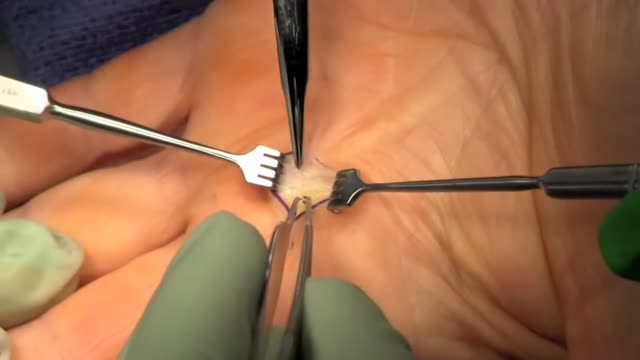
What it is
Trigger finger release is a small operation dividing the tight pulley at the base of a finger that traps the tendon, causing the finger to catch, click or lock in a bent position.
Why it is done
It is offered when splinting and steroid injection have not relieved triggering, or when the finger locks significantly.
How to prepare
It is a day procedure under local anaesthetic with no fasting usually required. Tell the team about blood thinners and allergies.
What happens during the procedure
After numbing the palm, a small cut is made and the tight A1 pulley is divided under direct vision, freeing the tendon; you will be asked to move the finger to confirm smooth gliding. It takes about 10 to 15 minutes.
Afterwards — recovery & results
Keep the hand up and moving from the start to prevent stiffness. The wound heals in about two weeks; scar tenderness settles over weeks. Most people return to light work within days.
Risks & considerations
Risks include infection, bleeding, scar tenderness, stiffness, and rare injury to the small nerve beside the tendon. Recurrence is uncommon.
Watch: Trigger finger release videos
Real procedure videos from the MedicalVideos.com library. Some clinical footage is graphic — that is the nature of a medical video library.
Frequently asked questions
Will the finger move normally straight away?
Triggering usually stops immediately. Some stiffness is normal early — keep the finger moving through its full range from day one.
Could an injection have avoided surgery?
Steroid injection cures many cases, especially early ones, and is usually tried first. Surgery is the backup when injection fails or the finger is locked.
Related procedures — Bone, Joint & Spine Procedures
Browse the T section of the A–Z list or return to the Procedures & Tests hub.