
- Physical Examination
- Surgical Examination
- Ophthalmology
- Clinical Skills
- Orthopedics
- Surgery Videos
- Laparoscopy
- Pediatrics
- Funny Videos
- Cardiothoracic Surgery
- Nursing Videos
- Plastic Surgery
- Otorhinolaryngology
- Histology and Histopathology
- Neurosurgery
- Dermatology
- Pediatric Surgery
- Urology
- Dentistry
- Oncology and Cancers
- Anatomy Videos
- Health and Fitness
- Radiology
- Anaesthesia
- Physical Therapy
- Pharmacology
- Interventional Radiology
- Cardiology
- Endocrinology
- Gynecology
- Emergency Medicine
- Psychiatry and Psychology
- Childbirth Videos
- General Medical Videos
- Nephrology
- Physiology
- Diet and Food Health
- Diabetes Mellitus
- Neurology
- Women Health
- Osteoporosis
- Gastroenterology
- Pulmonology
- Hematology
- Rheumatology
- Toxicology
- Nuclear Medicine
- Infectious Diseases
- Vascular Disease
- Reproductive Health
- Burns and Wound Healing
- Kidney Zone Podcast
- Other
Rash in children
Category: Babies & Children · All children symptoms
What it can feel like
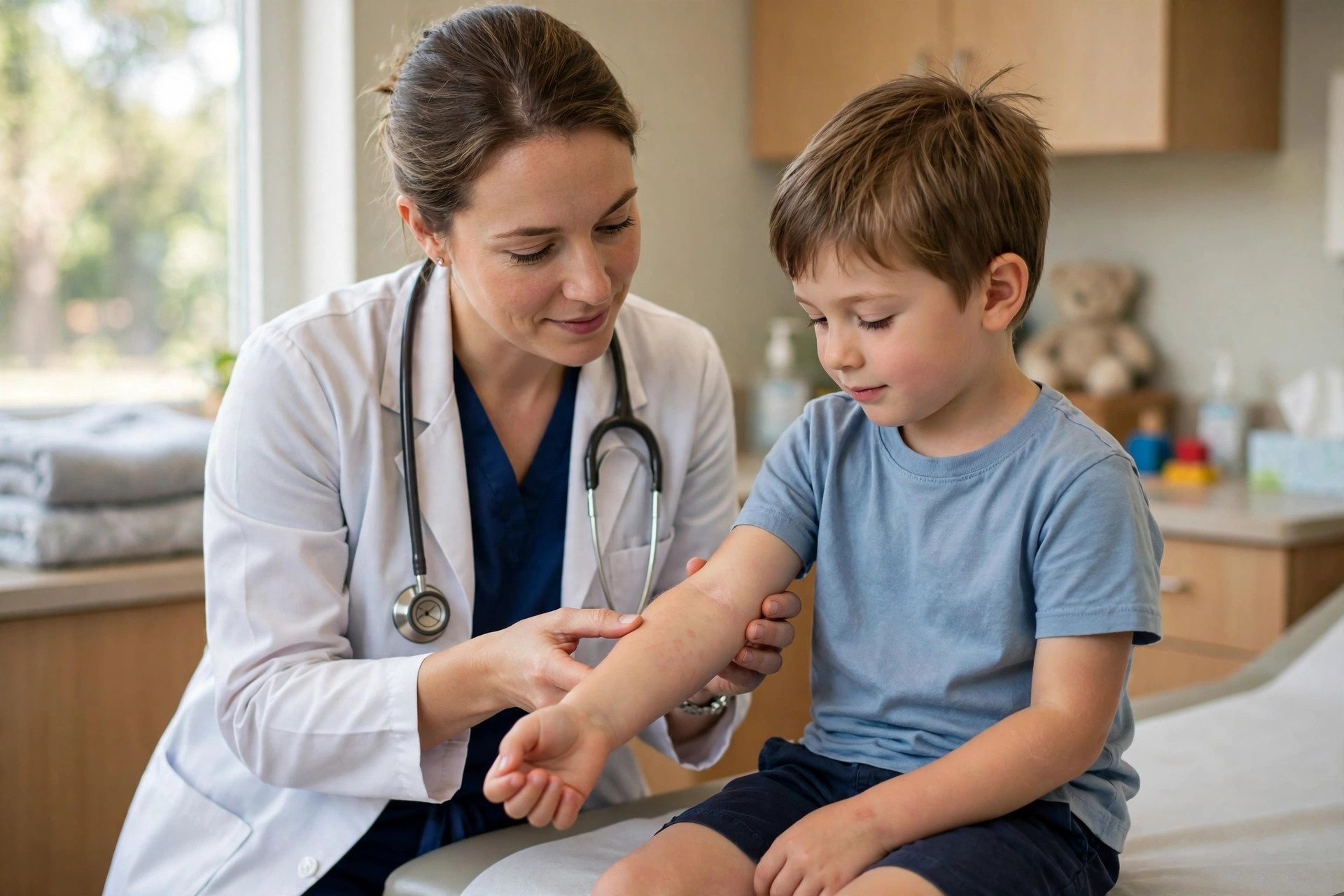
A rash in a child is any new change in the skin — spots, redness, blisters, bumps or scaling. Rashes are among the commonest childhood presentations and are usually viral fellow-travellers; the diagnosis lives in the pattern: where it started, how it spreads, what it feels like, and what comes with it (fever, itch, soreness, illness).
Possible causes
A symptom can have many causes, and most are not serious. The lists below group conditions this symptom can be associated with — common causes first. They are possibilities to discuss with a clinician, not a diagnosis.
Common causes
Rashes in children can be associated with viral exanthems (measles, rubella, chickenpox, roseola, hand-foot-and-mouth, slapped cheek), eczema, nappy rash, heat rash, hives from allergy or infection, and scabies when intensely itchy.
Other possible causes
Rashes in children can also be associated with bacterial infections — scarlet fever, impetigo, cellulitis — and, most importantly, the non-blanching rash of meningococcal sepsis; also Kawasaki disease in prolonged fever, and psoriasis or ringworm in older children.
Red flags — when to seek help promptly
- A non-blanching rash (does not fade under a pressed glass) in a febrile or unwell child — emergency
- A rash with breathing difficulty, lip or tongue swelling (possible severe allergy) — emergency
- A rash with fever over 5 days, red eyes, cracked lips or swollen hands (possible Kawasaki disease)
- A rash with a child who is drowsy, hard to wake or not feeding
- Blisters with mouth sores and eye involvement
- A rash in a baby under 3 months with fever
What a clinician may do
A clinician will examine the rash's distribution and type, press-test any suspicious spots, check temperature, throat, ears and glands, and review immunisations and contacts. Most viral rashes need only explanation and safety-netting; specific patterns lead to swabs, blood tests or hospital referral.
Related guides on MedicalVideos.com
Frequently asked questions
How can I describe a rash helpfully?
Note when and where it started, how it spread, whether it itches, hurts or neither, what the spots look like (flat, raised, blistered, scaly), any fever, medicines, new foods, and sick contacts. Photos in good light help clinicians enormously — rashes evolve, and a photo from yesterday may hold the clue.
Why do doctors ask about immunisations for a rash?
Because the classic childhood exanthems — measles, rubella — have vaccine-preventable patterns, and vaccination status changes both the likelihood and the public-health response. Measles in particular is resurging where coverage falls, and it starts as fever, cough, red eyes and then this rash.
Related symptoms — Babies & Children
Browse the R section of the A–Z list or return to the Symptoms A–Z hub.