
- Physical Examination
- Surgical Examination
- Ophthalmology
- Clinical Skills
- Orthopedics
- Surgery Videos
- Laparoscopy
- Pediatrics
- Funny Videos
- Cardiothoracic Surgery
- Nursing Videos
- Plastic Surgery
- Otorhinolaryngology
- Histology and Histopathology
- Neurosurgery
- Dermatology
- Pediatric Surgery
- Urology
- Dentistry
- Oncology and Cancers
- Anatomy Videos
- Health and Fitness
- Radiology
- Anaesthesia
- Physical Therapy
- Pharmacology
- Interventional Radiology
- Cardiology
- Endocrinology
- Gynecology
- Emergency Medicine
- Psychiatry and Psychology
- Childbirth Videos
- General Medical Videos
- Nephrology
- Physiology
- Diet and Food Health
- Diabetes Mellitus
- Neurology
- Women Health
- Osteoporosis
- Gastroenterology
- Pulmonology
- Hematology
- Rheumatology
- Toxicology
- Nuclear Medicine
- Infectious Diseases
- Vascular Disease
- Reproductive Health
- Burns and Wound Healing
- Kidney Zone Podcast
- Other
Teething pain
Category: Babies & Children · All children symptoms
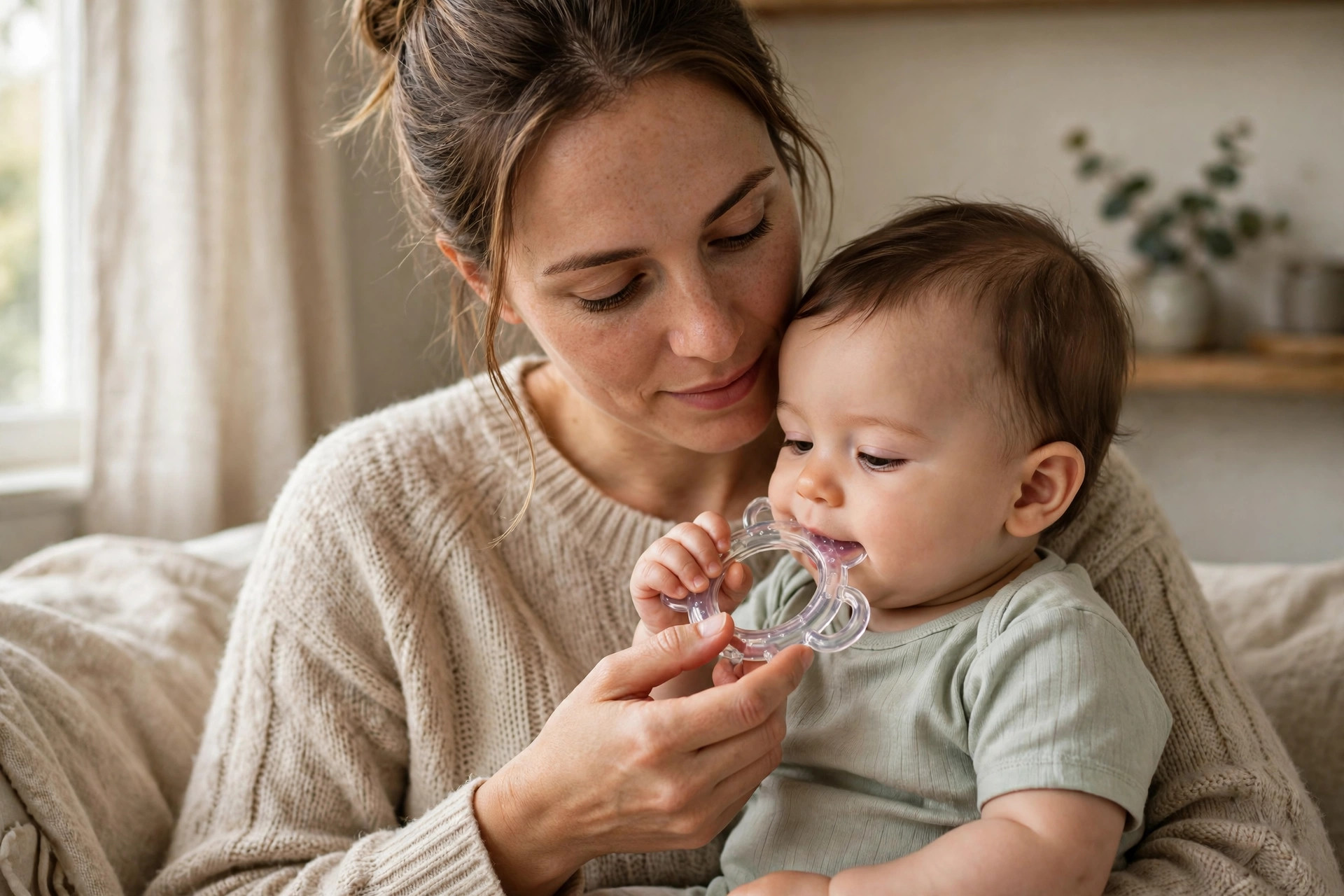
What it can feel like
Teething pain means the discomfort as teeth cut through the gums in babies and toddlers — typically from around six months, in waves over days per tooth. Teething is real but modest: it is blamed for far more (high fever, diarrhoea, severe illness) than it can actually cause, and that misattribution is its main danger.
Possible causes
A symptom can have many causes, and most are not serious. The lists below group conditions this symptom can be associated with — common causes first. They are possibilities to discuss with a clinician, not a diagnosis.
Common causes
Teething can be associated with sore, red gums, dribbling (with chin rash), chewing on everything, mild irritability, disturbed sleep for a few nights, and a very slight temperature rise — studies show no more than a fraction of a degree attributable to a tooth.
Other possible causes
Teething does not cause high fever (38°C or more), significant diarrhoea, vomiting, rashes over the body, or a properly unwell baby — those come from infections that happen to coincide with the teething months, when babies meet many viruses for the first time.
Red flags — when to seek help promptly
- A temperature of 38°C or above in a teething-age baby — assess as fever, not teething
- Teething-age baby who is drowsy, not feeding, or has few wet nappies
- Diarrhoea, vomiting or a body rash attributed to teething — find the real cause
- A baby under 3 months with any fever — urgent assessment
- Excessive dribbling with difficulty swallowing or breathing
What a clinician may do
A clinician will examine the gums (a bulging bluish swelling can precede a tooth), ears and throat — the usual hidden causes of this age group's misery — and assess the baby as a whole. Comfort measures (chilled teething rings, gum massage with a clean finger, age-appropriate pain relief when needed) cover the tooth itself.
Related guides on MedicalVideos.com
Frequently asked questions
Do teething gels and powders work?
Evidence for gels and granules is weak, and some products carry specific cautions — gels containing local anaesthetic or salicylates have age restrictions, and amber necklaces are a strangulation and choking hazard with no evidence at all. A chilled (not frozen) teething ring and a clean finger to chew on remain the mainstays.
Why does every illness get blamed on teeth?
Because the timing collides: teeth erupt almost continuously from 6 to 30 months, exactly when maternal antibodies fade and babies meet virus after virus. Some tooth is always erupting when a baby is ill — coincidence dressed as cause, which delays the real assessment if believed too readily.
Related symptoms — Babies & Children
Browse the T section of the A–Z list or return to the Symptoms A–Z hub.