
- Physical Examination
- Surgical Examination
- Ophthalmology
- Clinical Skills
- Orthopedics
- Surgery Videos
- Laparoscopy
- Pediatrics
- Funny Videos
- Cardiothoracic Surgery
- Nursing Videos
- Plastic Surgery
- Otorhinolaryngology
- Histology and Histopathology
- Neurosurgery
- Dermatology
- Pediatric Surgery
- Urology
- Dentistry
- Oncology and Cancers
- Anatomy Videos
- Health and Fitness
- Radiology
- Anaesthesia
- Physical Therapy
- Pharmacology
- Interventional Radiology
- Cardiology
- Endocrinology
- Gynecology
- Emergency Medicine
- Psychiatry and Psychology
- Childbirth Videos
- General Medical Videos
- Nephrology
- Physiology
- Diet and Food Health
- Diabetes Mellitus
- Neurology
- Women Health
- Osteoporosis
- Gastroenterology
- Pulmonology
- Hematology
- Rheumatology
- Toxicology
- Nuclear Medicine
- Infectious Diseases
- Vascular Disease
- Reproductive Health
- Burns and Wound Healing
- Kidney Zone Podcast
- Other
Urinalysis and urine culture
Category: Biopsies, Lab & Pathology Tests · All biopsies, lab & pathology tests
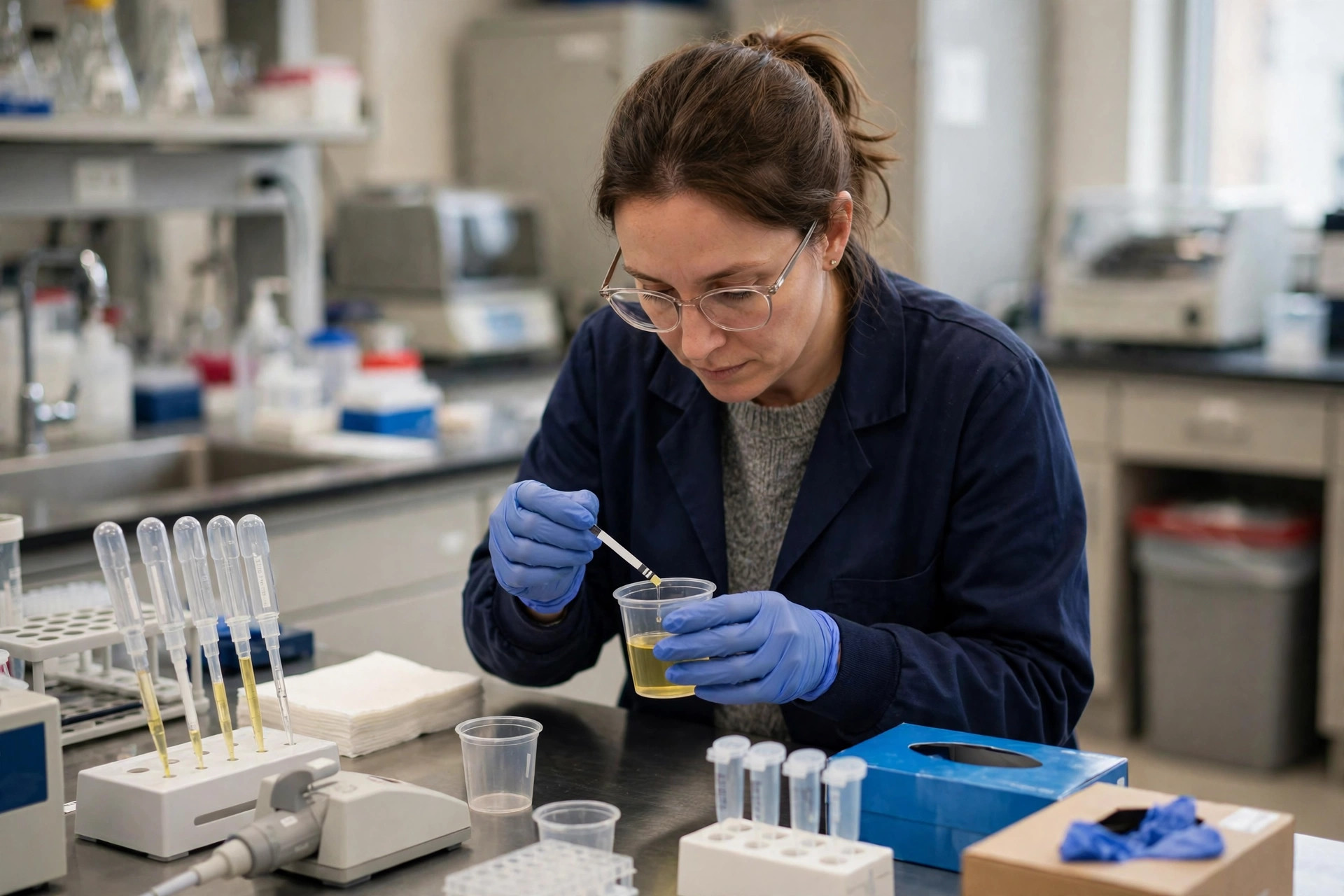
What it is
Urinalysis begins with a dipstick test — a chemically treated strip dipped in urine that changes colour to detect blood, protein, glucose, ketones, nitrites and white-cell markers. A urine culture (MSU — midstream urine) grows any bacteria present and tests which antibiotics work against them.
Why it is done
They investigate urinary symptoms (pain, frequency, urgency), check kidney disease (protein and blood), screen in pregnancy, and assess fevers without an obvious source, especially in children and older adults.
How to prepare
For a culture, a midstream sample is best: pass the first part into the toilet, collect the middle part in the sterile pot provided, then finish into the toilet — this reduces skin contamination. Your clinic gives instructions. Tell the team about recent antibiotics and, for women, if you are menstruating, as these affect interpretation.
What happens during the procedure
The dipstick takes two minutes in clinic. The sample then goes to the laboratory, where it is examined under the microscope and cultured on plates for 24 to 48 hours. Sensitivity results identify effective antibiotics.
Afterwards — recovery & results
You simply provide the sample; there is no recovery. Dipstick results are immediate; culture results usually take two to three days and your clinic will contact you if treatment needs to start or change.
Risks & considerations
There are no risks from the test itself. Contaminated samples are the main pitfall — they can suggest infection that is not really in the bladder, which is why collection technique matters.
Related guides on MedicalVideos.com
Frequently asked questions
My dipstick shows blood but I feel fine — why investigate?
Invisible (non-visible) haematuria can come from stones, infection or occasionally bladder or kidney tumours. Guidelines advise assessment to find the cause rather than ignore it.
Why is my culture 'mixed growth'?
That usually means skin bacteria contaminated the sample. You will be asked to repeat it with careful midstream technique.
Related procedures — Biopsies, Lab & Pathology Tests
Browse the U section of the A–Z list or return to the Procedures & Tests hub.