
- Physical Examination
- Surgical Examination
- Ophthalmology
- Clinical Skills
- Orthopedics
- Surgery Videos
- Laparoscopy
- Pediatrics
- Funny Videos
- Cardiothoracic Surgery
- Nursing Videos
- Plastic Surgery
- Otorhinolaryngology
- Histology and Histopathology
- Neurosurgery
- Dermatology
- Pediatric Surgery
- Urology
- Dentistry
- Oncology and Cancers
- Anatomy Videos
- Health and Fitness
- Radiology
- Anaesthesia
- Physical Therapy
- Pharmacology
- Interventional Radiology
- Cardiology
- Endocrinology
- Gynecology
- Emergency Medicine
- Psychiatry and Psychology
- Childbirth Videos
- General Medical Videos
- Nephrology
- Physiology
- Diet and Food Health
- Diabetes Mellitus
- Neurology
- Women Health
- Osteoporosis
- Gastroenterology
- Pulmonology
- Hematology
- Rheumatology
- Toxicology
- Nuclear Medicine
- Infectious Diseases
- Vascular Disease
- Reproductive Health
- Burns and Wound Healing
- Other
Latest videos
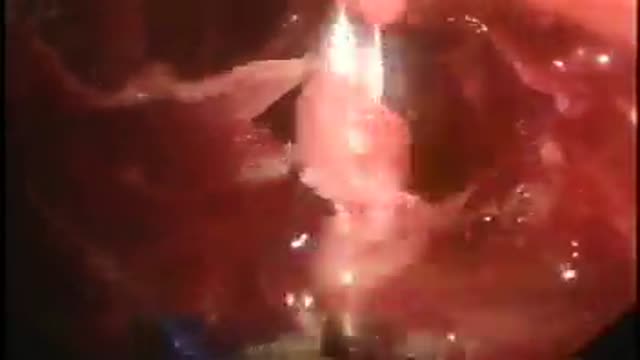

49-years old patient complaining of cough, fever and pleuritic pain for 2 weeks. At admission he was febrile and tachypnic. Chest X-Ray showed left pleural effusion. Thoracocentesis revealed purulent fluid. Chest CT-scan showed large and loculated left pleural effusion and pleural thickening. VATS decortication was performed through three incisions.

SCOOP transtracheal oxygen is indicated for patients with chronic hypoxemia which persists in spite of optimal medical therapy. Arterial blood gases obtained while breathing room air should show a PaO2< 55 mm Hg. SCOOP transtracheal oxygen is also indicated for patients with a PaO2 of 56-59 mm Hg ...
if they also have: 1) dependent edema suggesting congestive heart failure, 2) "P" pulmonale on EKG (P wave greater than 3mm in standard leads II, III or AVF), or 3) erythrocythemia with a hematocrit of >55%.
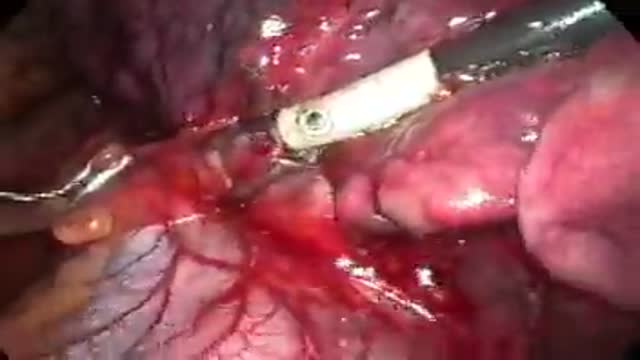
A 49-year old female patient complainig of cough. X-ray and chest CTscan showed a 2.5cm nodule in the left upper lobe. Transthoracic biopsy was consistent with adenocarcinoma. PET-Scan and CT Scan showed no mediastinal disease. The procedure was performed through three incisions.
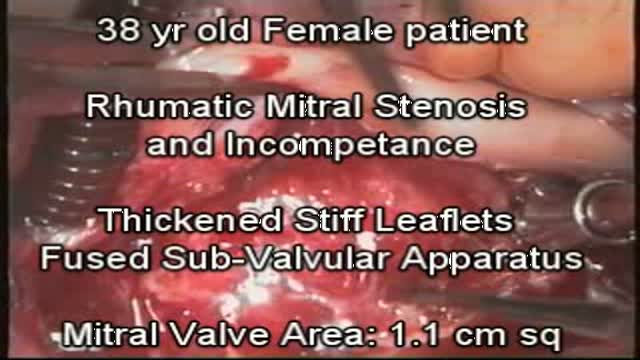
Rhumatic fever has almost been eraicated in the developed world, however it remains prevelent in many under developed countries and causes devastating damage to heart valves. Up till recently valve replacement was the treatment of choice. The long term results and sequelae of valve replacement are...
common knowledge. Mitral and tricuspid valve replacement results are on the whole far worse than for example Aortic valve. Mitral valve replacement should be the last resort and patients with very severe valvular and sub valvular mitral disease can nowadays be helped by mitral valve repair. NO MITRAL OR TRICUSPID VALVE SHOULD BE REPLACED IF IT CAN BE REPAIRED
No Scalpel Vasectomy
McMaster University technique of Laparoscopic Radical Nephrectomy
Robotic Prostatectomy: Cornell Athermal Robotic Technique
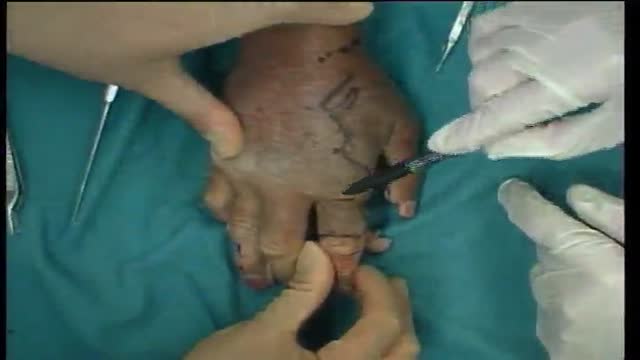
Kite flap, Guy Fouchier flap, 2nd finger to thumb. Cadaver dissection. Prof Steven Hovius demonstrates dissection technique and planning for a kite flap.
Meniscus allograft survival in patients with moderate to severe unicompartmental arthritis: a 2- to 7-year follow-up.PURPOSE: We present meniscus allograft survival data at least 2 years from surgery for 45 patients (47 allografts) with significant arthrosis to determine if the meniscus can survive ...in an arthritic joint. Type of Study: Prospective, longitudinal survival study. METHODS: Data were collected for 31 men and 14 women, mean age 48 years (range, 14 to 69 years), with preoperative evidence of significant arthrosis and an Outerbridge classification greater than II. Failure is established by previous studies as allograft removal. No patient was lost to follow-up. RESULTS: The success rate was 42 of 47 allografts (89.4%) with a mean failure time of 4.4 years as assessed by Kaplan-Meier survival analysis. Statistical power is greater than 0.9, with alpha = 0.05 and N = 47. There was significant mean improvement in preoperative versus postoperative self-reported measures of pain, activity, and functioning, with P = .001, P = .004, and P = .001, respectively, as assessed by a Wilcoxon rank-sum test with P = .05. CONCLUSIONS: Meniscus allografts can survive in a joint with arthrosis, challenging the contraindications of age and arthrosis severity. These results compare favorably with those in previous reports of meniscus allograft survival in patients without arthrosis. LEVEL OF EVIDENCE: Level IV.
39 Yr. Male with Aortic Stenosis and Incompetance and Good LV Function. The Patient is an athlete and did not want to take oral anticoagulants so opted out for a Bio-prosthesis. A 23mm Hancock II Porcine Xenograft was used in this operation. Usually central aortic and Rt. Atrial cannulation is per...formed with this procedure, however on occasions Percutaneous (Seldinger Technique) Femoro Femoral artery cannulation is used. The Kit is manufactured by DLP and consists of a 20mm Arterial cannula and a 29mm two stage Rt. Atrial Cannula.
parotidectomy has always been considered to be a daunting aesthetic surgical exercise reuiring extreme care to safeguard the facial nerve. most surgeons master the skill with experience and effort and develop thier own tips and tricks for safe conduct of the procedure. details of the procedure along... with practical tips are illustrated in the video for the benefit of head neck surgeons

Lumbar Laminotomy and Microdiscectomy

it's a 8 years old boy with previous medical history of Sickle cell disease presented with gall stone and repeat abdominal pain. A laparoscopic cholecystectomy is performed. The cystic duct is controlled with 2 stiches of absorbable suture. The cystic artery is simply cauterized with the hook cauter...y. the specimen is removed through the umbilical port using an 10mm endobag.

Laparoscopic treatment for Biliary Atresia. Kasai porto-enterostomy

Repair techniques for various types of asymmetric pectus excavatum are illustrated. Morphology-tailored bar shaping and selecting the hinge points are key elements of the technique. Repair of two cases on an eccentric type and unbalanced type according to "Park Classification" was demonstrated.

Hip Examination

Shoulder Injection

How to inject IM: How to draw substance

Intradermal Injection

Choose the site you will use for the injection,Clean your skin with an alcohol pad in a circular motion. Let the alcohol dry.
