
- Physical Examination
- Surgical Examination
- Ophthalmology
- Clinical Skills
- Orthopedics
- Surgery Videos
- Laparoscopy
- Pediatrics
- Funny Videos
- Cardiothoracic Surgery
- Nursing Videos
- Plastic Surgery
- Otorhinolaryngology
- Histology and Histopathology
- Neurosurgery
- Dermatology
- Pediatric Surgery
- Urology
- Dentistry
- Oncology and Cancers
- Anatomy Videos
- Health and Fitness
- Radiology
- Anaesthesia
- Physical Therapy
- Pharmacology
- Interventional Radiology
- Cardiology
- Endocrinology
- Gynecology
- Emergency Medicine
- Psychiatry and Psychology
- Childbirth Videos
- General Medical Videos
- Nephrology
- Physiology
- Diet and Food Health
- Diabetes Mellitus
- Neurology
- Women Health
- Osteoporosis
- Gastroenterology
- Pulmonology
- Hematology
- Rheumatology
- Toxicology
- Nuclear Medicine
- Infectious Diseases
- Vascular Disease
- Reproductive Health
- Burns and Wound Healing
- Other
Latest videos
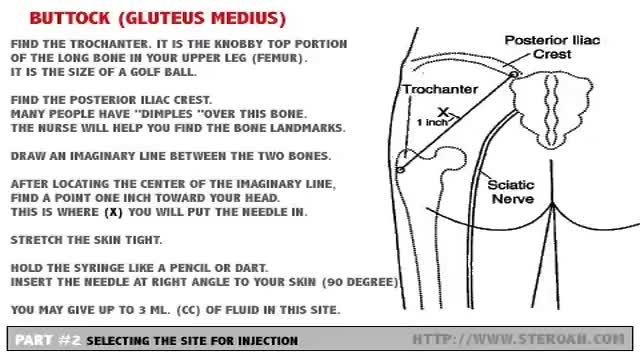

Carefully select the site for injection so major blood vessels and nerves are avoided. Buttock (Gluteus Medius)- Hip (Ventrogluteal) - Leg (Vastus Lateralis) - Arm (Deltoid)

a video showing subcutaneous injection

Subcutaneous Abdominal Injection

IM Injection instructions

Female IM injection

TRAM only in cases where a Diep or Gracilis is not applicable

The Pulsed Electron Avalanche Knife, a new electrosurgical knife for “cold” and traction-less cutting, was successfully used for a variety of surgical maneuvers commonly encountered in patients undergoing ocular surgery.

Removal of 5 Releasable sutures from the Eye

The trypan blue-stained viscoelastic is removed in its entirety using a Simcoe cannula. A stream of Healonid GV can be seen flowing into the cannula with some residual viscoelastic remaning, which is subsequently removed. Without the dye, much of the viscoelastic might have been left in the anterior... chamber – a risk factor for an acute rise in intra ocular pressure.

Pseudo-exfoliation with small pupil

Direct puncture capsulorhexis with a slightly barbed 30g needle on a TB syringe with BSS permits excellent control even with very high vitreous pressure without use of viscoelastic. Ideal for biaxial (microincision) cataract surgery.

Trabeculectomy surgery

Descemet’s stripping automated endothelial keratoplasty (DSAEK) avoids a full-thickness corneal procedure and provides rapid visual rehabilitation. Successful graft positioning while minimizing intraoperative donor endothelial trauma may determine long-term graft survival. Previously described t...echniques for graft insertion may be problematic in some patients with intraoperative floppy iris syndrome (IFIS), anatomically shallow or unstable anterior chambers, or intraoperative increased posterior pressure. This video displays alternative method called the suture drag technique, which may facilitate lamellar endothelial graft insertion under these special circumstances.

To present a new device for fixating the fibro-optic probe during phacoemulsification

Purpose: To evaluate the results of LASIK and IntraLASIK treatment in myopic patients with nystagmus. Methods: Eight patients with congenital nystagmus (16 eyes), from 23 to 49 years of age, underwent LASIK surgery. Corneal flaps were created using either the Hansatome microkeratome or the Intral...ase femtosecond laser. The ablations were performed with the Bausch & Lomb excimer laser with an active tracking system. In some patients, the eyes were fixated with forceps or a fixation ring during the laser ablation. Results: The refractive errors were corrected in all cases. There was no decentration or loss of best corrected visual acuity greater than 1 line. In 56% of the eyes, the post-operative uncorrected visual acuity was better than the best spectacle corrected-visual acuity (BSCVA). 62.5% of the eyes improved their BSCVA. The overall visual performance was improved in all the patients. One patient that did not not drive before become eligible to get a driver license after the surgery. Conclusions: Selected patients with myopia and congenital nystagmus may benefit from laser refractive surgery. Laser refractive surgery may be safely and accurately performed by using either the Hansatome microkeratome or the Intralase femtosecond laser and an active tracking system with or without mechanical fixation. Certain patients improve their BSCVA post-operatively.
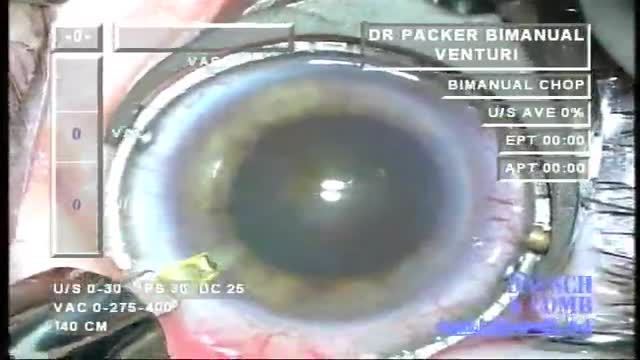
Challenges of cataract surgery in the eye with a history of radial keratotomy include IOL power calculation, protection of the cornea and aviodance of capsular complications.

Scleral fixated IOLs in case of inadequacy of capsular support and scleral sutured capsular tension rings when adequate zonular support is inavailable have been recently used in cataract surgery. In these techniques, polypropylene suture is used and the suture ends over the sclera after the knot ha...s been formed, may erode the conjunctiva and become exposed. Thus, the erosion may lead to the development of endophtalmitis. In order to prevent the aforementioned complication, scleral flaps, otologous cornea, duramater or fascia lata patches have been used to cover the knot and rotation of the knot into the tissues has been described.

Here we show the placement and removal of the maluygin ring in cataract sugery on a patient on Flomax to control intraoperative floppy iris syndrome (IFIS). The video shows the technique of placing the initial eyelet onto the iris, then toeing down on the inserter to open the lateral eyelets to all...ow them to grad the iris. the trailing haptic is placed with a kuglen hook.

A videos of cataract surgery
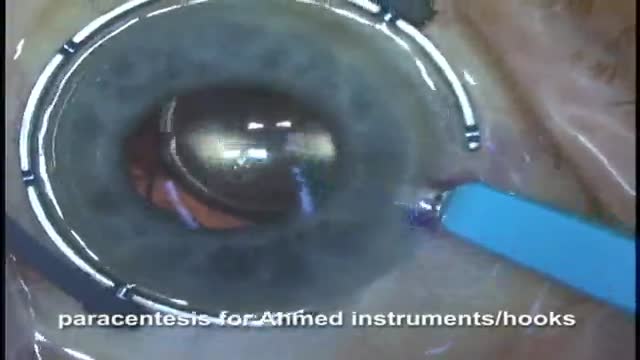
Here Drs Oetting and Shriver of the University of Iowa demonstrate the McCannel technique of fixing an IOL to the iris. In this video both the standard McCannel suture retrieval technique and the Siepser/Chang modifed technique are demonstrated. A 10-O prolene with a long curved ctc-6 needle is u...sed to place a suture through the iris and under an 3 piece IOL haptic. Using the standard technique the two ends of the suture are retrieved through a common paracentesis near the fixation site and tied externally. The other haptic is tied using the Siepser sliding knot technique as described by Chang for this indication with an internal knot. The standard technique is a bit easier but does not allow as thight a knot for fixation of the iris to the haptic.
