
- Physical Examination
- Surgical Examination
- Ophthalmology
- Clinical Skills
- Orthopedics
- Surgery Videos
- Laparoscopy
- Pediatrics
- Funny Videos
- Cardiothoracic Surgery
- Nursing Videos
- Plastic Surgery
- Otorhinolaryngology
- Histology and Histopathology
- Neurosurgery
- Dermatology
- Pediatric Surgery
- Urology
- Dentistry
- Oncology and Cancers
- Anatomy Videos
- Health and Fitness
- Radiology
- Anaesthesia
- Physical Therapy
- Pharmacology
- Interventional Radiology
- Cardiology
- Endocrinology
- Gynecology
- Emergency Medicine
- Psychiatry and Psychology
- Childbirth Videos
- General Medical Videos
- Nephrology
- Physiology
- Diet and Food Health
- Diabetes Mellitus
- Neurology
- Women Health
- Osteoporosis
- Gastroenterology
- Pulmonology
- Hematology
- Rheumatology
- Toxicology
- Nuclear Medicine
- Infectious Diseases
- Vascular Disease
- Reproductive Health
- Burns and Wound Healing
- Kidney Zone Podcast
- Other
Patch testing (contact allergy)
Category: Biopsies, Lab & Pathology Tests · All biopsies, lab & pathology tests
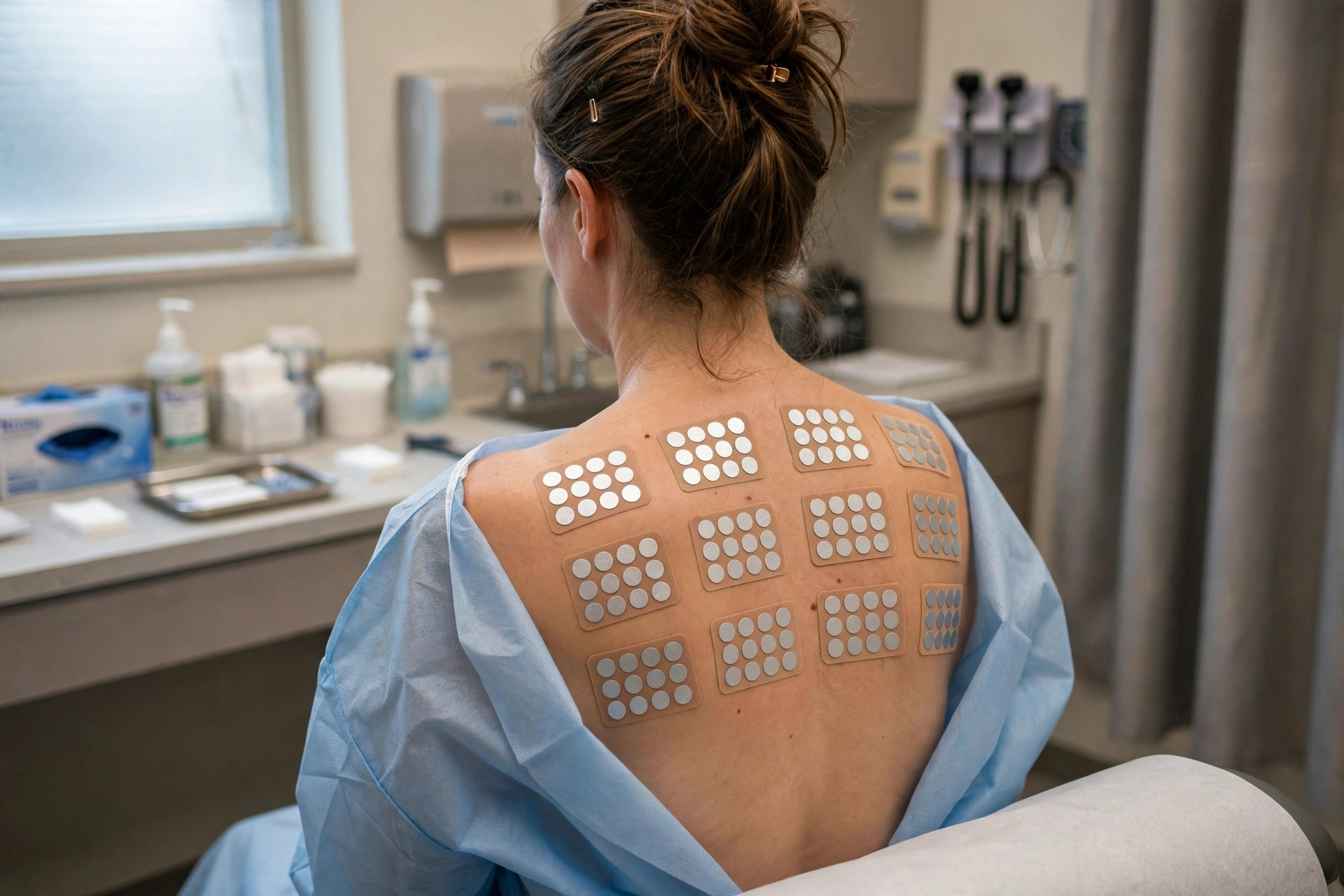
What it is
Patch testing identifies delayed (type IV) contact allergy — the cause of allergic contact dermatitis from substances such as nickel, fragrances, preservatives, hair dyes and rubber chemicals. Small chambers containing standard allergen series are taped to the back for 48 hours and read over the following days.
Why it is done
It investigates eczema that may be driven by contact allergy — hand eczema, facial eczema, eyelid dermatitis, reactions to cosmetics, jewellery, workplaces chemicals — when avoidance based on the culprit could control the condition.
How to prepare
You must not have sunbathed or used sunbeds on the back recently, and topical steroids on the back are stopped beforehand (your letter specifies). Tell the dermatologist about oral steroids or immune-suppressing medicines (they can blunt reactions) and about pregnancy (testing is deferred). Bring products you suspect, as your own items can sometimes be tested too.
What happens during the procedure
At the first visit, chambers are applied to the upper back and marked. You keep them dry (no showers wetting the back, no vigorous exercise) for 48 hours, then they are removed at a second visit with an initial reading. A final reading happens at about day four to seven, because contact reactions develop slowly.
Afterwards — recovery & results
Reactions are graded from weak redness to strong blistering responses. Your dermatologist matches positive reactions to your exposures and gives avoidance advice and product lists. Even negative testing is useful — it points the diagnosis back towards irritant or endogenous eczema.
Risks & considerations
Risks are low: itching at positive sites (expected), temporary pigment change, flare of eczema elsewhere occasionally, and very rarely a strong blistering reaction or new sensitisation to a tested substance. The back can be marked and itchy for some days.
Frequently asked questions
How is this different from skin prick testing?
Different allergy type: prick tests detect immediate (IgE) allergy causing hay fever and food reactions within minutes; patch tests detect delayed allergy causing eczema over days. They answer different questions.
Why three visits?
Contact allergy is slow: reactions build over 48 to 96 hours. Reading too early misses positives, so the schedule is part of the test's accuracy.
Related procedures — Biopsies, Lab & Pathology Tests
Browse the P section of the A–Z list or return to the Procedures & Tests hub.