
- Physical Examination
- Surgical Examination
- Ophthalmology
- Clinical Skills
- Orthopedics
- Surgery Videos
- Laparoscopy
- Pediatrics
- Funny Videos
- Cardiothoracic Surgery
- Nursing Videos
- Plastic Surgery
- Otorhinolaryngology
- Histology and Histopathology
- Neurosurgery
- Dermatology
- Pediatric Surgery
- Urology
- Dentistry
- Oncology and Cancers
- Anatomy Videos
- Health and Fitness
- Radiology
- Anaesthesia
- Physical Therapy
- Pharmacology
- Interventional Radiology
- Cardiology
- Endocrinology
- Gynecology
- Emergency Medicine
- Psychiatry and Psychology
- Childbirth Videos
- General Medical Videos
- Nephrology
- Physiology
- Diet and Food Health
- Diabetes Mellitus
- Neurology
- Women Health
- Osteoporosis
- Gastroenterology
- Pulmonology
- Hematology
- Rheumatology
- Toxicology
- Nuclear Medicine
- Infectious Diseases
- Vascular Disease
- Reproductive Health
- Burns and Wound Healing
- Kidney Zone Podcast
- Other
Hemophilia
Hemophilia is an inherited bleeding disorder in which the blood lacks enough of a clotting factor, so bleeding is difficult to stop. This page explains its symptoms, causes, and treatment in plain language, with videos to help you follow the key points.
✓ Medically reviewed by Dr. Mohamed Ibrahim, MD, PhD — physician-scientist · Last reviewed: November 2026
In short: Hemophilia mainly affects males and is usually inherited. Bleeding into joints and muscles is the characteristic problem, and repeated joint bleeds cause lasting damage. Regular replacement of the missing clotting factor prevents bleeds and has transformed life expectancy and quality of life.
Watch: Hemophilia videos


Read: the plain-language guide
Overview
Blood clotting depends on a chain of proteins called clotting factors working in sequence. In hemophilia, one factor in that chain is missing or present at very low levels: factor eight in hemophilia A, the more common type, and factor nine in hemophilia B. Without enough factor, clots form slowly and are fragile, so bleeding continues longer than it should. Severity depends on how much factor is present: severe hemophilia causes spontaneous bleeds, while mild hemophilia may only cause problems after surgery, dental work, or significant injury.
Symptoms
The typical pattern is bleeding into joints and muscles rather than surface cuts. Joint bleeds cause pain, swelling, warmth, and stiffness, most often in the knees, elbows, and ankles, and repeated bleeds permanently damage the joint. Muscle bleeds cause deep aching and swelling and can compress nerves. Other features include large bruises, prolonged bleeding after dental procedures or surgery, blood in the urine, and nosebleeds that are hard to stop. In babies, unusual bruising once they start crawling may be the first sign. Bleeding inside the head, though uncommon, is the most dangerous complication.
Causes & risk factors
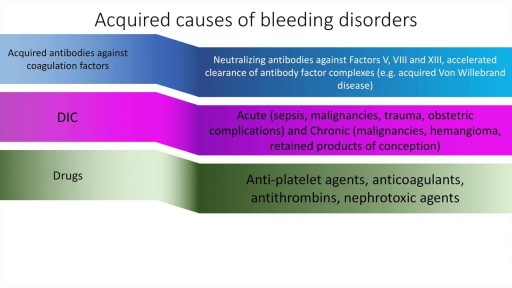
Hemophilia is usually inherited through a changed gene carried on the X chromosome, which is why it mainly affects boys and men, while women who carry the gene usually have enough clotting factor from their other X chromosome to avoid major bleeding. A mother who is a carrier can pass the gene to her children. In some cases the gene change arises for the first time in a family, so hemophilia can appear with no family history. Rarely, hemophilia is acquired later in life when the immune system attacks a clotting factor.
How it's diagnosed
Diagnosis is made with blood tests measuring how well the blood clots and the levels of individual clotting factors, which identify the type and severity. Testing is often done in infancy when there is a family history, sometimes using cord blood at birth. Genetic testing can pinpoint the exact gene change, helps identify female carriers in the family, and can be used in pregnancy. Because severity guides treatment planning, factor levels are checked at a specialist hemophilia center.
Treatment overview
The mainstay of treatment is replacing the missing clotting factor, given by infusion into a vein. Many people with severe hemophilia give themselves regular preventive infusions at home, which keeps factor levels high enough to prevent most bleeds and protect the joints. Others treat bleeds as they occur. Newer long-acting and non-factor treatments, including a medicine given by injection under the skin for hemophilia A, reduce treatment burden. Physiotherapy maintains joint strength, and pain relief avoids medicines that further impair clotting. Gene therapy is an emerging option for selected adults.
When to seek care
Seek emergency care after any head injury, for bleeding that will not stop, severe headache or vomiting, a rapidly swelling joint or muscle, or blood in vomit or stools. People with hemophilia should carry their treatment plan and contact their hemophilia center early for any significant bleed.
Frequently asked questions
Why does hemophilia mostly affect men?
The genes for the relevant clotting factors sit on the X chromosome. Men have one X chromosome, so a changed gene leaves them without a working copy. Women have two X chromosomes, so a healthy copy usually compensates, though carriers can still have reduced factor levels.
Can people with hemophilia play sports?
Yes, with planning. Regular exercise strengthens muscles and protects joints, and many sports are encouraged, especially swimming and cycling. High-contact sports carry more bleeding risk, so choices are discussed with the hemophilia center, and preventive treatment can be timed around activity.
Is hemophilia curable?
There is currently no routine cure, but modern preventive factor replacement allows a near-normal life and life expectancy. Gene therapy, which aims to help the body produce its own clotting factor, is becoming available for selected adults in some countries.
What should happen before dental work or surgery?
Procedures need advance planning with the hemophilia center, which arranges clotting factor cover before and after treatment so bleeding stays controlled. Always tell dentists and surgeons about hemophilia, and never take aspirin-type painkillers without specialist advice.
More in Blood & Immune
Related topics on MedicalVideos.com
Sources & further reading
Authoritative references for readers who want to go deeper:
This page is for general education only and is not medical advice. Any head injury in a person with hemophilia needs emergency assessment, even if they seem well, because bleeding inside the head can be delayed.