
- Physical Examination
- Surgical Examination
- Ophthalmology
- Clinical Skills
- Orthopedics
- Surgery Videos
- Laparoscopy
- Pediatrics
- Funny Videos
- Cardiothoracic Surgery
- Nursing Videos
- Plastic Surgery
- Otorhinolaryngology
- Histology and Histopathology
- Neurosurgery
- Dermatology
- Pediatric Surgery
- Urology
- Dentistry
- Oncology and Cancers
- Anatomy Videos
- Health and Fitness
- Radiology
- Anaesthesia
- Physical Therapy
- Pharmacology
- Interventional Radiology
- Cardiology
- Endocrinology
- Gynecology
- Emergency Medicine
- Psychiatry and Psychology
- Childbirth Videos
- General Medical Videos
- Nephrology
- Physiology
- Diet and Food Health
- Diabetes Mellitus
- Neurology
- Women Health
- Osteoporosis
- Gastroenterology
- Pulmonology
- Hematology
- Rheumatology
- Toxicology
- Nuclear Medicine
- Infectious Diseases
- Vascular Disease
- Reproductive Health
- Burns and Wound Healing
- Kidney Zone Podcast
- Other
Macular Degeneration
Macular degeneration is an eye condition that damages the macula, the small central part of the retina responsible for sharp, detailed vision. This page explains its symptoms and treatment in plain language, with videos to help you follow the key points.
✓ Medically reviewed by Dr. Mohamed Ibrahim, MD, PhD — physician-scientist · Last reviewed: November 2026
In short: Age-related macular degeneration affects central vision, making reading and recognizing faces harder, while side vision is usually preserved. The dry form progresses slowly; the wet form can damage vision quickly but responds to injections into the eye when treated promptly.
Watch: Macular Degeneration videos
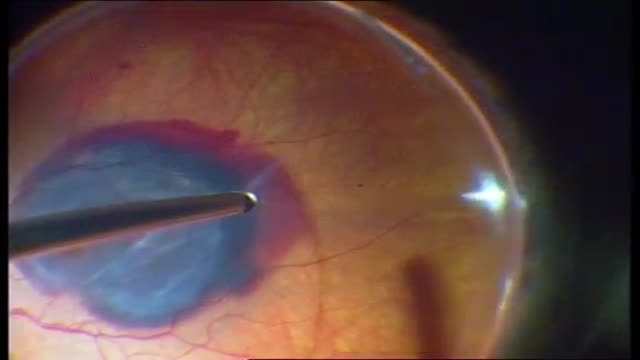
Read: the plain-language guide
Overview
The retina lines the back of the eye and converts light into signals for the brain. Its center, the macula, provides the sharp vision used for reading, driving, and recognizing faces. In age-related macular degeneration, this area gradually deteriorates with age. In the dry form, waste deposits accumulate and the macular tissue thins slowly over years. In the wet form, fragile new blood vessels grow beneath the retina and leak fluid or blood, causing faster damage. The condition does not cause total blindness, because peripheral vision remains, but central loss can be disabling.
Symptoms
Early macular degeneration often causes no symptoms and is found at a routine eye examination. As it progresses, straight lines may appear wavy or distorted, words on a page may blur or seem to have gaps, and colors may look less vivid. A dark or empty patch can develop in the center of vision. Reading, watching television, and recognizing faces become harder, while navigating around the home usually remains possible using side vision. The wet form can cause a rapid change over days to weeks, which is why new distortion should never be ignored.
Causes & risk factors
Age is the strongest risk factor, and the condition mainly affects older adults. Family history plays a part, suggesting inherited susceptibility. Smoking substantially increases risk and speeds progression, making stopping one of the most valuable steps a person can take. High blood pressure and cardiovascular disease may contribute, and diet appears relevant: diets rich in leafy green vegetables and oily fish are associated with healthier retinas.
How it's diagnosed
An eye specialist examines the back of the eye, often with drops that widen the pupil, looking for deposits and changes at the macula. A detailed scan that creates cross-sectional images of the retina shows fluid, swelling, or abnormal vessels and is central to distinguishing dry from wet disease. A grid test, in which a person looks at a pattern of straight lines and reports any waviness or missing areas, helps detect and monitor distortion. Regular self-checking with such a grid, covering one eye at a time, can flag change early.
Treatment overview
There is currently no cure, and treatment for the dry form centers on protecting remaining vision: not smoking, a nutrient-rich diet, and specific vitamin formulations recommended for certain stages, alongside regular monitoring. The wet form is treated with injections into the eye of medicines that block the growth signal for abnormal blood vessels; given early and repeated as needed, these can stabilize and sometimes improve vision. Low-vision support makes a real difference: magnifiers, good lighting, large-print materials, and rehabilitation services help people keep reading and managing daily life.
When to seek care
Seek same-day eye assessment for any sudden distortion, a new dark patch in central vision, or rapid blurring in one eye, since wet macular degeneration treated early has a much better outcome. Do not wait for a routine appointment if central vision changes quickly.
Frequently asked questions
Will macular degeneration make me completely blind?
No. Macular degeneration damages central vision only, and side vision is preserved, so people do not go completely blind from it. However, losing sharp central vision affects reading, driving, and recognizing faces, which is why treatment and low-vision support matter.
What is the difference between dry and wet macular degeneration?
Dry macular degeneration involves slow thinning of the macula and progresses gradually over years. Wet macular degeneration involves abnormal blood vessels leaking under the retina; it is less common but damages vision much faster, and it can be treated with injections if caught early.
Can vitamins help macular degeneration?
Specific vitamin and mineral formulations have been shown to slow progression in people with certain intermediate or advanced stages of dry disease. They do not restore lost vision or help everyone, so an eye specialist should advise whether they suit your stage.
How can I check my vision at home?
Cover one eye at a time and look at a grid of straight lines, such as an Amsler grid, noting any waviness, distortion, or missing patches. Check regularly, and report any new change to an eye specialist the same day.
More in Eyes & Ears
Related topics on MedicalVideos.com
Sources & further reading
Authoritative references for readers who want to go deeper:
This page is for general education only and is not medical advice. Sudden distortion or a new dark patch in central vision may be wet macular degeneration and needs same-day eye assessment.