- Physical Examination
- Surgical Examination
- Ophthalmology
- Clinical Skills
- Orthopedics
- Surgery Videos
- Laparoscopy
- Pediatrics
- Funny Videos
- Cardiothoracic Surgery
- Nursing Videos
- Plastic Surgery
- Otorhinolaryngology
- Histology and Histopathology
- Neurosurgery
- Dermatology
- Pediatric Surgery
- Urology
- Dentistry
- Oncology and Cancers
- Anatomy Videos
- Health and Fitness
- Radiology
- Anaesthesia
- Physical Therapy
- Pharmacology
- Interventional Radiology
- Cardiology
- Endocrinology
- Gynecology
- Emergency Medicine
- Psychiatry and Psychology
- Childbirth Videos
- General Medical Videos
- Nephrology
- Physiology
- Diet and Food Health
- Diabetes Mellitus
- Neurology
- Women Health
- Osteoporosis
- Gastroenterology
- Pulmonology
- Hematology
- Rheumatology
- Toxicology
- Nuclear Medicine
- Infectious Diseases
- Vascular Disease
- Reproductive Health
- Burns and Wound Healing
- Kidney Zone Podcast
- Other
Shock — First Aid
What to do
- Recognise shock: pale, cold, clammy or sweaty skin; fast weak pulse; fast breathing; nausea or thirst; dizziness, anxiety, confusion or drowsiness. Shock follows severe bleeding, burns, allergic reactions, heart problems, infection or major injury.
- Call 911 immediately — shock is a life-threatening failure of circulation and needs hospital treatment of its cause.
- Treat the cause if you can: control severe bleeding (see Severe Bleeding), give epinephrine for anaphylaxis, and so on.
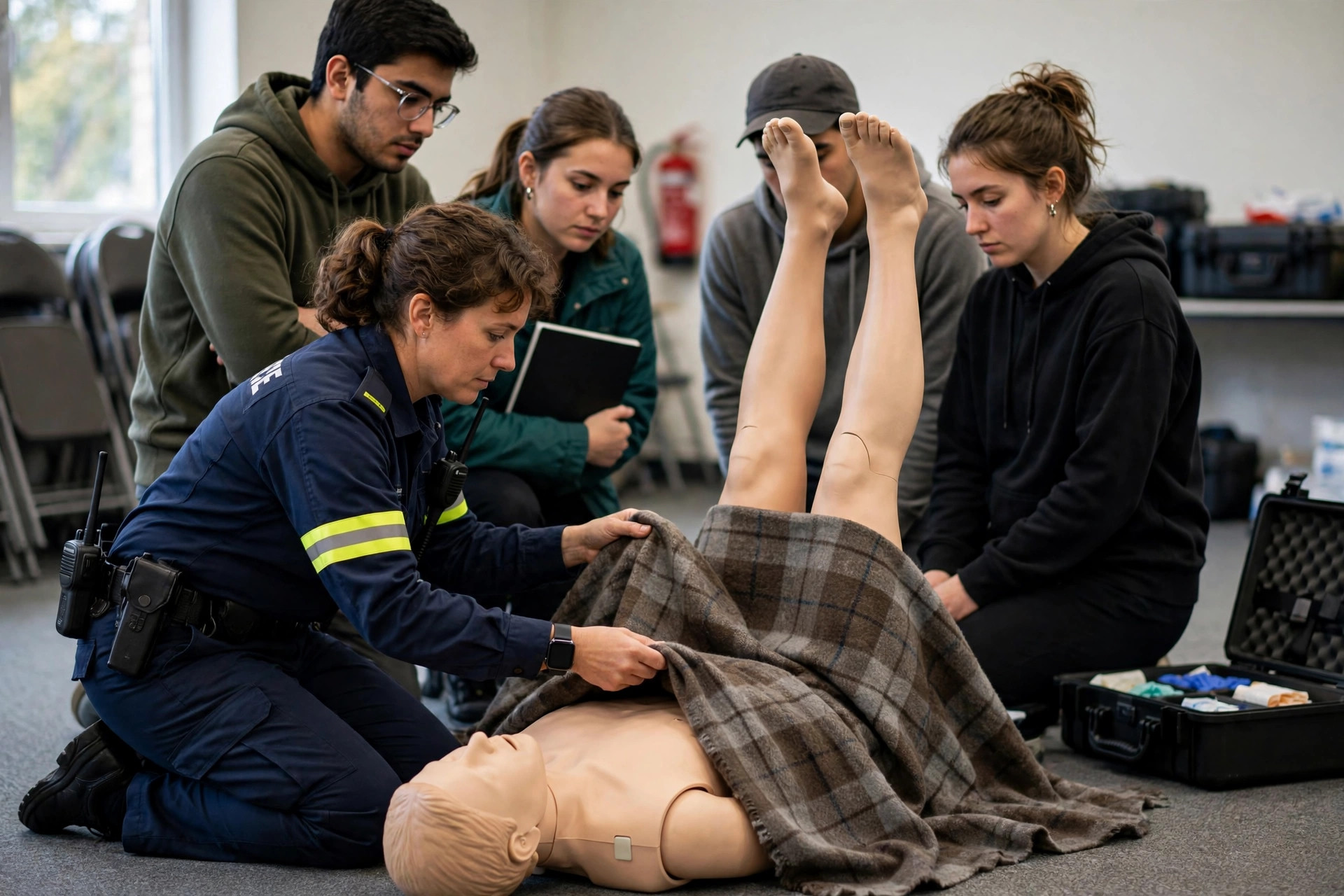
- Lie the person down on a blanket or coat. If they have no leg, pelvic or spinal injury and are not having breathing difficulty, raise the legs slightly to support circulation.
- Keep them warm with blankets or coats (under as well as over if the ground is cold). Loosen tight clothing.
- Give nothing to eat or drink — not even sips of water. Monitor response and breathing continuously; start CPR if they become unresponsive and stop breathing normally.
What NOT to do
- Do not give food or drink to someone in shock.
- Do not raise the legs if it worsens breathing or if leg, pelvis or spine injuries are suspected.
- Do not apply direct heat (hot water bottles, heaters) to the skin — insulation with blankets is the safe way to keep them warm.
- Do not leave them alone or let them get up and walk around.
When to get medical care
Shock is always a 911 emergency. Call at once for anyone with shock signs after injury, bleeding, burns, a severe allergic reaction, chest pain, or infection with fever and feeling seriously unwell. Deterioration can be rapid, so early ambulance response and hospital treatment of the underlying cause are essential.
Related conditions
Related symptoms
Frequently asked questions
Is medical shock the same as emotional shock?
No. Emotional shock is the stunned feeling after bad news. Medical shock is a physical state where the circulation fails to deliver enough oxygen to the organs — it follows major blood or fluid loss, heart failure, severe infection or anaphylaxis, and it can be fatal without treatment.
Why can't someone in shock have a drink?
Blood flow to the gut is reduced, vomiting is common, and emergency surgery under anaesthetic is likely — food or drink in the stomach increases the risk of inhaling vomit. Moistening the lips is acceptable comfort care.
In an emergency, call 911 (or your local emergency number) first — do not delay a call to read a guide. These pages are educational first-aid information in general terms; they are not a substitute for emergency services, first-aid training, or assessment by a qualified clinician.