- Physical Examination
- Surgical Examination
- Ophthalmology
- Clinical Skills
- Orthopedics
- Surgery Videos
- Laparoscopy
- Pediatrics
- Funny Videos
- Cardiothoracic Surgery
- Nursing Videos
- Plastic Surgery
- Otorhinolaryngology
- Histology and Histopathology
- Neurosurgery
- Dermatology
- Pediatric Surgery
- Urology
- Dentistry
- Oncology and Cancers
- Anatomy Videos
- Health and Fitness
- Radiology
- Anaesthesia
- Physical Therapy
- Pharmacology
- Interventional Radiology
- Cardiology
- Endocrinology
- Gynecology
- Emergency Medicine
- Psychiatry and Psychology
- Childbirth Videos
- General Medical Videos
- Nephrology
- Physiology
- Diet and Food Health
- Diabetes Mellitus
- Neurology
- Women Health
- Osteoporosis
- Gastroenterology
- Pulmonology
- Hematology
- Rheumatology
- Toxicology
- Nuclear Medicine
- Infectious Diseases
- Vascular Disease
- Reproductive Health
- Burns and Wound Healing
- Kidney Zone Podcast
- Other
Anaphylaxis — First Aid
What to do
- Recognise anaphylaxis: a rapidly developing reaction with airway, breathing or circulation problems — swelling of tongue or throat, hoarse voice, noisy or difficult breathing, wheeze, persistent cough, dizziness, collapse, pale or clammy skin — often with hives or swelling.
- Call 911 immediately, saying 'anaphylaxis'. Send someone for the person's auto-injector if it is not with them.
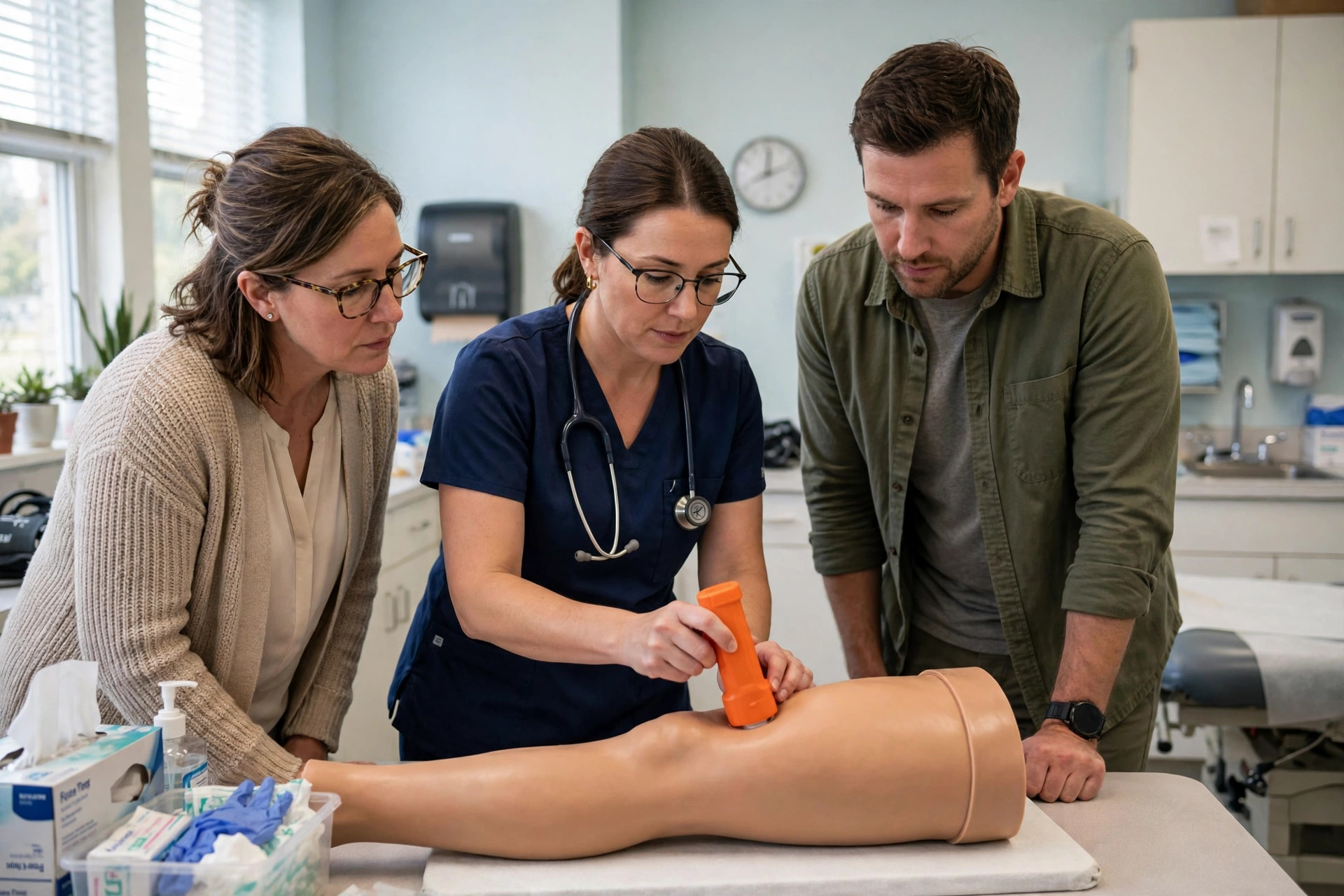
- Give epinephrine at once if the person carries an auto-injector: press it firmly into the outer thigh (through clothing is fine), hold for the time stated on the device (about 10 seconds), and note the time. Do not delay epinephrine to give antihistamines.
- Position: lie the person flat with legs raised. If breathing is difficult, let them sit up slightly; if pregnant, lie them on their left side. Do not stand them up or walk them around — sudden standing can cause collapse.
- If there is no improvement after about 5 to 15 minutes and another auto-injector is available, give a second one in the other thigh.
- If the person becomes unresponsive and stops breathing normally, start CPR. Stay until the ambulance arrives, even if they seem fully recovered — reactions can return.
What NOT to do
- Do not wait to see if it gets better before using the auto-injector — early epinephrine saves lives.
- Do not rely on antihistamines for anaphylaxis; they do not open the airway or raise blood pressure.
- Do not stand the person up, sit them in a car to drive to hospital, or leave them alone.
- Do not hesitate to use the auto-injector through clothing or on bare skin if needed.
When to get medical care
Anaphylaxis is always a 911 emergency, even if the auto-injector works and symptoms fully resolve — hospital observation is needed because symptoms can recur hours later (biphasic reaction). Afterwards, the person needs allergy follow-up, replacement auto-injectors and an action plan.
Related conditions
Related procedures & tests
Related symptoms
Frequently asked questions
How do I use an epinephrine auto-injector?
The common design: pull off the safety cap, hold the tip against the outer thigh, push firmly until it clicks, and hold for about 10 seconds, then massage the area briefly. Each brand differs slightly — the instructions are printed on the device, and trainer pens are available to practise with.
Can epinephrine harm someone if it turns out not to be anaphylaxis?
Used in the thigh as directed, epinephrine is safe for the vast majority of people and the risk of withholding it in true anaphylaxis is far greater. If in doubt during a severe reaction, use it and call 911.
In an emergency, call 911 (or your local emergency number) first — do not delay a call to read a guide. These pages are educational first-aid information in general terms; they are not a substitute for emergency services, first-aid training, or assessment by a qualified clinician.