
- Physical Examination
- Surgical Examination
- Ophthalmology
- Clinical Skills
- Orthopedics
- Surgery Videos
- Laparoscopy
- Pediatrics
- Funny Videos
- Cardiothoracic Surgery
- Nursing Videos
- Plastic Surgery
- Otorhinolaryngology
- Histology and Histopathology
- Neurosurgery
- Dermatology
- Pediatric Surgery
- Urology
- Dentistry
- Oncology and Cancers
- Anatomy Videos
- Health and Fitness
- Radiology
- Anaesthesia
- Physical Therapy
- Pharmacology
- Interventional Radiology
- Cardiology
- Endocrinology
- Gynecology
- Emergency Medicine
- Psychiatry and Psychology
- Childbirth Videos
- General Medical Videos
- Nephrology
- Physiology
- Diet and Food Health
- Diabetes Mellitus
- Neurology
- Women Health
- Osteoporosis
- Gastroenterology
- Pulmonology
- Hematology
- Rheumatology
- Toxicology
- Nuclear Medicine
- Infectious Diseases
- Vascular Disease
- Reproductive Health
- Burns and Wound Healing
- Kidney Zone Podcast
- Other
Bronchoscopy — How to Prepare and What to Expect
A bronchoscopy lets a doctor look inside your airways with a thin, flexible camera passed through the nose or mouth. It sounds daunting, but with sedation and numbing spray most people remember little of it. This guide explains why the test is done, how to prepare, what happens minute by minute, and what recovery is like, with videos of real bronchoscopies from our catalog.
✓ Medically reviewed by Dr. Mohamed Ibrahim, MD, PhD — physician-scientist · Last reviewed: October 2026
What it is and why it is done
The bronchoscope shows the windpipe and the branching airways of the lungs directly. It is used to investigate a persistent cough, coughing blood, infections that are not clearing, or an abnormal area seen on a scan. Through the scope the doctor can wash out samples of mucus and cells, brush an area, or take small biopsies — painlessly, because the inside of the airways cannot feel cutting.
Most bronchoscopies are day-case procedures with sedation rather than a general anaesthetic: you are drowsy and relaxed, breathing for yourself, with your oxygen and pulse monitored throughout. The test itself usually takes about 20 to 40 minutes.
How to Prepare
Preparation for bronchoscopy is mostly about fasting, sedation and the journey home:
- You will be asked not to eat for several hours beforehand — commonly around six hours — with small sips of water allowed until nearer the time. Follow your appointment letter exactly; a full stomach and sedation do not mix safely.
- Tell the team about medicines that affect blood clotting, about allergies, and about any previous problems with sedation or anaesthetics. Ask whether to take your usual medicines on the day.
- Arrange a lift home and someone to stay with you afterwards: sedation means no driving, no machinery and no important decisions for the rest of the day.
- Remove dentures, glasses and contact lenses before the test if asked, and tell the team about loose teeth, crowns or a bad neck.
- If you use inhalers or oxygen, bring them with you and tell the team — they will plan around them.
- Mention a current chest infection, fever or worsening breathlessness when you arrive; occasionally the test is postponed or the plan changes.
If your clinic gave you different instructions, follow theirs — they know your situation.
Before, during and after
Before
You change into a gown, a cannula goes into your hand, and monitors are attached for pulse, blood pressure and oxygen. The back of your throat is numbed with a spray that tastes bitter and makes swallowing feel strange — that is expected and wears off. Sedation is given through the cannula, and extra oxygen through a small nose tube.
During
The thin scope passes through your nose or mouth and down the windpipe while you breathe normally. The numbing means the tube is felt as pressure rather than pain, though it can make you cough at first; more numbing medicine can be sprayed through the scope. You cannot speak easily with the scope in place — the team watches you closely and you can raise a hand. Samples, washings or biopsies add a few minutes. Most people afterwards remember only fragments.
After
You rest in recovery until the sedation lifts and your oxygen and blood pressure are steady — usually one to two hours. Your throat stays numb for a while, so you will not eat or drink until swallowing is safe again — hot drinks especially. A sore throat, a hoarse voice and coughing up a little blood-streaked mucus after biopsies are common for a day or two. Contact the unit urgently for increasing breathlessness, chest pain, a fever, or coughing more than a little blood.
Watch: see it explained on video
 Removal of Foreign Body Airway through bronchoscopy
69,048 views
 Trans tracheal catheter insertion under direct bronchoscopic guidance
29,742 views
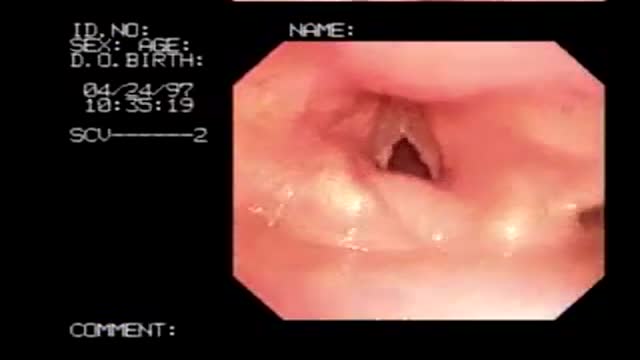 Fiberoptic Laryngoscopy and Bronchoscopy
19,301 views
 Electromagnetic Navigation Diagnostic Bronchoscopy Used to Detect Lung Cancer
15,510 views
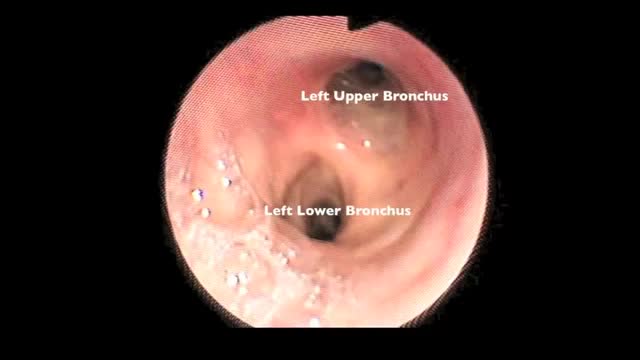 Flexible Fiberoptic Bronchoscopy
5,464 views
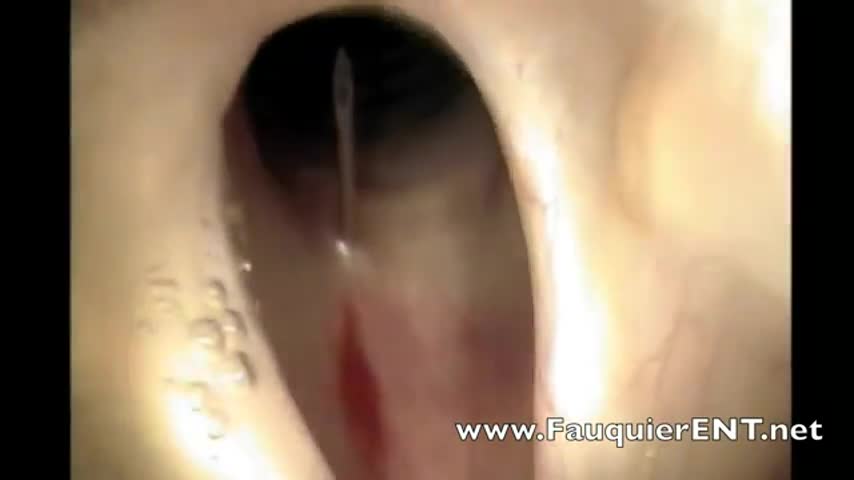 Endoscopic Injection of Vocal Cord Mass & Bronchoscopy Without Sedation
1,550 views
Frequently asked questions
Will I be able to breathe during a bronchoscopy?
Yes. The scope is thin and the windpipe remains open around it — there is always room for air — and your oxygen is monitored and topped up through a nose tube. Feeling that you might not be able to breathe is a common fear, but the team does this test every day and watches your breathing continuously.
Does bronchoscopy hurt?
With throat numbing and sedation, most people report little or no pain — the main sensations are the bitter spray, some coughing, and pressure. If you are uncomfortable, more sedation or numbing medicine can be given during the test.
How long does it take?
The bronchoscopy itself usually takes about 20 to 40 minutes, depending on whether samples or biopsies are taken. Allow half a day for the whole visit, including preparation and recovery from sedation.
When do I get the results?
The doctor can often tell you what the airways looked like on the day. Results of washings, brushings and biopsies take longer — commonly one to two weeks — and you will be told whether they will come by letter, phone or at a follow-up appointment.
Is a bronchoscopy the same as a general anaesthetic?
Usually not. Most bronchoscopies use sedation — you are drowsy and relaxed but breathing for yourself — combined with numbing spray. Some situations are done under general anaesthetic instead; your team will tell you which is planned and why.
This guide is general information, not medical advice. Follow your own clinician's instructions if they differ — they know your health history and the exact test you are having.