
- Physical Examination
- Surgical Examination
- Ophthalmology
- Clinical Skills
- Orthopedics
- Surgery Videos
- Laparoscopy
- Pediatrics
- Funny Videos
- Cardiothoracic Surgery
- Nursing Videos
- Plastic Surgery
- Otorhinolaryngology
- Histology and Histopathology
- Neurosurgery
- Dermatology
- Pediatric Surgery
- Urology
- Dentistry
- Oncology and Cancers
- Anatomy Videos
- Health and Fitness
- Radiology
- Anaesthesia
- Physical Therapy
- Pharmacology
- Interventional Radiology
- Cardiology
- Endocrinology
- Gynecology
- Emergency Medicine
- Psychiatry and Psychology
- Childbirth Videos
- General Medical Videos
- Nephrology
- Physiology
- Diet and Food Health
- Diabetes Mellitus
- Neurology
- Women Health
- Osteoporosis
- Gastroenterology
- Pulmonology
- Hematology
- Rheumatology
- Toxicology
- Nuclear Medicine
- Infectious Diseases
- Vascular Disease
- Reproductive Health
- Burns and Wound Healing
- Kidney Zone Podcast
- Other
Botox for chronic migraine
Category: Minor Procedures, Injections & Pain Relief · All minor procedures, injections & pain relief
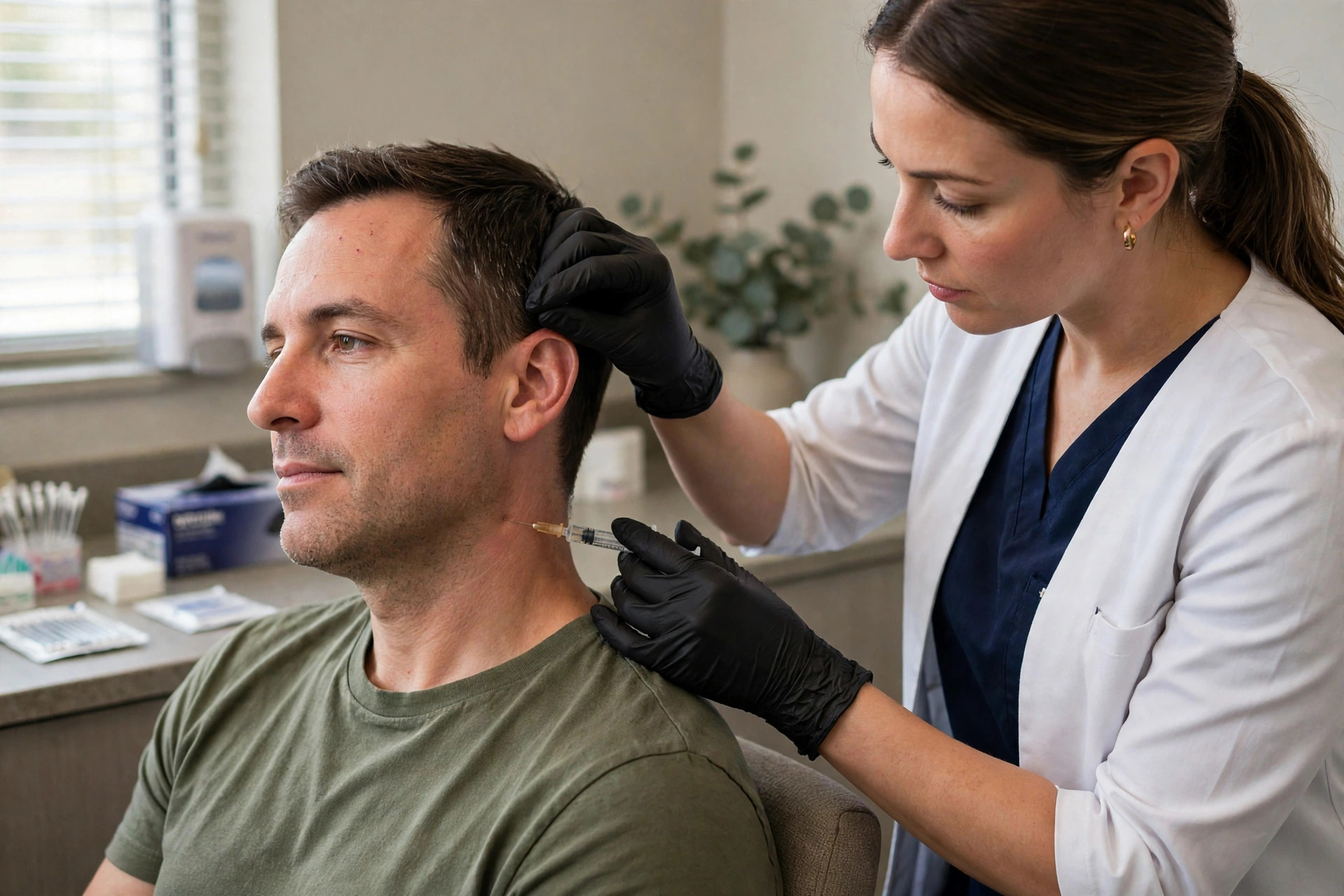
What it is
Botulinum toxin (Botox) is licensed for preventing chronic migraine in adults — meaning headaches on 15 or more days a month, with at least eight being migraine days — when other preventives have not worked or are not tolerated. It is given as a series of small injections in the head and neck every 12 weeks.
Why it is done
It aims to reduce the number of headache days and the severity of attacks. It is a preventive treatment, not a rescue treatment for an attack in progress.
How to prepare
Eligibility follows local criteria (usually failed trials of other preventives first) and is assessed in a headache clinic. Keep a headache diary beforehand so benefit can be measured. Tell the team about allergies, neuromuscular conditions, pregnancy plans and blood thinners.
What happens during the procedure
Thirty-one small injections are made across the forehead, temples, back of the head, neck and shoulders using a fine needle — following a standard protocol. It takes about 15 to 20 minutes. Local anaesthetic is not used; the injections sting briefly.
Afterwards — recovery & results
You can return to normal activities the same day. Benefit builds over one to two weeks and is judged after at least two treatment cycles (about six months). A headache diary at each review decides whether to continue.
Risks & considerations
Risks include neck pain and weakness, headache worsening briefly, drooping eyelid (uncommon, temporary), bruising, and flu-like symptoms. It is generally well tolerated; stopping is simple (effects fade in about three months).
Frequently asked questions
Why so many injections?
The protocol targets the nerve pathways involved in migraine across the head and neck — a fixed set of sites, rather than just the painful spots.
Will it replace my other preventives?
Often it is added to or replaces oral preventives after discussion. Acute rescue medicines (triptans, painkillers) remain available for attacks.
Related procedures — Minor Procedures, Injections & Pain Relief
Browse the B section of the A–Z list or return to the Procedures & Tests hub.