
- Physical Examination
- Surgical Examination
- Ophthalmology
- Clinical Skills
- Orthopedics
- Surgery Videos
- Laparoscopy
- Pediatrics
- Funny Videos
- Cardiothoracic Surgery
- Nursing Videos
- Plastic Surgery
- Otorhinolaryngology
- Histology and Histopathology
- Neurosurgery
- Dermatology
- Pediatric Surgery
- Urology
- Dentistry
- Oncology and Cancers
- Anatomy Videos
- Health and Fitness
- Radiology
- Anaesthesia
- Physical Therapy
- Pharmacology
- Interventional Radiology
- Cardiology
- Endocrinology
- Gynecology
- Emergency Medicine
- Psychiatry and Psychology
- Childbirth Videos
- General Medical Videos
- Nephrology
- Physiology
- Diet and Food Health
- Diabetes Mellitus
- Neurology
- Women Health
- Osteoporosis
- Gastroenterology
- Pulmonology
- Hematology
- Rheumatology
- Toxicology
- Nuclear Medicine
- Infectious Diseases
- Vascular Disease
- Reproductive Health
- Burns and Wound Healing
- Kidney Zone Podcast
- Other
Cryotherapy for skin lesions (seborrheic keratoses, actinic keratoses)
Category: Minor Procedures, Injections & Pain Relief · All minor procedures, injections & pain relief
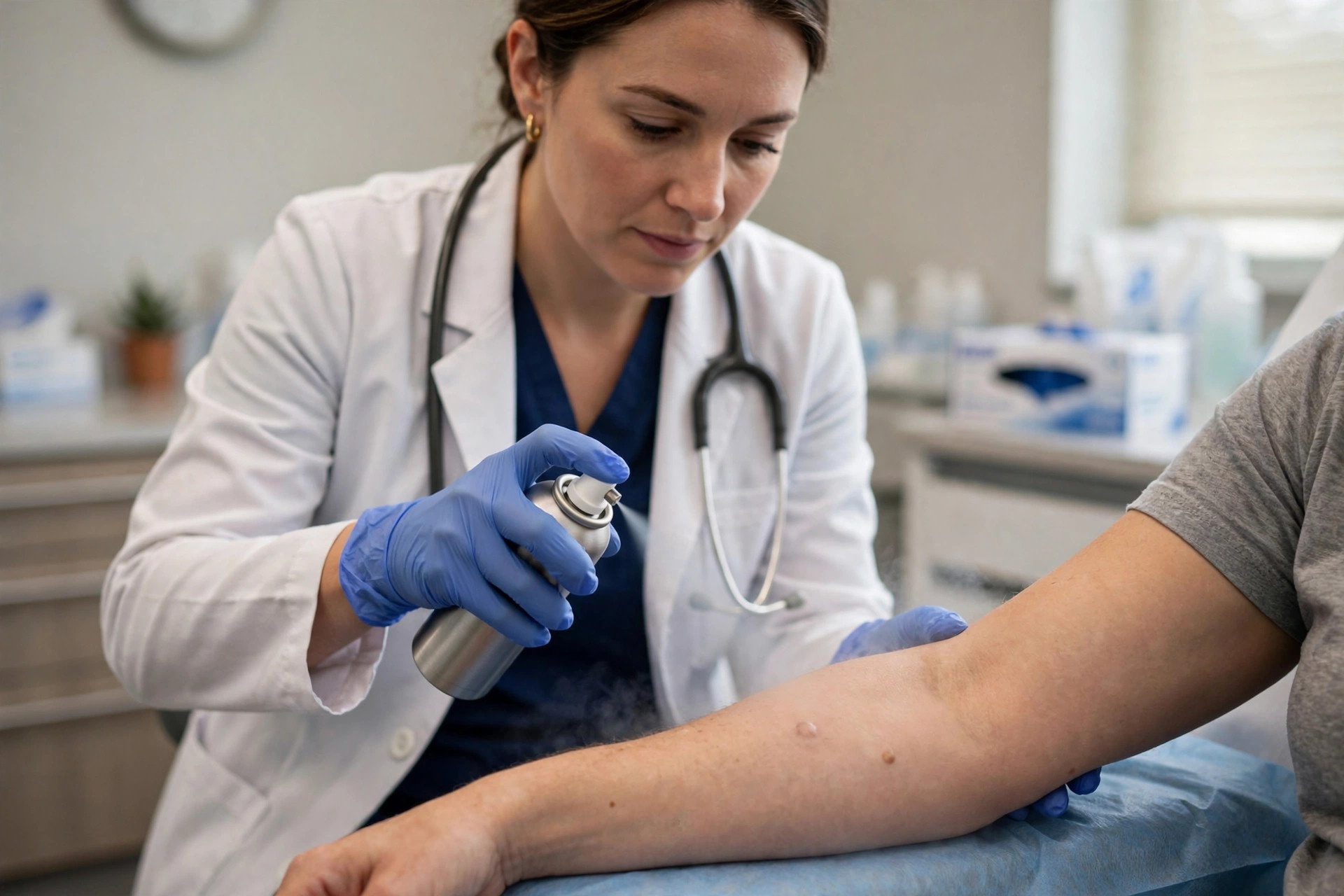
What it is
Cryotherapy freezes benign or precancerous skin lesions with liquid nitrogen: seborrheic keratoses (warty age-related growths), actinic keratoses (rough sun-damage patches that can rarely progress), and some other small lesions.
Why it is done
It is used for symptomatic or cosmetically troublesome seborrheic keratoses, and as a standard field treatment for actinic keratoses — treating them early reduces the (small) chance of progression to squamous cell carcinoma.
How to prepare
Assessment first confirms the lesion type with dermoscopy; pigmented or uncertain lesions are biopsied rather than frozen, because freezing destroys the sample. Tell the clinician about cold sensitivity, poor circulation, diabetes and pregnancy.
What happens during the procedure
Liquid nitrogen is applied to the lesion for a few seconds per freeze cycle, often repeated. A blister or scab forms over the following days. The session takes a few minutes per lesion.
Afterwards — recovery & results
Keep the area clean; blisters settle over one to two weeks and a scab falls off. Treated actinic keratoses may look redder before they heal. Sun protection on treated areas is advised. Follow-up checks that the lesion has cleared and that no new lesions need treatment.
Risks & considerations
Risks include pain, blistering, scarring, and pigment loss or darkening at the site (more noticeable on darker skin). Actinic keratoses sometimes recur and need repeat treatment or a topical medicine instead.
Related guides on MedicalVideos.com
Frequently asked questions
Will freezing remove my seborrheic keratosis completely?
Often yes in one session, but large or thick ones may need a repeat, and new ones commonly appear elsewhere with age.
Why treat actinic keratoses if they rarely become cancer?
Each lesion carries a small individual risk, but people with many have a meaningful cumulative risk, and treatment is quick and effective.
Related procedures — Minor Procedures, Injections & Pain Relief
Browse the C section of the A–Z list or return to the Procedures & Tests hub.