
- Physical Examination
- Surgical Examination
- Ophthalmology
- Clinical Skills
- Orthopedics
- Surgery Videos
- Laparoscopy
- Pediatrics
- Funny Videos
- Cardiothoracic Surgery
- Nursing Videos
- Plastic Surgery
- Otorhinolaryngology
- Histology and Histopathology
- Neurosurgery
- Dermatology
- Pediatric Surgery
- Urology
- Dentistry
- Oncology and Cancers
- Anatomy Videos
- Health and Fitness
- Radiology
- Anaesthesia
- Physical Therapy
- Pharmacology
- Interventional Radiology
- Cardiology
- Endocrinology
- Gynecology
- Emergency Medicine
- Psychiatry and Psychology
- Childbirth Videos
- General Medical Videos
- Nephrology
- Physiology
- Diet and Food Health
- Diabetes Mellitus
- Neurology
- Women Health
- Osteoporosis
- Gastroenterology
- Pulmonology
- Hematology
- Rheumatology
- Toxicology
- Nuclear Medicine
- Infectious Diseases
- Vascular Disease
- Reproductive Health
- Burns and Wound Healing
- Kidney Zone Podcast
- Other
Joint aspiration (arthrocentesis)
Category: Bone, Joint & Spine Procedures · All bone, joint & spine procedures
What it is
Joint aspiration removes fluid from a swollen joint with a needle for testing and to relieve pressure. The fluid is examined for crystals (gout, pseudogout), infection (septic arthritis) and inflammation — one of the highest-yield tests in joint medicine.
Why it is done
It is performed for any hot, swollen joint where infection is possible (a same-day emergency — septic arthritis destroys joints quickly), unexplained joint swelling, suspected gout, and to relieve a tense effusion (for example a large knee swelling after injury).
How to prepare
Tell the clinician about blood thinners, allergies, skin infection over the joint, and any joint replacement in that joint (aspiration of prosthetic joints is a specialist decision). Blood tests — inflammatory markers and blood cultures — are taken alongside when infection is suspected.
What happens during the procedure
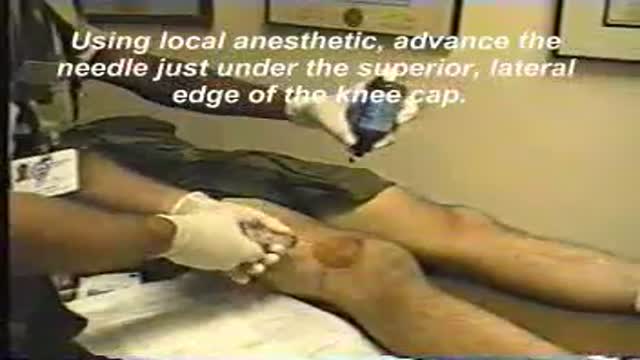
After thorough skin cleaning and often local anaesthetic, a needle enters the joint and fluid is drawn into syringes, sent for microscopy (crystals, white cells), culture and chemistry. A sample of blood-stained fluid after injury suggests internal damage such as a fracture or ligament tear. It takes about 10 minutes.
Afterwards — recovery & results
The joint often feels more comfortable immediately. You will be told results as they arrive: crystal results within a day, cultures over several days. If infection is confirmed, urgent hospital treatment with antibiotics and usually surgical washout follows. Seek help for worsening pain, fever or re-swelling.
Risks & considerations
Risks include introducing infection (minimised by sterile technique — the reason skin must be clean and unbroken), bleeding into the joint, and pain. The diagnostic value in a hot joint far outweighs these small risks.
Watch: Joint aspiration (arthrocentesis) videos
Real procedure videos from the MedicalVideos.com library. Some clinical footage is graphic — that is the nature of a medical video library.
Related guides on MedicalVideos.com
Frequently asked questions
Why can't you just start antibiotics for my hot joint?
Because septic arthritis and gout look identical at the bedside but need different treatment, and antibiotics before aspiration reduce the chance of growing the organism. Fluid first — then treatment — is the safe sequence, done urgently.
The fluid was cloudy — what does that mean?
Cloudiness suggests many white cells (inflammation or infection) or crystals. The laboratory distinguishes them; cloudiness alone is not a diagnosis.
Related procedures — Bone, Joint & Spine Procedures
Browse the J section of the A–Z list or return to the Procedures & Tests hub.