
- Physical Examination
- Surgical Examination
- Ophthalmology
- Clinical Skills
- Orthopedics
- Surgery Videos
- Laparoscopy
- Pediatrics
- Funny Videos
- Cardiothoracic Surgery
- Nursing Videos
- Plastic Surgery
- Otorhinolaryngology
- Histology and Histopathology
- Neurosurgery
- Dermatology
- Pediatric Surgery
- Urology
- Dentistry
- Oncology and Cancers
- Anatomy Videos
- Health and Fitness
- Radiology
- Anaesthesia
- Physical Therapy
- Pharmacology
- Interventional Radiology
- Cardiology
- Endocrinology
- Gynecology
- Emergency Medicine
- Psychiatry and Psychology
- Childbirth Videos
- General Medical Videos
- Nephrology
- Physiology
- Diet and Food Health
- Diabetes Mellitus
- Neurology
- Women Health
- Osteoporosis
- Gastroenterology
- Pulmonology
- Hematology
- Rheumatology
- Toxicology
- Nuclear Medicine
- Infectious Diseases
- Vascular Disease
- Reproductive Health
- Burns and Wound Healing
- Kidney Zone Podcast
- Other
Nephrostomy insertion
Category: Kidney & Dialysis Procedures · All kidney & dialysis procedures
What it is
A nephrostomy is a thin tube placed through the skin of the back directly into the kidney to drain urine to a bag outside the body. It bypasses a blockage in the ureter (the tube from kidney to bladder).
Why it is done
It is done urgently when a blocked kidney is infected or kidney function is threatened, and electively when a blockage (from stone, tumour, scarring or pregnancy) needs draining before definitive treatment, or when the ureter needs rest to heal.
How to prepare
You will have scans, blood tests and clotting checks; blood thinners are reviewed. The procedure is usually done with local anaesthetic and sedation in the radiology department; fasting is needed if sedation is used. Antibiotics are commonly given, especially if infection is present.
What happens during the procedure
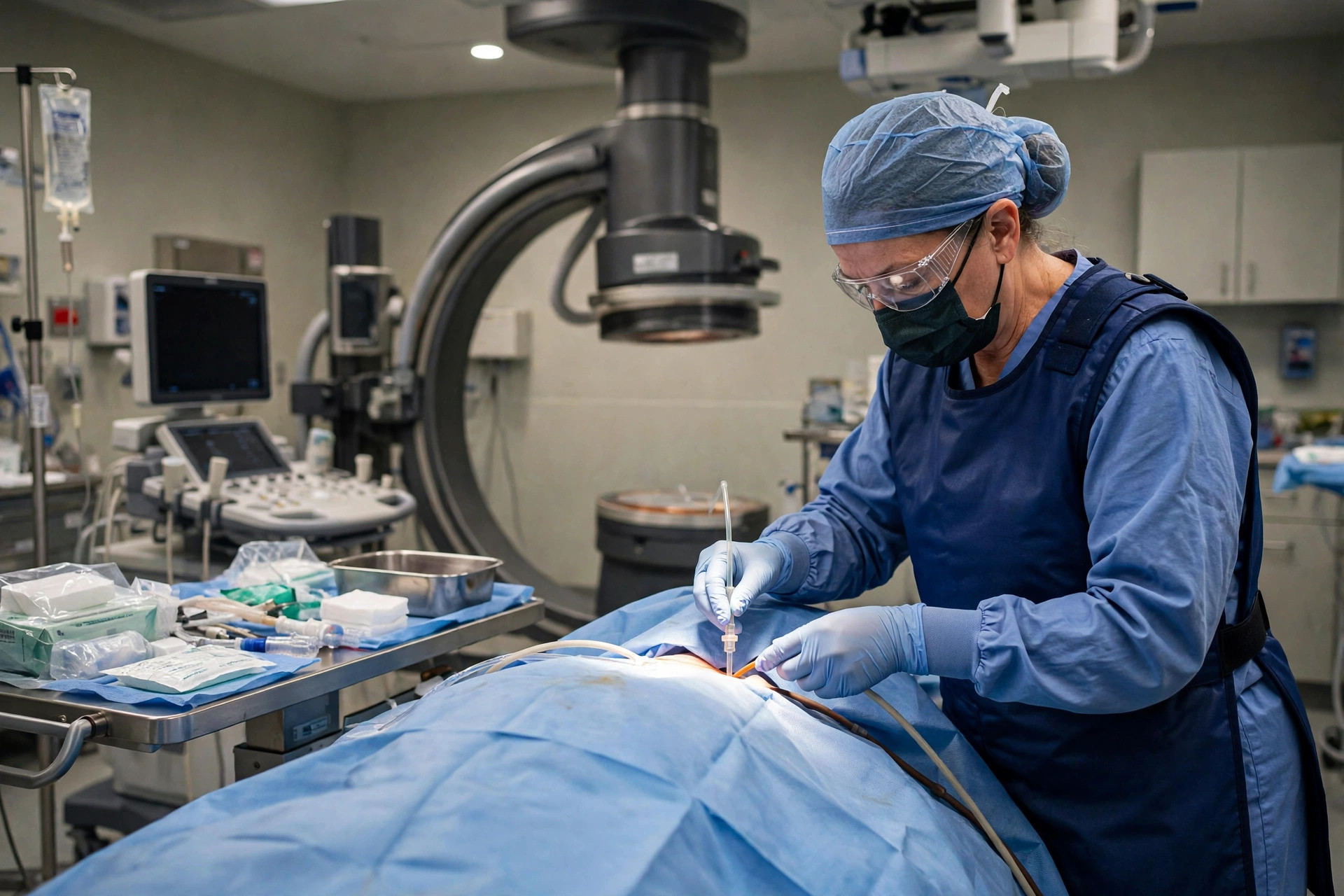
Lying on your front or side, the skin is numbed and, under ultrasound and X-ray guidance, a needle enters the kidney's collecting system; a guidewire and then the drainage tube follow, secured with a stitch and dressing. It takes about 30 to 60 minutes.
Afterwards — recovery & results
The tube drains to a bag you will be taught to empty and care for. Kidney function and infection usually improve quickly once drained. The tube is exchanged periodically if long-term, and removed when the underlying blockage is treated — sometimes after a test injection (nephrostogram) confirms the ureter is open.
Risks & considerations
Risks include bleeding into the urine (common and usually settling), infection, tube blockage or dislodgement, leakage around the tube, and rarely injury to adjacent organs. Report if drainage stops, the tube falls out, or you develop fever or loin pain.
Related guides on MedicalVideos.com
Frequently asked questions
How long will I have the tube?
It depends on the cause: days for some stone blockages treated promptly, weeks to months when it bridges to surgery or treats a complex problem. Your team will give a plan.
Can I shower and dress normally?
Yes, with the dressing protected and the bag secured under clothing as the nurses will show you. Baths and swimming are usually avoided while the tube is in.
Related procedures — Kidney & Dialysis Procedures
Browse the N section of the A–Z list or return to the Procedures & Tests hub.