
- Physical Examination
- Surgical Examination
- Ophthalmology
- Clinical Skills
- Orthopedics
- Surgery Videos
- Laparoscopy
- Pediatrics
- Funny Videos
- Cardiothoracic Surgery
- Nursing Videos
- Plastic Surgery
- Otorhinolaryngology
- Histology and Histopathology
- Neurosurgery
- Dermatology
- Pediatric Surgery
- Urology
- Dentistry
- Oncology and Cancers
- Anatomy Videos
- Health and Fitness
- Radiology
- Anaesthesia
- Physical Therapy
- Pharmacology
- Interventional Radiology
- Cardiology
- Endocrinology
- Gynecology
- Emergency Medicine
- Psychiatry and Psychology
- Childbirth Videos
- General Medical Videos
- Nephrology
- Physiology
- Diet and Food Health
- Diabetes Mellitus
- Neurology
- Women Health
- Osteoporosis
- Gastroenterology
- Pulmonology
- Hematology
- Rheumatology
- Toxicology
- Nuclear Medicine
- Infectious Diseases
- Vascular Disease
- Reproductive Health
- Burns and Wound Healing
- Kidney Zone Podcast
- Other
Dialysis fistula creation (AV fistula surgery)
Category: Kidney & Dialysis Procedures · All kidney & dialysis procedures
What it is
This operation joins an artery directly to a vein, usually in the arm. Over the following weeks the vein enlarges and strengthens ('matures') under the higher blood flow, creating a durable access that needles can be placed into for haemodialysis.
Why it is done
A fistula is the preferred long-term access for haemodialysis because it lasts longest and has the lowest infection risk compared with grafts and lines. It is created ideally months before dialysis is expected to start.
How to prepare
Your arm vessels are mapped with an ultrasound scan to choose the best site, favouring the non-dominant arm and the lowest (wrist) site that is suitable. Surgery is usually under local or regional anaesthetic as a day case. Tell the team about allergies and blood thinners.
What happens during the procedure
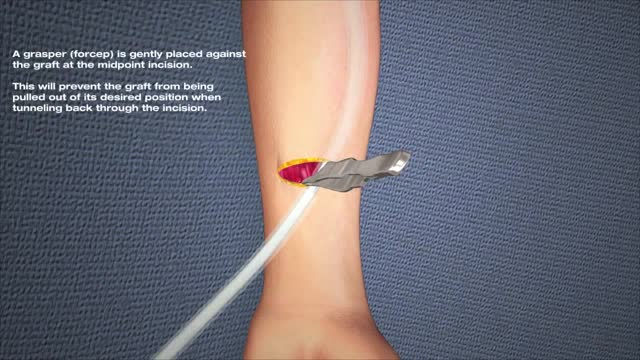
Through a small cut, the surgeon connects the side of the artery to the vein end (or side-to-side). You may feel a buzzing ('thrill') over it immediately — a good sign. The operation takes about an hour.
Afterwards — recovery & results
You go home the same day with arm exercises (squeezing a ball) to help maturation. The fistula is checked at clinic; it usually needs six to eight weeks or more before use. Protect the arm: no blood pressure cuffs, blood tests or tight sleeves on that arm.
Risks & considerations
Risks include failure to mature (the commonest issue; a proportion need a further procedure or a new site), infection, bleeding, steal syndrome (hand short of blood — pain or cold hand needs review) and swelling. Your access team monitors maturation with examination and scans.
Watch: Dialysis fistula creation (AV fistula surgery) videos
Real procedure videos from the MedicalVideos.com library. Some clinical footage is graphic — that is the nature of a medical video library.
Related guides on MedicalVideos.com
Frequently asked questions
Why create it so early if I feel fine?
Fistulas need weeks to mature, and creating one early avoids starting dialysis with a temporary line, which carries higher infection risk.
What does the thrill mean?
The buzzing you feel when touching the fistula is blood rushing through the new connection — its presence is reassuring; if it ever disappears, contact your unit the same day.
Related procedures — Kidney & Dialysis Procedures
Browse the D section of the A–Z list or return to the Procedures & Tests hub.