
- Physical Examination
- Surgical Examination
- Ophthalmology
- Clinical Skills
- Orthopedics
- Surgery Videos
- Laparoscopy
- Pediatrics
- Funny Videos
- Cardiothoracic Surgery
- Nursing Videos
- Plastic Surgery
- Otorhinolaryngology
- Histology and Histopathology
- Neurosurgery
- Dermatology
- Pediatric Surgery
- Urology
- Dentistry
- Oncology and Cancers
- Anatomy Videos
- Health and Fitness
- Radiology
- Anaesthesia
- Physical Therapy
- Pharmacology
- Interventional Radiology
- Cardiology
- Endocrinology
- Gynecology
- Emergency Medicine
- Psychiatry and Psychology
- Childbirth Videos
- General Medical Videos
- Nephrology
- Physiology
- Diet and Food Health
- Diabetes Mellitus
- Neurology
- Women Health
- Osteoporosis
- Gastroenterology
- Pulmonology
- Hematology
- Rheumatology
- Toxicology
- Nuclear Medicine
- Infectious Diseases
- Vascular Disease
- Reproductive Health
- Burns and Wound Healing
- Kidney Zone Podcast
- Other
Percutaneous nephrolithotomy (PCNL)
Category: Kidney & Dialysis Procedures · All kidney & dialysis procedures
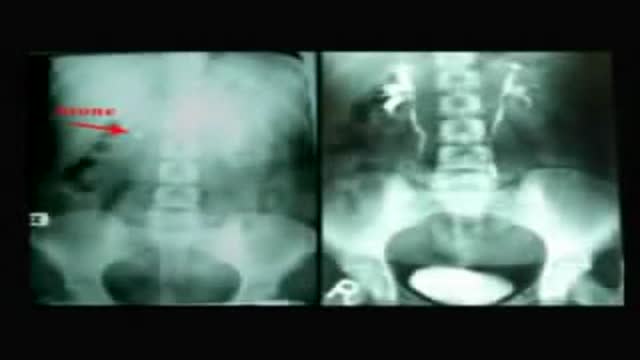
What it is
PCNL removes large or complex kidney stones through a small track made from the skin of the back directly into the kidney. Instruments passed through the track break up and remove the stone under direct vision.
Why it is done
It is the standard operation for large kidney stones (generally over about 2 cm), staghorn stones filling the kidney's collecting system, and stones that other methods cannot clear.
How to prepare
You will have CT imaging, blood tests, urine infection screening and treatment, and anaesthetic assessment. Blood thinners are reviewed carefully because the track passes through the kidney. You fast before surgery.
What happens during the procedure
Under general anaesthetic, guided by X-ray and/or ultrasound, a needle is passed from the back into the kidney, the track is widened, and a scope is used to fragment (with ultrasound, laser or pneumatic energy) and extract the stone. A drainage tube (nephrostomy) and/or internal stent is often left temporarily. Surgery takes one to three hours.
Afterwards — recovery & results
Hospital stay is usually two to three days. The nephrostomy tube is removed once drainage is clear and imaging is satisfactory. Blood-stained urine is expected for some days. Full recovery is about two to four weeks. Follow-up imaging confirms stone clearance, and stone analysis guides prevention.
Risks & considerations
Risks include bleeding (the main risk; occasionally needing transfusion or a vessel-blocking procedure), infection including sepsis, injury to nearby organs (bowel, lung lining causing a chest complication), urine leak, and residual fragments sometimes needing a second look. Your surgeon will discuss your stone's complexity.
Watch: Percutaneous nephrolithotomy (PCNL) videos
Real procedure videos from the MedicalVideos.com library. Some clinical footage is graphic — that is the nature of a medical video library.
Related guides on MedicalVideos.com
Frequently asked questions
Why not just use shockwaves for a big stone?
Large stones fragment into too many pieces for shockwaves to clear reliably and would need many sessions; PCNL removes the bulk in one operation with the highest single-procedure clearance.
Will there be a big scar?
No — the track is about 1 cm. Modern 'mini-PCNL' uses even smaller tracks for suitable stones.
Related procedures — Kidney & Dialysis Procedures
Browse the P section of the A–Z list or return to the Procedures & Tests hub.