
- Physical Examination
- Surgical Examination
- Ophthalmology
- Clinical Skills
- Orthopedics
- Surgery Videos
- Laparoscopy
- Pediatrics
- Funny Videos
- Cardiothoracic Surgery
- Nursing Videos
- Plastic Surgery
- Otorhinolaryngology
- Histology and Histopathology
- Neurosurgery
- Dermatology
- Pediatric Surgery
- Urology
- Dentistry
- Oncology and Cancers
- Anatomy Videos
- Health and Fitness
- Radiology
- Anaesthesia
- Physical Therapy
- Pharmacology
- Interventional Radiology
- Cardiology
- Endocrinology
- Gynecology
- Emergency Medicine
- Psychiatry and Psychology
- Childbirth Videos
- General Medical Videos
- Nephrology
- Physiology
- Diet and Food Health
- Diabetes Mellitus
- Neurology
- Women Health
- Osteoporosis
- Gastroenterology
- Pulmonology
- Hematology
- Rheumatology
- Toxicology
- Nuclear Medicine
- Infectious Diseases
- Vascular Disease
- Reproductive Health
- Burns and Wound Healing
- Kidney Zone Podcast
- Other
Osteoporosis Screening (DXA Bone Density Scan)
Osteoporosis weakens bone silently until a fracture happens. The USPSTF recommends screening women aged 65 and over, and younger postmenopausal women at increased risk (grade B).
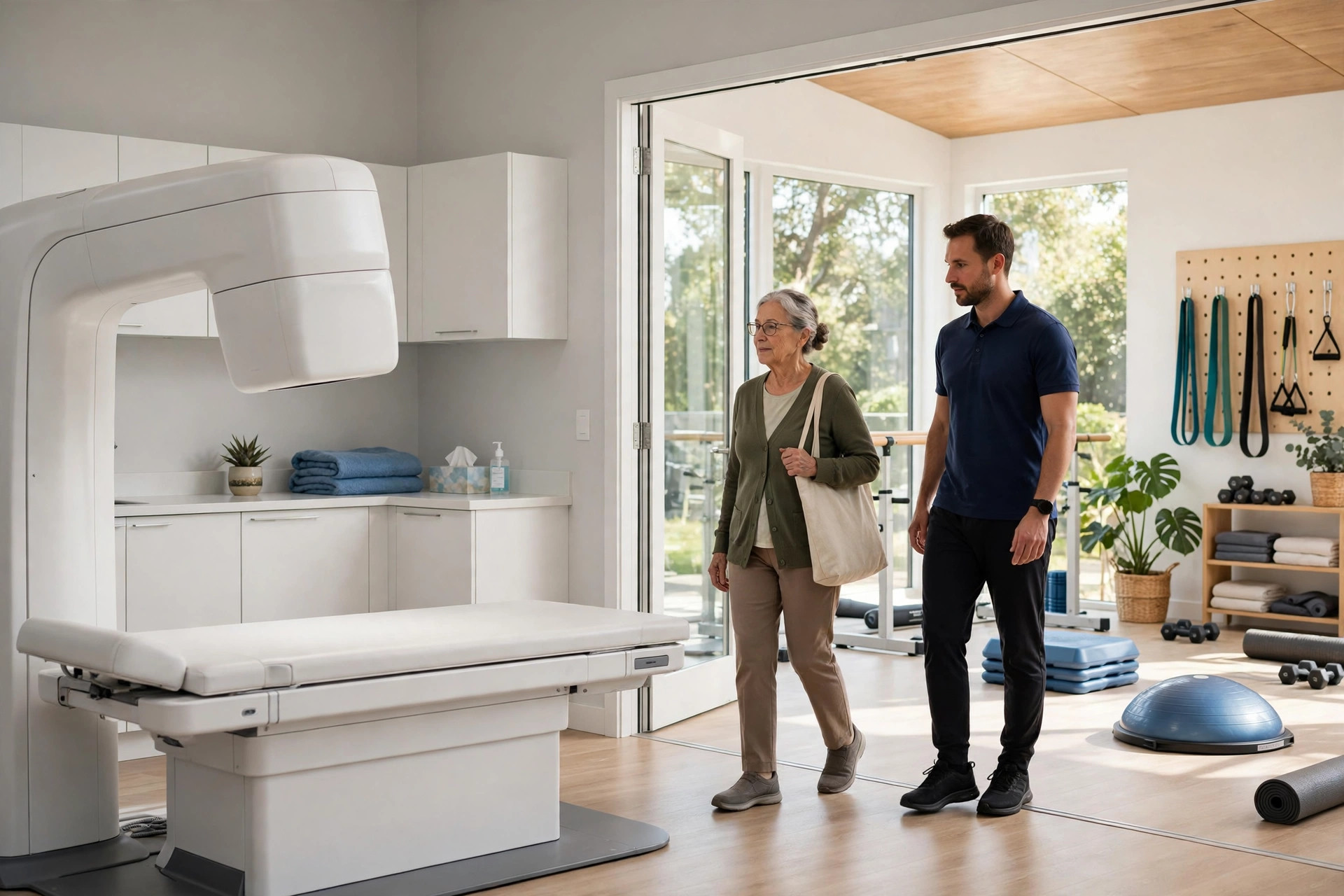
Osteoporosis makes bones thinner and more fragile. It causes no pain and no symptoms — until a wrist, spine or hip fracture reveals it. Screening measures bone density so that treatment can start before the first fracture, because hip fractures in particular can permanently change an older person's independence.
The USPSTF recommends screening for osteoporosis in women aged 65 and older (grade B, reaffirmed January 2025), and in postmenopausal women younger than 65 who have at least one risk factor, identified with a clinical risk assessment. For men, the evidence is insufficient (grade I). The recommendation applies to adults aged 40 and over who do not already have osteoporosis or a history of fragility fractures.
What this screening checks
- Bone mineral density measured by central DXA — a low-dose X-ray scan of the hip (total hip and femoral neck) and lumbar spine.
- Results are given as a T-score comparing your bone density with that of a healthy young adult. By the World Health Organization definition, a T-score of −2.5 or lower is osteoporosis. Fracture-risk tools combine the scan with clinical risk factors to guide decisions.
Who should have it, and how often
Women aged 65 and over — screening is recommended regardless of other risk factors.
Postmenopausal women under 65 with at least one risk factor — such as low body weight, a parent who fractured a hip, smoking, or excess alcohol use. The pathway is two-step: risk factors prompt a clinical risk assessment tool, and a concerning result leads to a DXA scan.
Men: the USPSTF found insufficient evidence (grade I) — if you have strong risk factors or have had a fragility fracture, discuss testing with your clinician directly.
A fracture from a minor fall (a fragility fracture) is not a screening matter — it needs assessment and usually treatment in its own right.
What happens during the test
- You lie fully clothed on a padded table while the DXA scanner arm passes slowly over your hip and lower spine.
- The scan is painless, quiet and takes roughly ten to twenty minutes; the radiation dose is very low — far below a standard X-ray.
- Your T-scores and fracture-risk estimate are reported to your clinician, who discusses what they mean for you.
How to prepare
- Wear clothing without metal around the waist and hips (zips, buttons, underwired belts can interfere) or you may be asked to change into a gown.
- Tell the department about recent scans involving contrast dye or barium, which can affect timing, and about any hip or spine surgery or metalwork.
- You can eat normally and take your usual medicines unless told otherwise.
What the results mean
A normal T-score is reassuring; a score in the middle range (low bone density, sometimes called osteopenia) means monitoring and lifestyle measures, with rescreening intervals based on how close the score is to the osteoporosis threshold.
A T-score of −2.5 or lower means osteoporosis. That is the start of a treatment conversation — medicines that slow bone loss or build bone, plus calcium, vitamin D, exercise and falls prevention — aimed squarely at preventing your first fracture.
Benefits
- Finds fragile bones before the first fracture, when treatment can still prevent it.
- DXA is quick, painless and very low in radiation.
- The risk-assessment pathway targets scans at younger postmenopausal women most likely to benefit.
Limits and possible harms
- Some women treated after screening would never have fractured — treatment exposes them to side effects without personal benefit.
- An 'osteopenia' label can cause anxiety disproportionate to the actual risk.
- DXA measures density, not every aspect of bone strength; a normal scan does not make fracture impossible.
Useful links and tools
More in Bone, Senses, Children & Older Adults
- Falls Prevention in Older Adults
- Vision Screening in Young Children
- Oral Health & Fluoride for Young Children
- Depression & Anxiety Screening in Children and Teenagers
Frequently asked questions
What is a T-score, and what counts as osteoporosis?
A T-score compares your bone density with that of a healthy young adult, measured by a DXA scan of the hip and spine. By the World Health Organization definition used in the USPSTF recommendation, a T-score of −2.5 or lower is osteoporosis; between −1 and −2.5 is low bone density. Your clinician interprets the score alongside your fracture risk factors, not in isolation.
Should men be screened for osteoporosis?
The USPSTF found the evidence insufficient to recommend for or against screening men (grade I, 2025) — fractures matter just as much in men, but the trial evidence for screening programmes is lacking. Men with strong risk factors, or who have already had a fragility fracture, should discuss bone health testing with their clinician directly.
This guide explains how a screening test usually works and who it is generally offered to. It is general educational information only — not medical advice, and not a recommendation for you personally. Screening decisions depend on your age, history and risk, so talk to your own clinician about which tests you need and when. If you have symptoms now, do not wait for a screening test — seek medical care promptly.
← Bone, Senses, Children & Older Adults · Screening & Prevention home