
- Physical Examination
- Surgical Examination
- Ophthalmology
- Clinical Skills
- Orthopedics
- Surgery Videos
- Laparoscopy
- Pediatrics
- Funny Videos
- Cardiothoracic Surgery
- Nursing Videos
- Plastic Surgery
- Otorhinolaryngology
- Histology and Histopathology
- Neurosurgery
- Dermatology
- Pediatric Surgery
- Urology
- Dentistry
- Oncology and Cancers
- Anatomy Videos
- Health and Fitness
- Radiology
- Anaesthesia
- Physical Therapy
- Pharmacology
- Interventional Radiology
- Cardiology
- Endocrinology
- Gynecology
- Emergency Medicine
- Psychiatry and Psychology
- Childbirth Videos
- General Medical Videos
- Nephrology
- Physiology
- Diet and Food Health
- Diabetes Mellitus
- Neurology
- Women Health
- Osteoporosis
- Gastroenterology
- Pulmonology
- Hematology
- Rheumatology
- Toxicology
- Nuclear Medicine
- Infectious Diseases
- Vascular Disease
- Reproductive Health
- Burns and Wound Healing
- Kidney Zone Podcast
- Other
Carpal tunnel release: What to Expect & Recovery
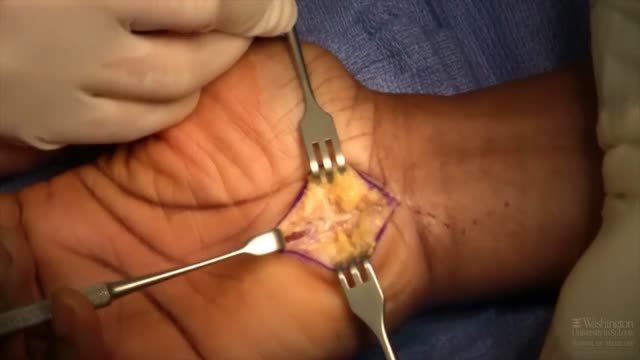
Carpal tunnel release divides the tight ligament pressing on the median nerve in the wrist. It takes about 20 minutes under local anaesthetic, you go home the same day, and night-time tingling often improves quickly — while grip strength and scar tenderness take weeks to months to fully settle.
Before surgery: how to prepare
- No fasting is normally needed for local anaesthetic; confirm with your unit and take medicines as advised.
- Arrange help at home for the first days — it takes about 2 weeks before you can use the hand normally, especially if it is your dominant hand (Frimley Health NHS).
- Plan work: light office work at 1 to 3 weeks and heavy or manual work at 6 to 8 weeks are typical ranges (Doncaster & Bassetlaw NHS).
- You cannot drive while wearing the bulky bandage — arrange lifts for the first days.
The day of surgery
With the wrist numbed, the surgeon makes a small cut in the palm and divides the ligament roofing the carpal tunnel, freeing the nerve. The wound is stitched and a bulky bandage applied. The fingers may feel numb for several hours from the anaesthetic — this wears off the same day.
In hospital
Recovery timeline
Every recovery is individual, but most follow this general arc:
Warning signs: when to get help
- Increasing pain, redness, swelling or discharge from the wound (infection)
- Fingers becoming pale, blue or cold
- Symptoms no better within 4 weeks of surgery, or normal movement not returning (Doncaster & Bassetlaw NHS review triggers)
- Bleeding soaking the bandage
- New weakness in the thumb
Related topics
Watch: real operation videos
From the MedicalVideos library. Some surgical videos are graphic and intended for education.
Frequently asked questions
Why is my scar sore when my tingling has gone?
They are different recoveries: the nerve symptoms often settle quickly once pressure is released, while the divided ligament and healing palm tissues — 'pillar pain' around the scar — ache for 6 to 8 weeks or longer and dislike gripping and weight-bearing through the palm. It improves steadily with time and use.
My numbness has not fully gone — has it failed?
Not necessarily. Nerves recover slowly, and the longer and more severely the nerve was compressed, the slower and sometimes less complete the recovery. Improvement can continue for up to 6 months. If symptoms have not improved at all by about 4 weeks, or movement is not returning, contact your surgical team for review.
Medically reviewed by Dr. Mohamed Ibrahim, Assistant Professor of Medicine, Transplant Nephrology, University of Maryland School of Medicine. Last reviewed: 12 November 2026.