
- Physical Examination
- Surgical Examination
- Ophthalmology
- Clinical Skills
- Orthopedics
- Surgery Videos
- Laparoscopy
- Pediatrics
- Funny Videos
- Cardiothoracic Surgery
- Nursing Videos
- Plastic Surgery
- Otorhinolaryngology
- Histology and Histopathology
- Neurosurgery
- Dermatology
- Pediatric Surgery
- Urology
- Dentistry
- Oncology and Cancers
- Anatomy Videos
- Health and Fitness
- Radiology
- Anaesthesia
- Physical Therapy
- Pharmacology
- Interventional Radiology
- Cardiology
- Endocrinology
- Gynecology
- Emergency Medicine
- Psychiatry and Psychology
- Childbirth Videos
- General Medical Videos
- Nephrology
- Physiology
- Diet and Food Health
- Diabetes Mellitus
- Neurology
- Women Health
- Osteoporosis
- Gastroenterology
- Pulmonology
- Hematology
- Rheumatology
- Toxicology
- Nuclear Medicine
- Infectious Diseases
- Vascular Disease
- Reproductive Health
- Burns and Wound Healing
- Kidney Zone Podcast
- Other
Carpal tunnel release
Category: General & Abdominal Surgery · All general & abdominal surgery
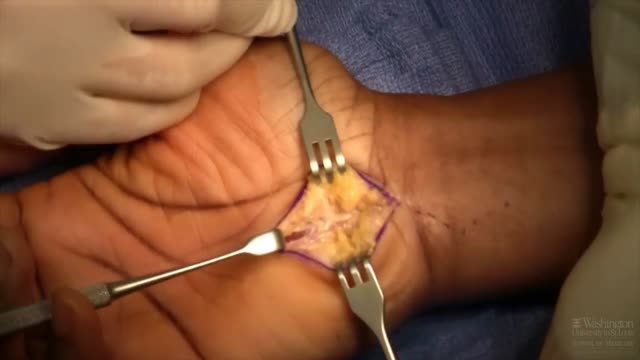
What it is
Carpal tunnel release is a short operation that divides the tight ligament forming the roof of the carpal tunnel in the wrist, giving the compressed median nerve more room.
Why it is done
It is offered for carpal tunnel syndrome — tingling, numbness and pain in the hand, often worse at night — when splints and injections have not controlled symptoms, or when there is nerve weakness or wasting.
How to prepare
It is usually day surgery under local anaesthetic, so fasting is often unnecessary — the unit will confirm. Tell the team about blood thinners and allergies. Nerve conduction tests are sometimes done first to confirm the diagnosis.
What happens during the procedure
After numbing the palm, the surgeon makes a small cut in the palm crease and divides the ligament under direct vision (open technique) or with a camera (endoscopic technique). It takes about 10 to 20 minutes. You can move your fingers straight away.
Afterwards — recovery & results
The hand is bandaged for a couple of days; keep it elevated and moving. Stitches are removed or dissolve at about two weeks. Grip strength and scar tenderness take weeks to months to settle fully. Most people return to light duties within days and heavier work in a few weeks.
Risks & considerations
Risks include infection, bleeding, scar tenderness, temporary stiffness, injury to small nerve branches, and incomplete relief if the nerve was severely compressed for a long time. Serious complications are uncommon.
Watch: Carpal tunnel release videos
Real procedure videos from the MedicalVideos.com library. Some clinical footage is graphic — that is the nature of a medical video library.
Frequently asked questions
How soon will the night tingling stop?
For many people, night symptoms improve within days. Numbness from long-standing compression recovers slowly over months and occasionally not completely.
Will I need physiotherapy?
Usually just hand exercises you do yourself. Formal therapy is arranged if stiffness or weakness persists.
Related procedures — General & Abdominal Surgery
Browse the C section of the A–Z list or return to the Procedures & Tests hub.