
- Physical Examination
- Surgical Examination
- Ophthalmology
- Clinical Skills
- Orthopedics
- Surgery Videos
- Laparoscopy
- Pediatrics
- Funny Videos
- Cardiothoracic Surgery
- Nursing Videos
- Plastic Surgery
- Otorhinolaryngology
- Histology and Histopathology
- Neurosurgery
- Dermatology
- Pediatric Surgery
- Urology
- Dentistry
- Oncology and Cancers
- Anatomy Videos
- Health and Fitness
- Radiology
- Anaesthesia
- Physical Therapy
- Pharmacology
- Interventional Radiology
- Cardiology
- Endocrinology
- Gynecology
- Emergency Medicine
- Psychiatry and Psychology
- Childbirth Videos
- General Medical Videos
- Nephrology
- Physiology
- Diet and Food Health
- Diabetes Mellitus
- Neurology
- Women Health
- Osteoporosis
- Gastroenterology
- Pulmonology
- Hematology
- Rheumatology
- Toxicology
- Nuclear Medicine
- Infectious Diseases
- Vascular Disease
- Reproductive Health
- Burns and Wound Healing
- Kidney Zone Podcast
- Other
Peripheral angiography and angioplasty (leg arteries): What to Expect & Recovery
Leg artery angioplasty stretches open narrowed arteries in the leg through a needle puncture in the groin, sometimes leaving a stent. There is no wound to heal — recovery is about the puncture site sealing, then the real long-term work: walking, medicines and not smoking.
Before surgery: how to prepare
- Tell the team about kidney problems and diabetes — the dye used can affect kidneys, and metformin sometimes needs a plan.
- Bring your medicine list; antiplatelet medicines are usually continued and sometimes added to afterwards.
- You will fast for a few hours beforehand and need a lift home; driving waits until the groin is comfortable.
- Ask about the walking programme afterwards — structured exercise is a treatment for leg artery disease in its own right.
The day of surgery
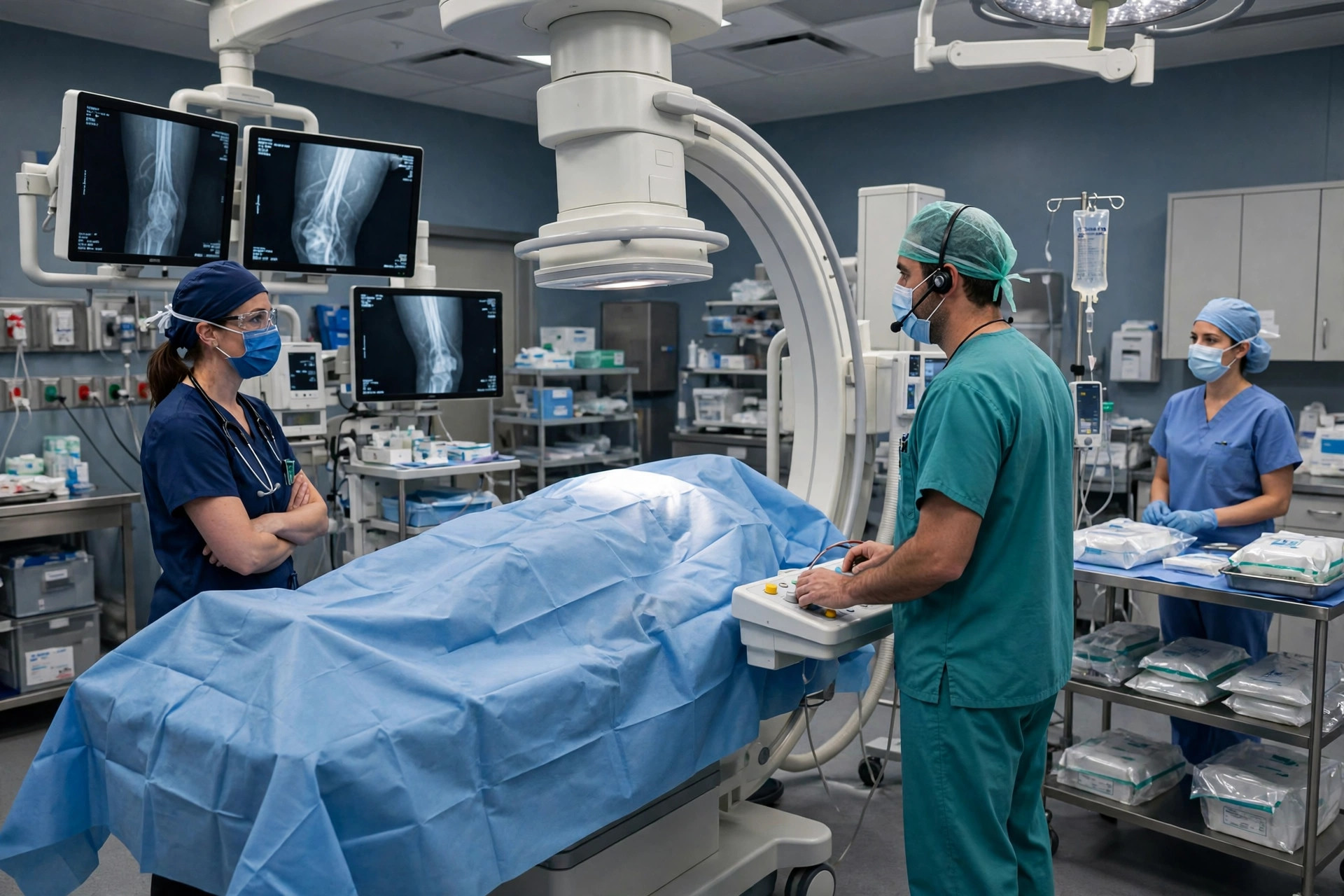
Under local anaesthetic, a needle enters the artery at the groin (occasionally the arm or leg), and dye pictures map the narrowings. A balloon stretches the narrowed segment and a stent may be left to hold it open. Afterwards you lie flat with pressure or a closure device on the puncture while nurses check the groin and the pulses in your foot.
In hospital
Recovery timeline
Every recovery is individual, but most follow this general arc:
Warning signs: when to get help
- A painful, pale, cold or numb foot or leg — seek urgent help
- Bleeding from the groin, or a rapidly enlarging or pulsating lump
- Severe pain in the leg or foot
- Fever, or the puncture becoming red and hot
- Chest pain or breathlessness
Related topics
Frequently asked questions
Why does walking matter so much after this procedure?
Walking trains the leg muscles to work more efficiently and encourages smaller bypass vessels to develop — supervised exercise programmes rival the procedure itself for improving walking distance in leg artery disease. Short, regular walks built up gradually are the prescription.
Can the artery narrow again?
Yes — re-narrowing over months to years is the commonest late problem, and sometimes a further procedure is needed. Medicines, exercise and not smoking all lower the risk, and follow-up scans in some services detect it early.
Medically reviewed by Dr. Mohamed Ibrahim, Assistant Professor of Medicine, Transplant Nephrology, University of Maryland School of Medicine. Last reviewed: 12 November 2026.
← More Heart & Vascular Surgery · All surgery recovery guides