
- Physical Examination
- Surgical Examination
- Ophthalmology
- Clinical Skills
- Orthopedics
- Surgery Videos
- Laparoscopy
- Pediatrics
- Funny Videos
- Cardiothoracic Surgery
- Nursing Videos
- Plastic Surgery
- Otorhinolaryngology
- Histology and Histopathology
- Neurosurgery
- Dermatology
- Pediatric Surgery
- Urology
- Dentistry
- Oncology and Cancers
- Anatomy Videos
- Health and Fitness
- Radiology
- Anaesthesia
- Physical Therapy
- Pharmacology
- Interventional Radiology
- Cardiology
- Endocrinology
- Gynecology
- Emergency Medicine
- Psychiatry and Psychology
- Childbirth Videos
- General Medical Videos
- Nephrology
- Physiology
- Diet and Food Health
- Diabetes Mellitus
- Neurology
- Women Health
- Osteoporosis
- Gastroenterology
- Pulmonology
- Hematology
- Rheumatology
- Toxicology
- Nuclear Medicine
- Infectious Diseases
- Vascular Disease
- Reproductive Health
- Burns and Wound Healing
- Kidney Zone Podcast
- Other
Total hip replacement: What to Expect & Recovery
A total hip replacement swaps the worn ball-and-socket for an artificial joint. Modern enhanced recovery gets you walking the same or next day and home in 1 to 3 days — and most people are off crutches by about 6 weeks, improving for months afterwards.
Before surgery: how to prepare
- Prepare your home: raised chair and toilet seat if advised, frequently used items at waist height, trip hazards removed, and help arranged for the first couple of weeks.
- Practise the exercises beforehand if your unit offers pre-habilitation — stronger muscles recover faster.
- Review medicines — blood thinners, diabetes medicines and others need a perioperative plan — and follow fasting instructions.
- Your surgeon may give specific movement precautions depending on the surgical approach; learn them before surgery so they are habits from day one.
The day of surgery
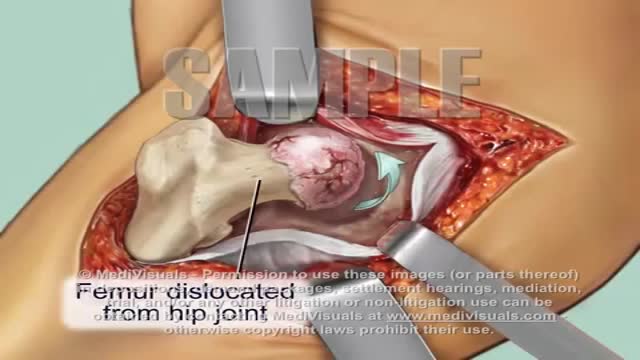
Under a spinal or general anaesthetic, the surgeon removes the worn ball and socket lining and fits the new components — a stem in the thigh bone, a cup in the pelvis, and a new ball. You wake in recovery and, once the anaesthetic allows, stand and take first steps with a frame or crutches, often the same day.
In hospital
Recovery timeline
Every recovery is individual, but most follow this general arc:
Warning signs: when to get help
- A sudden 'clunk' with pain, the leg looking shorter or turned out, or being unable to bear weight (dislocation — urgent help)
- Fever, wound redness, increasing pain or leaking (infection in a replacement joint is serious)
- Calf pain or swelling, chest pain or breathlessness
- New numbness or foot weakness on the operated side
- Pain that worsens after it had been improving
Related topics
Watch: real operation videos
From the MedicalVideos library. Some surgical videos are graphic and intended for education.
Frequently asked questions
How long will my new hip last?
Modern hip replacements commonly last 15 to 20 years or more, and many last longer. Longevity depends on activity level, weight, implant and surgical factors. Regular follow-up and prompt review of new symptoms protect the joint — revision surgery exists if wear or loosening eventually occurs.
What movements must I avoid?
It depends on the surgical approach your surgeon used — some give precautions about bending, crossing legs and twisting for the first weeks, others give few restrictions. Your discharge instructions are specific to your operation: follow those, not generic lists.
Medically reviewed by Dr. Mohamed Ibrahim, Assistant Professor of Medicine, Transplant Nephrology, University of Maryland School of Medicine. Last reviewed: 12 November 2026.