
- Physical Examination
- Surgical Examination
- Ophthalmology
- Clinical Skills
- Orthopedics
- Surgery Videos
- Laparoscopy
- Pediatrics
- Funny Videos
- Cardiothoracic Surgery
- Nursing Videos
- Plastic Surgery
- Otorhinolaryngology
- Histology and Histopathology
- Neurosurgery
- Dermatology
- Pediatric Surgery
- Urology
- Dentistry
- Oncology and Cancers
- Anatomy Videos
- Health and Fitness
- Radiology
- Anaesthesia
- Physical Therapy
- Pharmacology
- Interventional Radiology
- Cardiology
- Endocrinology
- Gynecology
- Emergency Medicine
- Psychiatry and Psychology
- Childbirth Videos
- General Medical Videos
- Nephrology
- Physiology
- Diet and Food Health
- Diabetes Mellitus
- Neurology
- Women Health
- Osteoporosis
- Gastroenterology
- Pulmonology
- Hematology
- Rheumatology
- Toxicology
- Nuclear Medicine
- Infectious Diseases
- Vascular Disease
- Reproductive Health
- Burns and Wound Healing
- Kidney Zone Podcast
- Other
Total hip replacement
Category: Bone, Joint & Spine Procedures · All bone, joint & spine procedures
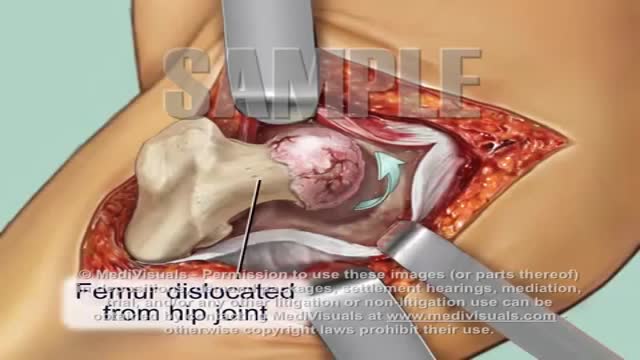
What it is
A total hip replacement replaces the worn ball-and-socket hip joint with a prosthetic ball on a stem in the thigh bone and a cup in the pelvis, with a smooth bearing surface between them.
Why it is done
It is offered for advanced hip arthritis and some other conditions causing persistent groin or buttock pain, stiffness and loss of mobility that no longer respond to simpler measures. It is also used for some hip fractures.
How to prepare
You will have X-rays, blood tests and anaesthetic review, plan your home setup (raised chair and toilet seat may help), and fast before surgery. Dental and skin problems are treated first where possible, because infection control matters greatly for implants.
What happens during the procedure
Under spinal or general anaesthetic, the surgeon removes the worn ball, shapes the socket, and fixes the stem and cup; the bearing is assembled and the joint tested for stability. Surgery usually takes one to one and a half hours.
Afterwards — recovery & results
You will usually walk with aids the same or next day, and most people go home in one to three days. Physiotherapy exercises and walking build strength and movement. Many people are off crutches by about six weeks and continue to improve over several months. Your surgeon may give specific movement precautions depending on the surgical approach.
Risks & considerations
Risks include dislocation (especially early), infection, blood clots, leg-length difference, nerve injury causing foot weakness, fracture, and wear or loosening over time requiring revision. Your team will discuss your individual risk and implant choice.
Watch: Total hip replacement videos
Real procedure videos from the MedicalVideos.com library. Some clinical footage is graphic — that is the nature of a medical video library.
Related guides on MedicalVideos.com
Frequently asked questions
How long does a hip replacement last?
Most hip replacements function well for 15 to 20 years or more. Registry data helps surgeons choose implants with proven track records.
When can I drive?
Commonly around four to six weeks, once you can walk comfortably, bend sufficiently and perform an emergency stop. Follow your surgeon's and insurer's guidance.
Related procedures — Bone, Joint & Spine Procedures
Browse the T section of the A–Z list or return to the Procedures & Tests hub.