
- Physical Examination
- Surgical Examination
- Ophthalmology
- Clinical Skills
- Orthopedics
- Surgery Videos
- Laparoscopy
- Pediatrics
- Funny Videos
- Cardiothoracic Surgery
- Nursing Videos
- Plastic Surgery
- Otorhinolaryngology
- Histology and Histopathology
- Neurosurgery
- Dermatology
- Pediatric Surgery
- Urology
- Dentistry
- Oncology and Cancers
- Anatomy Videos
- Health and Fitness
- Radiology
- Anaesthesia
- Physical Therapy
- Pharmacology
- Interventional Radiology
- Cardiology
- Endocrinology
- Gynecology
- Emergency Medicine
- Psychiatry and Psychology
- Childbirth Videos
- General Medical Videos
- Nephrology
- Physiology
- Diet and Food Health
- Diabetes Mellitus
- Neurology
- Women Health
- Osteoporosis
- Gastroenterology
- Pulmonology
- Hematology
- Rheumatology
- Toxicology
- Nuclear Medicine
- Infectious Diseases
- Vascular Disease
- Reproductive Health
- Burns and Wound Healing
- Kidney Zone Podcast
- Other
Easy bruising
Category: Skin, Hair & Nails · All skin symptoms
What it can feel like
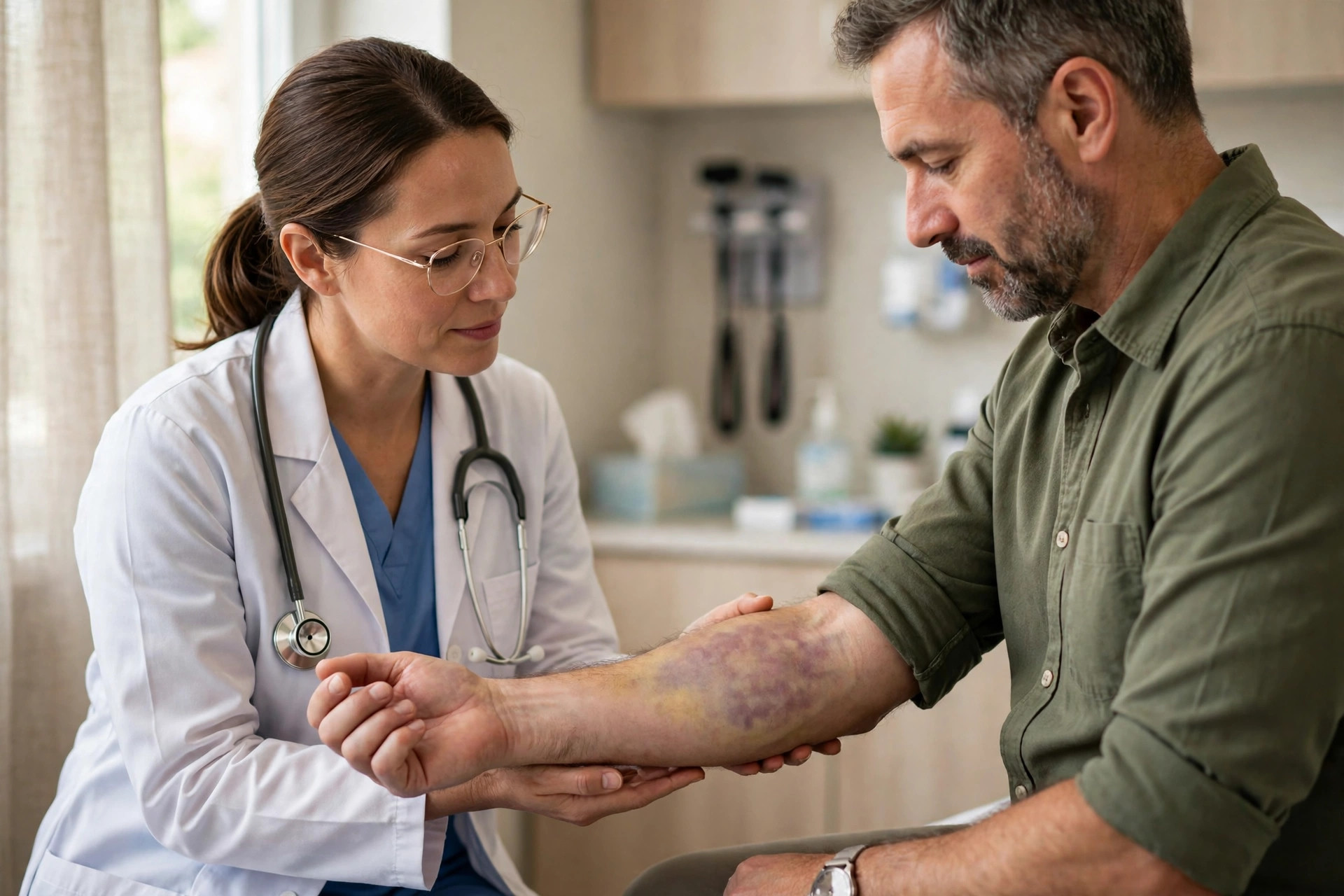
Easy bruising means bruises appear after minor knocks you barely remember, are unusually large, or appear in unusual places such as the back, face or trunk. Bruising reflects blood leaking from small vessels; its ease depends on vessel fragility, platelets, clotting factors and medicines.
Possible causes
A symptom can have many causes, and most are not serious. The lists below group conditions this symptom can be associated with — common causes first. They are possibilities to discuss with a clinician, not a diagnosis.
Common causes
Easy bruising can be associated with ageing and sun-damaged skin (thin, fragile vessel support), bumps and unnoticed minor trauma, alcohol, and medicines — aspirin, blood thinners, steroids and some antidepressants all increase bruising.
Other possible causes
Easy bruising can also be associated with low platelets or platelet problems, liver disease reducing clotting factor production, vitamin deficiencies, and occasionally bone-marrow or blood conditions — particularly when bleeding joins in elsewhere.
Red flags — when to seek help promptly
- Bruising with bleeding gums, nosebleeds, blood in urine or stool, or heavy periods
- Pinpoint red or purple spots (petechiae) that do not fade under pressure, especially with fever
- Very large or painful bruises without injury, or bruising in a young child who is not yet mobile
- Bruising with unexplained weight loss, night sweats or feeling generally unwell
What a clinician may do
A clinician will map the bruising pattern, review medicines and alcohol, and examine for other bleeding signs. Blood tests include a blood count, clotting screen and liver function; results direct whether haematology assessment is needed.
Related guides on MedicalVideos.com
Frequently asked questions
Why do older people bruise so easily?
Ageing skin loses the collagen cushion around its small vessels, and sun exposure accelerates it — so minor shears tear vessels that once were protected. These flat, dark purple patches on the forearms and hands (senile purpura) are a skin-fragility problem, not usually a blood problem.
When is bruising a blood problem?
When the pattern breaks the rules: bruises without trauma in protected places, very large bruises, or bleeding in several systems at once (gums, nose, urine, periods). That combination points at platelets or clotting and earns blood tests promptly.
Related symptoms — Skin, Hair & Nails
Browse the E section of the A–Z list or return to the Symptoms A–Z hub.