
- Physical Examination
- Surgical Examination
- Ophthalmology
- Clinical Skills
- Orthopedics
- Surgery Videos
- Laparoscopy
- Pediatrics
- Funny Videos
- Cardiothoracic Surgery
- Nursing Videos
- Plastic Surgery
- Otorhinolaryngology
- Histology and Histopathology
- Neurosurgery
- Dermatology
- Pediatric Surgery
- Urology
- Dentistry
- Oncology and Cancers
- Anatomy Videos
- Health and Fitness
- Radiology
- Anaesthesia
- Physical Therapy
- Pharmacology
- Interventional Radiology
- Cardiology
- Endocrinology
- Gynecology
- Emergency Medicine
- Psychiatry and Psychology
- Childbirth Videos
- General Medical Videos
- Nephrology
- Physiology
- Diet and Food Health
- Diabetes Mellitus
- Neurology
- Women Health
- Osteoporosis
- Gastroenterology
- Pulmonology
- Hematology
- Rheumatology
- Toxicology
- Nuclear Medicine
- Infectious Diseases
- Vascular Disease
- Reproductive Health
- Burns and Wound Healing
- Kidney Zone Podcast
- Other
A mole that has changed
Category: Skin, Hair & Nails · All skin symptoms
What it can feel like
A mole that has changed — in size, shape, colour, surface, or sensation — is a symptom that should always be examined. Most moles are harmless and change slowly with age, but melanoma, the most serious skin cancer, frequently announces itself exactly this way, and it is curable when caught early.
Possible causes
A symptom can have many causes, and most are not serious. The lists below group conditions this symptom can be associated with — common causes first. They are possibilities to discuss with a clinician, not a diagnosis.
Common causes
Moles can change with normal growth in younger adults, hormonal changes in pregnancy, friction, and inflammation or bleeding after a knock. Sun exposure drives the development of new moles and atypical (unusual-looking) ones.
Other possible causes
A changing mole can be a melanoma — the warning pattern is asymmetry, an irregular or blurred border, varied colours, growth beyond about 6mm, and evolution: any change over weeks to months. A new, growing, dome-shaped lump that bleeds can be a faster-growing nodular melanoma.
Red flags — when to seek help promptly
- A mole that is new, growing, changing colour or shape, or looks different from all your others ('ugly duckling')
- A mole that itches, crusts, oozes or bleeds without injury
- A dark streak appearing in or under a nail
- Any mole change in someone with many moles, fair skin, heavy sun exposure or a family history of melanoma
What a clinician may do
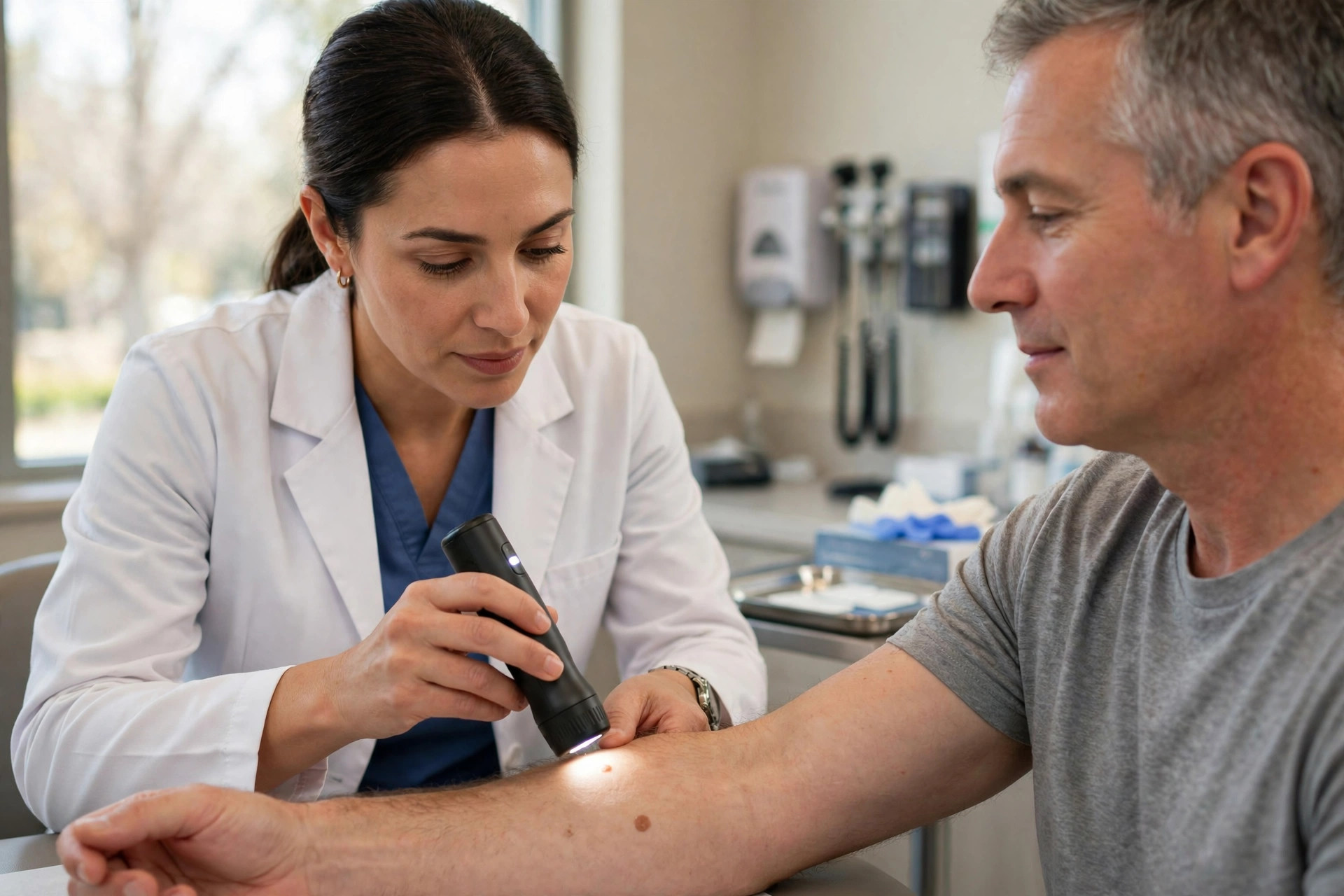
A clinician will examine the mole, usually with a dermatoscope (a magnifier with light that reveals pigment patterns invisible to the naked eye), and compare it with your other moles. Suspicious moles are referred urgently and removed whole for laboratory examination — the biopsy is the diagnosis.
Related guides on MedicalVideos.com
Frequently asked questions
What is the 'ugly duckling' sign?
Most people's moles resemble each other — a personal signature pattern. The mole that looks different from all the others, even if it breaks no formal rule, is the one dermatologists check first, because melanoma often betrays itself simply by not matching.
Should I just photograph and watch it?
A dated photograph beside a ruler is genuinely useful for detecting change, and clinicians use it. But watching applies to moles already assessed as benign — a mole that is actively changing now, or is new and growing, deserves examination now, not a longer watch.
Related symptoms — Skin, Hair & Nails
Browse the A section of the A–Z list or return to the Symptoms A–Z hub.