
- Physical Examination
- Surgical Examination
- Ophthalmology
- Clinical Skills
- Orthopedics
- Surgery Videos
- Laparoscopy
- Pediatrics
- Funny Videos
- Cardiothoracic Surgery
- Nursing Videos
- Plastic Surgery
- Otorhinolaryngology
- Histology and Histopathology
- Neurosurgery
- Dermatology
- Pediatric Surgery
- Urology
- Dentistry
- Oncology and Cancers
- Anatomy Videos
- Health and Fitness
- Radiology
- Anaesthesia
- Physical Therapy
- Pharmacology
- Interventional Radiology
- Cardiology
- Endocrinology
- Gynecology
- Emergency Medicine
- Psychiatry and Psychology
- Childbirth Videos
- General Medical Videos
- Nephrology
- Physiology
- Diet and Food Health
- Diabetes Mellitus
- Neurology
- Women Health
- Osteoporosis
- Gastroenterology
- Pulmonology
- Hematology
- Rheumatology
- Toxicology
- Nuclear Medicine
- Infectious Diseases
- Vascular Disease
- Reproductive Health
- Burns and Wound Healing
- Kidney Zone Podcast
- Other
Fever in children
Category: Babies & Children · All children symptoms
What it can feel like
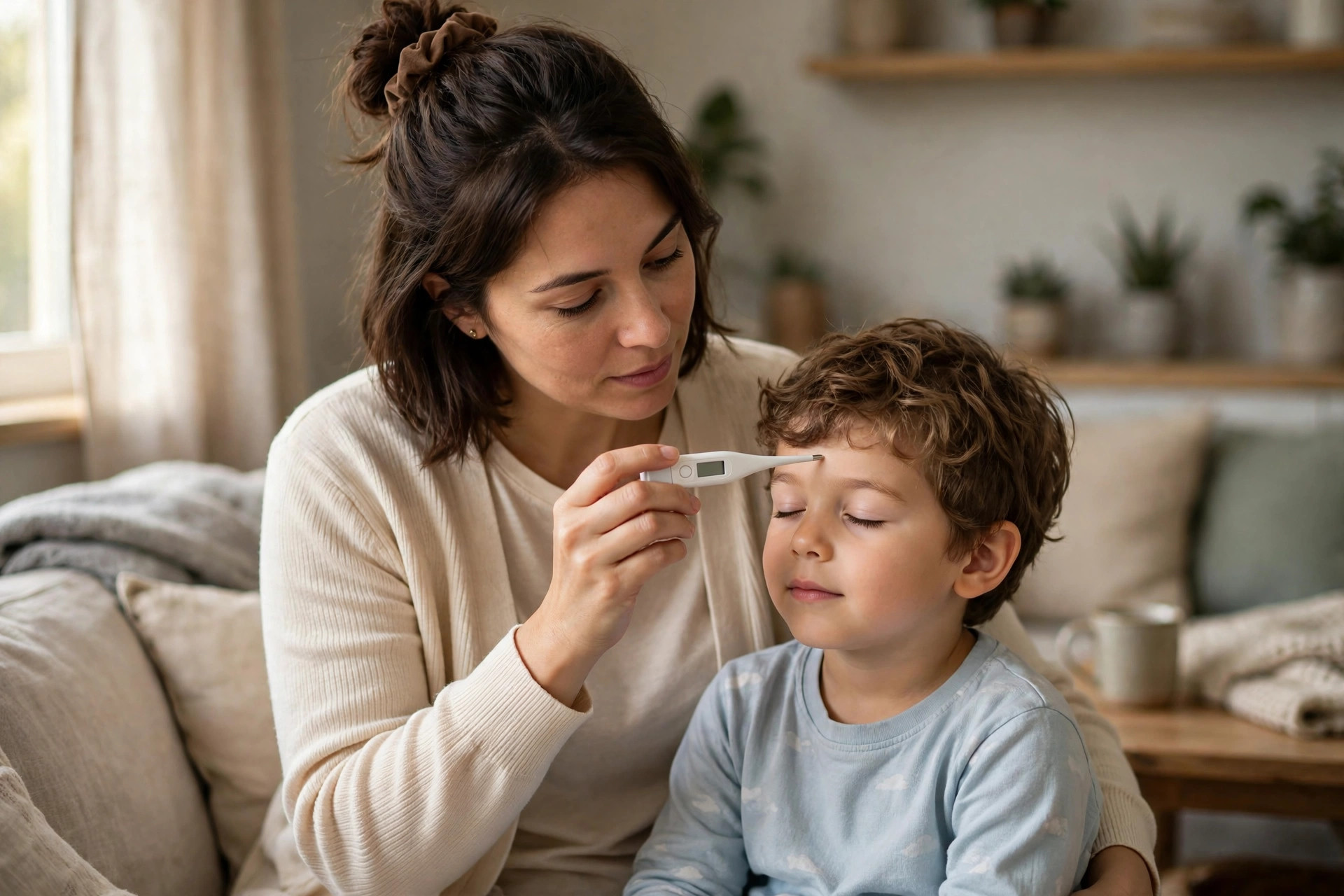
Fever in children means a temperature of 38°C (100.4°F) or above. Fever itself is the immune system working, not a disease — what matters is the child's age, how they look and behave, and what accompanies the fever. Young babies run by stricter rules because serious infection hides more easily in them.
Possible causes
A symptom can have many causes, and most are not serious. The lists below group conditions this symptom can be associated with — common causes first. They are possibilities to discuss with a clinician, not a diagnosis.
Common causes
Fever in children can be associated with viral infections (the overwhelming majority — colds, flu, roseola, hand-foot-and-mouth), ear infections, throat infections including tonsillitis, and urine infections (a classic hidden cause, especially in girls and babies).
Other possible causes
Fever in children can also be associated with bacterial infections needing urgent treatment — pneumonia, meningitis, sepsis, kidney infection, infected joints or bones — and with non-infective causes such as Kawasaki disease (prolonged fever with red eyes, lips and rash).
Red flags — when to seek help promptly
- Any fever in a baby under 3 months old — urgent assessment
- A child who is hard to wake, floppy, unresponsive, or has a weak high-pitched cry
- A non-blanching rash (spots that do not fade under a pressed glass), neck stiffness, or a bulging soft spot
- Breathing difficulty, blue lips, or severe dehydration (no wet nappies, sunken eyes, no tears)
- Fever lasting more than 5 days, or a seizure with the fever
- A child who is pale, mottled, ashen or unusually drowsy between fever peaks
What a clinician may do
A clinician will assess the child as a whole — responsiveness, breathing, circulation, hydration — measure temperature and oxygen, and test urine (the commonest hidden bacterial source). Babies under 3 months and children with red-flag features are referred to hospital for blood tests and close observation.
Related guides on MedicalVideos.com
Frequently asked questions
Should I bring the fever down?
Treat the child, not the number: antipyretics (paracetamol or ibuprofen at the correct dose for weight) are for comfort — a child who perks up, drinks and plays as the fever dips is reassuring whatever the thermometer says. Fever reduction does not prevent seizures and is not obligatory in a comfortable child.
What is the glass test?
Pressing a clear glass firmly against a rash: ordinary viral rashes blanch (fade) under pressure; the meningococcal rash of meningitis and sepsis does not, because it is bleeding into the skin. A non-blanching rash in an unwell febrile child is an emergency — do not wait for more spots to appear.
Related symptoms — Babies & Children
Browse the F section of the A–Z list or return to the Symptoms A–Z hub.