
- Physical Examination
- Surgical Examination
- Ophthalmology
- Clinical Skills
- Orthopedics
- Surgery Videos
- Laparoscopy
- Pediatrics
- Funny Videos
- Cardiothoracic Surgery
- Nursing Videos
- Plastic Surgery
- Otorhinolaryngology
- Histology and Histopathology
- Neurosurgery
- Dermatology
- Pediatric Surgery
- Urology
- Dentistry
- Oncology and Cancers
- Anatomy Videos
- Health and Fitness
- Radiology
- Anaesthesia
- Physical Therapy
- Pharmacology
- Interventional Radiology
- Cardiology
- Endocrinology
- Gynecology
- Emergency Medicine
- Psychiatry and Psychology
- Childbirth Videos
- General Medical Videos
- Nephrology
- Physiology
- Diet and Food Health
- Diabetes Mellitus
- Neurology
- Women Health
- Osteoporosis
- Gastroenterology
- Pulmonology
- Hematology
- Rheumatology
- Toxicology
- Nuclear Medicine
- Infectious Diseases
- Vascular Disease
- Reproductive Health
- Burns and Wound Healing
- Kidney Zone Podcast
- Other
Chest X-ray
Category: Imaging & Scans · All imaging & scans
What it is
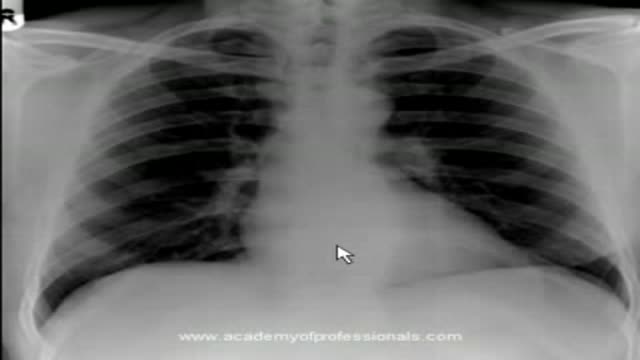
A chest X-ray is a quick picture of the chest made with a small amount of radiation. It shows the lungs, the heart outline, the ribs and the upper spine on one or two images.
Why it is done
It is usually one of the first tests for cough, breathlessness, chest pain or a chest injury, and it can show signs associated with chest infection, fluid around the lungs, an enlarged heart or a broken rib.
How to prepare
There is usually nothing special to prepare. You will be asked to remove metal objects, jewellery and sometimes clothing above the waist, and to wear a gown.
What happens during the procedure
You stand or sit against a flat panel and the radiographer positions you, then asks you to take a deep breath and hold it for a few seconds while each picture is taken. The test is painless and usually takes about 10 to 15 minutes in the room.
Afterwards — recovery & results
You can usually go straight back to your normal activities. A specialist doctor (radiologist) studies the images and sends a report to your own doctor, usually within a few days.
Risks & considerations
A chest X-ray uses a low dose of radiation, comparable to a small fraction of the natural background radiation we all receive. Tell the team if you might be pregnant, so they can decide with you whether the test is appropriate or should be adapted.
Watch: Chest X-ray videos
Real procedure videos from the MedicalVideos.com library. Some clinical footage is graphic — that is the nature of a medical video library.
Related guides on MedicalVideos.com
Frequently asked questions
Does a chest X-ray hurt?
No — the test is completely painless. The only brief discomfort can be standing still or holding a deep breath for a few seconds.
When will I get the results?
A radiologist reports the images and sends the result to the doctor who requested the test, commonly within a few days. Urgent inpatient X-rays are usually reported the same day.
Related procedures — Imaging & Scans
Browse the C section of the A–Z list or return to the Procedures & Tests hub.