
- Physical Examination
- Surgical Examination
- Ophthalmology
- Clinical Skills
- Orthopedics
- Surgery Videos
- Laparoscopy
- Pediatrics
- Funny Videos
- Cardiothoracic Surgery
- Nursing Videos
- Plastic Surgery
- Otorhinolaryngology
- Histology and Histopathology
- Neurosurgery
- Dermatology
- Pediatric Surgery
- Urology
- Dentistry
- Oncology and Cancers
- Anatomy Videos
- Health and Fitness
- Radiology
- Anaesthesia
- Physical Therapy
- Pharmacology
- Interventional Radiology
- Cardiology
- Endocrinology
- Gynecology
- Emergency Medicine
- Psychiatry and Psychology
- Childbirth Videos
- General Medical Videos
- Nephrology
- Physiology
- Diet and Food Health
- Diabetes Mellitus
- Neurology
- Women Health
- Osteoporosis
- Gastroenterology
- Pulmonology
- Hematology
- Rheumatology
- Toxicology
- Nuclear Medicine
- Infectious Diseases
- Vascular Disease
- Reproductive Health
- Burns and Wound Healing
- Kidney Zone Podcast
- Other
Hot flushes
Category: Women's Health · All women's health symptoms
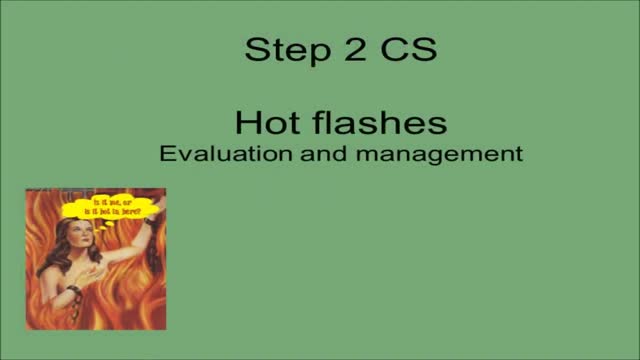
What it can feel like
Hot flushes are sudden waves of heat rising through the chest, neck and face, with flushing, sweating and sometimes palpitations, lasting seconds to a few minutes, often followed by a chill. At night they appear as night sweats. They are the hallmark symptom of the menopause, driven by the brain's thermostat becoming more sensitive as oestrogen falls.
Possible causes
A symptom can have many causes, and most are not serious. The lists below group conditions this symptom can be associated with — common causes first. They are possibilities to discuss with a clinician, not a diagnosis.
Common causes
Hot flushes can be associated with the perimenopause and menopause, with surgical or medically induced menopause (often more abrupt and severe), and are worsened by heat, spicy food, alcohol, caffeine and stress.
Other possible causes
Flushing can also be associated with an overactive thyroid, some medicines, panic attacks, and rare hormone-secreting tumours (carcinoid) — worth considering when flushes arrive without a menopause context, or with diarrhoea and wheezing.
Red flags — when to seek help promptly
- Flushes in a woman well before the usual menopause age, or after periods have long settled without flushes
- Flushes with palpitations, weight loss and tremor (possible thyroid)
- Flushes with severe headaches or visual changes
- Night sweats with unexplained weight loss or fever
- Flushes accompanied by diarrhoea, wheezing and facial flushing attacks
What a clinician may do
A clinician will place flushes in the menopause timeline (age, last period, other symptoms) — blood tests are not usually needed over 45 with a classic story, but thyroid tests follow atypical features. Management spans lifestyle measures, HRT discussion based on personal risk, and non-hormonal options for those who cannot or prefer not to use HRT.
Watch: related videos
Examination and clinical videos from the MedicalVideos.com library relevant to this symptom. Some clinical footage is graphic — that is the nature of a medical video library.
Related guides on MedicalVideos.com
Frequently asked questions
How long do hot flushes last?
On average around seven years across the whole menopause transition — typically a few years either side of the final period — though there is wide variation, and a minority continue for a decade or more. Severity usually peaks in the first years after periods stop.
Why do flushes come with palpitations sometimes?
The same thermostat misfiring triggers a surge of adrenaline-like activity — blood vessels dilate, sweating starts and the heart rate rises. Brief palpitations inside a classic flush are common; palpitations at other times, or with chest pain or faintness, take the cardiac pathway instead.
Related symptoms — Women's Health
Browse the H section of the A–Z list or return to the Symptoms A–Z hub.