
- Physical Examination
- Surgical Examination
- Ophthalmology
- Clinical Skills
- Orthopedics
- Surgery Videos
- Laparoscopy
- Pediatrics
- Funny Videos
- Cardiothoracic Surgery
- Nursing Videos
- Plastic Surgery
- Otorhinolaryngology
- Histology and Histopathology
- Neurosurgery
- Dermatology
- Pediatric Surgery
- Urology
- Dentistry
- Oncology and Cancers
- Anatomy Videos
- Health and Fitness
- Radiology
- Anaesthesia
- Physical Therapy
- Pharmacology
- Interventional Radiology
- Cardiology
- Endocrinology
- Gynecology
- Emergency Medicine
- Psychiatry and Psychology
- Childbirth Videos
- General Medical Videos
- Nephrology
- Physiology
- Diet and Food Health
- Diabetes Mellitus
- Neurology
- Women Health
- Osteoporosis
- Gastroenterology
- Pulmonology
- Hematology
- Rheumatology
- Toxicology
- Nuclear Medicine
- Infectious Diseases
- Vascular Disease
- Reproductive Health
- Burns and Wound Healing
- Kidney Zone Podcast
- Other
Bleeding after the menopause
Category: Women's Health · All women's health symptoms
What it can feel like
Bleeding after the menopause means any vaginal bleeding occurring a year or more after your last period. It should never be dismissed as 'one last period' — it always needs prompt investigation, because while the commonest causes are benign thinning of the tissues, it is the classic early symptom of womb cancer, which is highly curable at that stage.
Possible causes
A symptom can have many causes, and most are not serious. The lists below group conditions this symptom can be associated with — common causes first. They are possibilities to discuss with a clinician, not a diagnosis.
Common causes
Postmenopausal bleeding can be associated with thinning and fragility of the vaginal and womb lining (atrophy — the commonest cause), polyps of the cervix or womb lining, and hormone replacement therapy effects, particularly when doses change.
Other possible causes
Bleeding after the menopause can also be associated with precancerous thickening of the womb lining and womb (endometrial) cancer, and occasionally with cervical or ovarian pathology.
Red flags — when to seek help promptly
- Any vaginal bleeding more than a year after your last period — arrange prompt assessment
- Bleeding after the menopause that is heavy or comes with pelvic pain
- Bleeding in a woman taking tamoxifen
- Bleeding after the menopause with weight loss or a pelvic mass
What a clinician may do
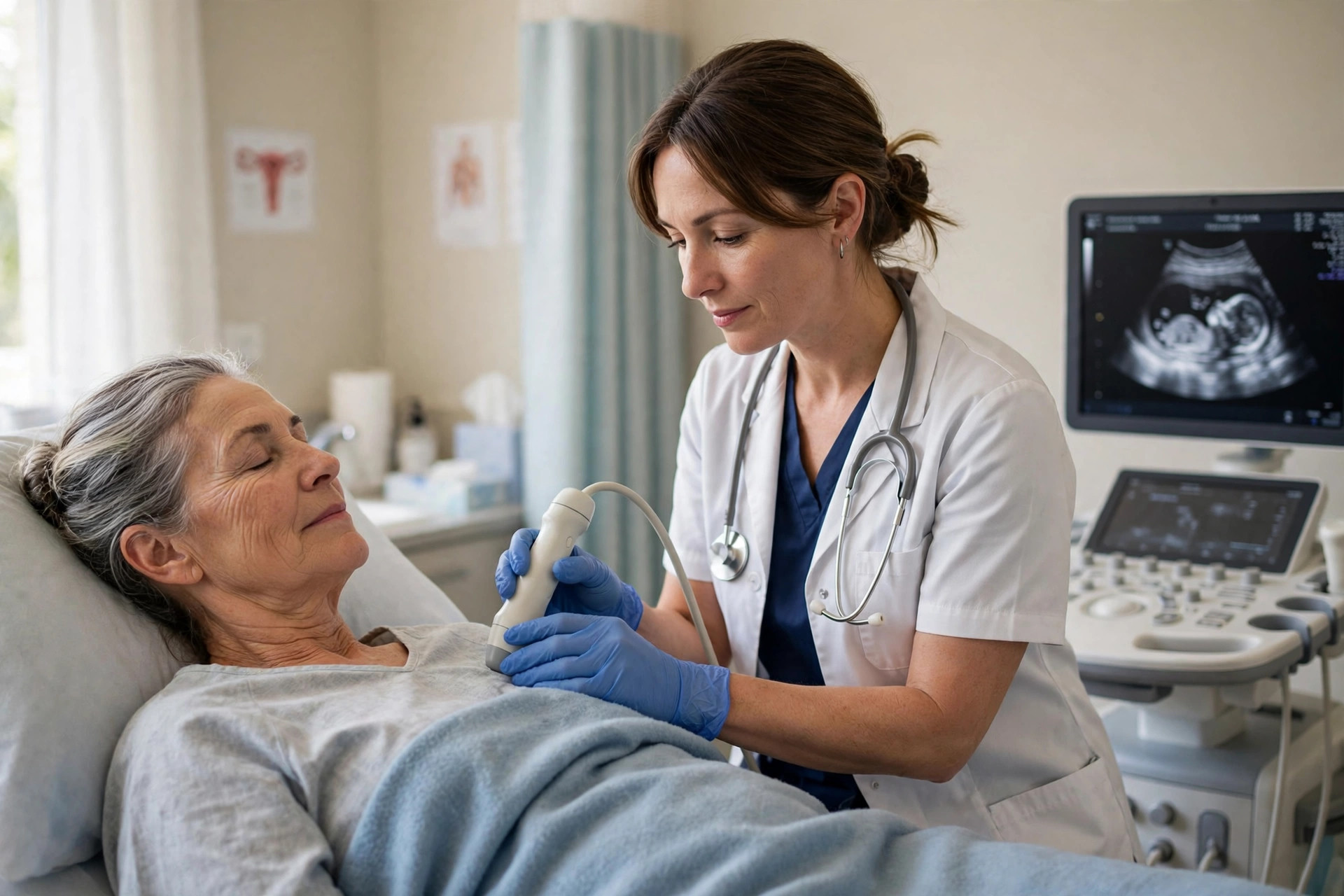
Assessment is usually on an urgent pathway: pelvic examination, a transvaginal ultrasound to measure the womb lining, and where the lining is thickened or bleeding persists, a camera look inside the womb (hysteroscopy) with a lining sample (biopsy). Thin linings with a normal examination are often reassuring but bleeding that recurs is re-investigated.
Related guides on MedicalVideos.com
Frequently asked questions
How soon is 'prompt' for postmenopausal bleeding?
It should be reported as soon as noticed and is typically investigated within two weeks on cancer pathways. Do not wait for a second episode: a single bleed, even spotting, is enough to trigger the pathway.
Why does the ultrasound measure the lining?
After the menopause the womb lining should be thin. A thin lining on scan makes cancer very unlikely and focuses attention on atrophy or polyps; a thickened lining needs a sample. The measurement triages who needs the camera test first.
Related symptoms — Women's Health
Browse the B section of the A–Z list or return to the Symptoms A–Z hub.