
- Physical Examination
- Surgical Examination
- Ophthalmology
- Clinical Skills
- Orthopedics
- Surgery Videos
- Laparoscopy
- Pediatrics
- Funny Videos
- Cardiothoracic Surgery
- Nursing Videos
- Plastic Surgery
- Otorhinolaryngology
- Histology and Histopathology
- Neurosurgery
- Dermatology
- Pediatric Surgery
- Urology
- Dentistry
- Oncology and Cancers
- Anatomy Videos
- Health and Fitness
- Radiology
- Anaesthesia
- Physical Therapy
- Pharmacology
- Interventional Radiology
- Cardiology
- Endocrinology
- Gynecology
- Emergency Medicine
- Psychiatry and Psychology
- Childbirth Videos
- General Medical Videos
- Nephrology
- Physiology
- Diet and Food Health
- Diabetes Mellitus
- Neurology
- Women Health
- Osteoporosis
- Gastroenterology
- Pulmonology
- Hematology
- Rheumatology
- Toxicology
- Nuclear Medicine
- Infectious Diseases
- Vascular Disease
- Reproductive Health
- Burns and Wound Healing
- Kidney Zone Podcast
- Other
Swelling in one leg
Category: Chest, Heart & Circulation · All chest & heart symptoms
What it can feel like
Swelling in one leg only means one calf or leg is visibly bigger than the other, sometimes with aching, tightness, warmth or redness. Because the causes include a deep vein thrombosis (a clot in the deep veins), new one-sided leg swelling should always be assessed the same day.
Possible causes
A symptom can have many causes, and most are not serious. The lists below group conditions this symptom can be associated with — common causes first. They are possibilities to discuss with a clinician, not a diagnosis.
Common causes
One-sided swelling can be associated with a sprain or muscle injury, a burst cyst behind the knee, varicose veins, infection of the skin (cellulitis), or swelling after surgery or injury to that leg.
Other possible causes
The urgent association is a deep vein thrombosis, which is more likely after long journeys, surgery, immobility, pregnancy, hormone treatment or cancer. Part of a clot can travel to the lungs, which is why same-day assessment matters.
Red flags — when to seek help promptly
- One swollen leg with chest pain or breathlessness — emergency
- A swollen leg that is painful, warm and red
- Leg swelling after a long flight, operation or period in bed
- Swelling with fever or a spreading area of redness
What a clinician may do
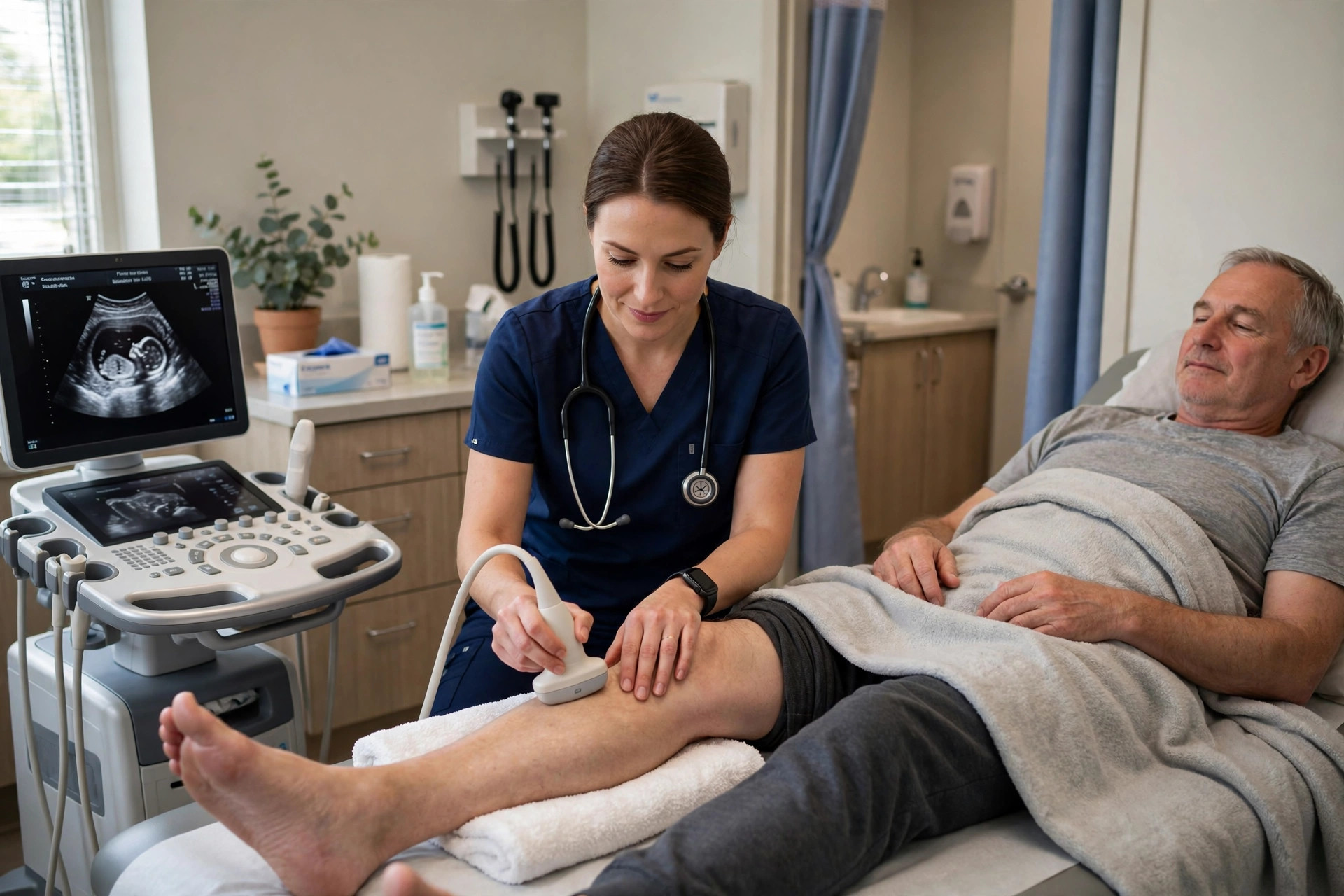
A clinician will measure and examine both legs, assess your risk factors, and usually arrange a blood test (D-dimer) and an ultrasound scan of the leg veins, often the same day. If a clot is likely, blood-thinning treatment may be started while the scan is arranged.
Related guides on MedicalVideos.com
Frequently asked questions
Can I wait and see if it settles?
A new one-sided swelling should not be waited on — the main worry, a deep vein clot, can worsen or travel to the lungs. Same-day assessment with a leg vein scan is the safe route, and most people turn out not to have a clot.
What increases the chance of a leg clot?
Recent surgery or hospital stay, long immobility or long-haul travel, pregnancy, combined hormonal contraception, cancer, previous clots and some inherited clotting tendencies. Tell the clinician about any of these — they change how urgently the scan is done.
Related symptoms — Chest, Heart & Circulation
Browse the S section of the A–Z list or return to the Symptoms A–Z hub.