
- Physical Examination
- Surgical Examination
- Ophthalmology
- Clinical Skills
- Orthopedics
- Surgery Videos
- Laparoscopy
- Pediatrics
- Funny Videos
- Cardiothoracic Surgery
- Nursing Videos
- Plastic Surgery
- Otorhinolaryngology
- Histology and Histopathology
- Neurosurgery
- Dermatology
- Pediatric Surgery
- Urology
- Dentistry
- Oncology and Cancers
- Anatomy Videos
- Health and Fitness
- Radiology
- Anaesthesia
- Physical Therapy
- Pharmacology
- Interventional Radiology
- Cardiology
- Endocrinology
- Gynecology
- Emergency Medicine
- Psychiatry and Psychology
- Childbirth Videos
- General Medical Videos
- Nephrology
- Physiology
- Diet and Food Health
- Diabetes Mellitus
- Neurology
- Women Health
- Osteoporosis
- Gastroenterology
- Pulmonology
- Hematology
- Rheumatology
- Toxicology
- Nuclear Medicine
- Infectious Diseases
- Vascular Disease
- Reproductive Health
- Burns and Wound Healing
- Kidney Zone Podcast
- Other
Calf pain
Category: Chest, Heart & Circulation · All chest & heart symptoms
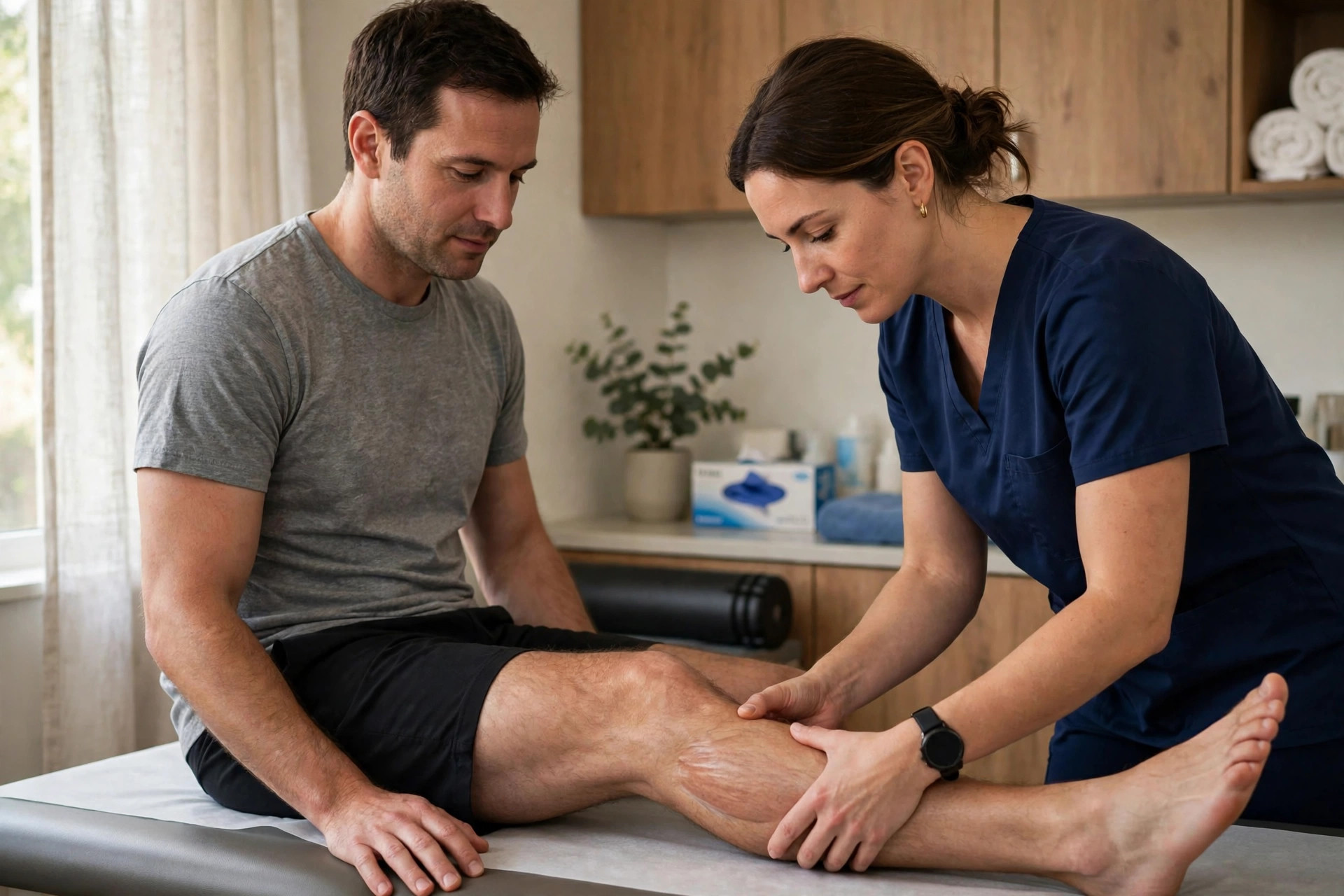
What it can feel like
Calf pain is pain in the bulky muscle at the back of the lower leg. It can arrive suddenly during sport, ache after unaccustomed exercise, or appear with swelling — and that combination changes its urgency, because calf pain is one of the ways a deep vein clot presents.
Possible causes
A symptom can have many causes, and most are not serious. The lists below group conditions this symptom can be associated with — common causes first. They are possibilities to discuss with a clinician, not a diagnosis.
Common causes
Calf pain can be associated with cramp, muscle strain or a torn calf muscle during sport, with a burst cyst behind the knee, and with skin infection of the lower leg.
Other possible causes
Calf pain with swelling can be associated with a deep vein thrombosis. Aching that comes on predictably when walking and eases with rest can be associated with narrowed leg arteries.
Red flags — when to seek help promptly
- Calf pain with swelling of that leg
- Calf pain with chest pain, breathlessness or coughing blood — emergency
- Calf pain after surgery, a long journey or immobility
- A calf that is hot, red and increasingly painful with fever
What a clinician may do
A clinician will ask how it started and examine the calf and leg, comparing both sides. If a clot is possible they will arrange a D-dimer blood test and a leg vein ultrasound; muscle injuries may need physiotherapy advice rather than tests.
Related guides on MedicalVideos.com
Frequently asked questions
How do I tell a strain from a clot?
A strain usually follows a clear event — a sudden push-off or stretch during sport — and hurts when the muscle is used or pressed in a specific spot. Clot pain is often a constant ache with swelling and no clear injury. The overlap is real, though: with swelling, get it checked the same day.
Why does calf pain when walking matter?
Pain that arrives at a predictable walking distance and eases within minutes of rest suggests the leg arteries are narrowed, so the muscle is short of blood during effort. That pattern deserves assessment of your circulation and risk factors.
Related symptoms — Chest, Heart & Circulation
Browse the C section of the A–Z list or return to the Symptoms A–Z hub.