
- Physical Examination
- Surgical Examination
- Ophthalmology
- Clinical Skills
- Orthopedics
- Surgery Videos
- Laparoscopy
- Pediatrics
- Funny Videos
- Cardiothoracic Surgery
- Nursing Videos
- Plastic Surgery
- Otorhinolaryngology
- Histology and Histopathology
- Neurosurgery
- Dermatology
- Pediatric Surgery
- Urology
- Dentistry
- Oncology and Cancers
- Anatomy Videos
- Health and Fitness
- Radiology
- Anaesthesia
- Physical Therapy
- Pharmacology
- Interventional Radiology
- Cardiology
- Endocrinology
- Gynecology
- Emergency Medicine
- Psychiatry and Psychology
- Childbirth Videos
- General Medical Videos
- Nephrology
- Physiology
- Diet and Food Health
- Diabetes Mellitus
- Neurology
- Women Health
- Osteoporosis
- Gastroenterology
- Pulmonology
- Hematology
- Rheumatology
- Toxicology
- Nuclear Medicine
- Infectious Diseases
- Vascular Disease
- Reproductive Health
- Burns and Wound Healing
- Kidney Zone Podcast
- Other
Multiple Sclerosis
Multiple sclerosis, often called MS, is a long-term condition in which the immune system damages the protective coating around nerve fibers in the brain and spinal cord. Symptoms vary widely and can come and go. This guide explains MS symptoms, causes, diagnosis and treatment in plain language, with helpful videos.
✓ Medically reviewed by Dr. Mohamed Ibrahim, MD, PhD — physician-scientist · Last reviewed: November 2026
In short: MS disrupts signals between the brain and body, causing symptoms such as numbness, weakness, vision problems, balance difficulties and fatigue. It often follows a relapsing pattern early on. There is no cure, but modern disease-modifying treatments can reduce relapses and slow disability.
Watch: Multiple Sclerosis videos




Read: the plain-language guide
Overview
Nerve fibers in the brain and spinal cord are wrapped in a fatty coating called myelin, which helps electrical signals travel quickly. In MS, the immune system mistakenly attacks myelin and, over time, the fibers themselves, leaving scarred areas called lesions. Damaged signals cause the symptoms of MS, which depend on where the damage occurs. The most common early pattern is relapsing-remitting MS, with attacks of new symptoms followed by partial or full recovery. MS usually begins in young adulthood.
Symptoms
MS symptoms vary depending on which nerves are damaged. Common early symptoms include numbness or tingling in the limbs or face, weakness in an arm or leg, and vision problems in one eye, such as blurring or pain when moving the eye. Balance problems, dizziness, muscle stiffness and spasms, and bladder or bowel difficulties are also common. Fatigue in MS can be overwhelming. Symptoms often worsen temporarily with heat or infection, and true relapses bring new symptoms lasting days to weeks.
Causes & risk factors
The cause of MS is not fully understood. It is considered an autoimmune condition, in which the immune system attacks the body's own tissue, but what triggers this is unclear. Genetics contribute: MS can cluster in families, though it is not directly inherited in a simple way. Environmental factors also matter. Low vitamin D levels and limited sunlight exposure are associated with higher risk, as is smoking. Infection with the Epstein-Barr virus is strongly linked with later MS in research, though most people infected never develop MS.
How it's diagnosed
No single test diagnoses MS. A neurologist builds the diagnosis from the history of symptoms, a neurological examination and test results. MRI scans of the brain and spinal cord are central, showing characteristic lesions. Lumbar puncture, testing the fluid around the spinal cord, can show immune activity supporting the diagnosis. Blood tests help exclude conditions that mimic MS. Because diagnosis requires evidence of damage in more than one place and at more than one time, the process can take a while.
Treatment overview
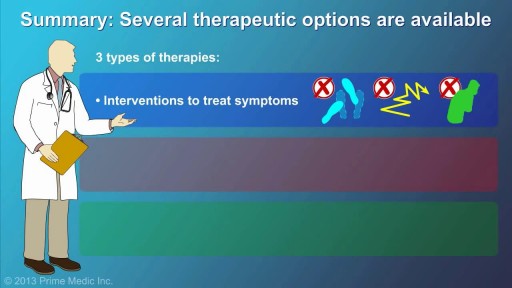
There is no cure for MS, but treatment has improved greatly. Disease-modifying therapies, a group of medicine classes that calm the immune system in different ways, reduce relapses and slow the build-up of disability; starting them early is generally favored, and the choice is individual, made with a specialist. Relapses are sometimes treated with short courses of high-dose steroids to speed recovery. Other care targets symptoms such as spasticity, pain, bladder problems and fatigue, plus physical and occupational therapy.
When to seek care
Contact a clinician promptly about new neurological symptoms such as vision loss in one eye, limb weakness or numbness spreading over days, since early assessment of a possible relapse matters. Seek urgent care for symptoms that could signal stroke, such as sudden face or limb weakness with speech difficulty.
Frequently asked questions
Is multiple sclerosis inherited?
MS is not directly inherited, and most people with MS have no close relative with it. However, genes do influence risk: having a close relative with MS raises the chance somewhat. Environmental factors such as vitamin D, smoking and certain viral infections also contribute.
What is an MS relapse?
A relapse, also called an attack or flare, is a period of new or clearly worsening neurological symptoms lasting at least a day, usually days to weeks, caused by new inflammation. Temporary worsening from heat, fever or infection is different and settles as the trigger resolves.
Can people with MS have children?
Yes. MS does not prevent pregnancy, and pregnancy does not worsen the long-term course of MS; relapse risk often falls during pregnancy and rises somewhat after birth. Some disease-modifying treatments are not recommended around pregnancy, so family planning should be discussed with the specialist team in advance.
Does exercise help in MS?
Regular activity is encouraged in MS. Exercise helps maintain strength, balance, mood and energy, and can reduce the impact of fatigue for many people. Programs are adapted to ability and may include aerobic exercise, resistance training and stretching, often guided by a physical therapist.
More in Brain & Nerves
Related topics on MedicalVideos.com
Sources & further reading
Authoritative references for readers who want to go deeper:
- MedlinePlus: Multiple Sclerosis
- NHS: Multiple Sclerosis
- National Multiple Sclerosis Society: Multiple Sclerosis (National Multiple Sclerosis Society)
This page is for general education only and is not medical advice. Sudden weakness with speech or facial changes should be treated as a possible stroke emergency, even in someone already diagnosed with MS.