- Physical Examination
- Surgical Examination
- Ophthalmology
- Clinical Skills
- Orthopedics
- Surgery Videos
- Laparoscopy
- Pediatrics
- Funny Videos
- Cardiothoracic Surgery
- Nursing Videos
- Plastic Surgery
- Otorhinolaryngology
- Histology and Histopathology
- Neurosurgery
- Dermatology
- Pediatric Surgery
- Urology
- Dentistry
- Oncology and Cancers
- Anatomy Videos
- Health and Fitness
- Radiology
- Anaesthesia
- Physical Therapy
- Pharmacology
- Interventional Radiology
- Cardiology
- Endocrinology
- Gynecology
- Emergency Medicine
- Psychiatry and Psychology
- Childbirth Videos
- General Medical Videos
- Nephrology
- Physiology
- Diet and Food Health
- Diabetes Mellitus
- Neurology
- Women Health
- Osteoporosis
- Gastroenterology
- Pulmonology
- Hematology
- Rheumatology
- Toxicology
- Nuclear Medicine
- Infectious Diseases
- Vascular Disease
- Reproductive Health
- Burns and Wound Healing
- Kidney Zone Podcast
- Other
Chemical Burns — First Aid
What to do
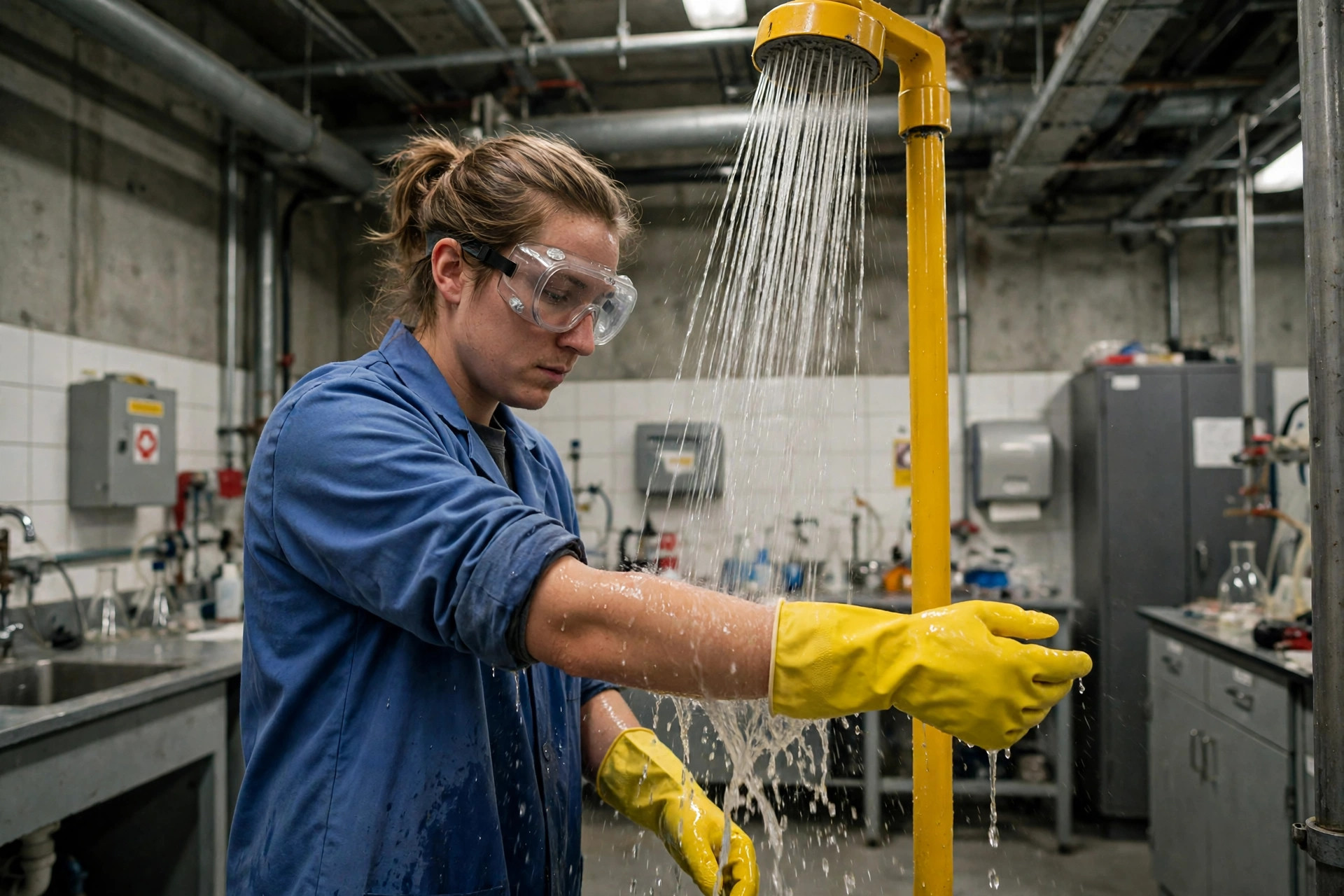
- Protect yourself first: wear gloves if available and avoid touching the chemical. Move the person away from the source and make sure the area is ventilated.
- Call 911, and contact your poison control centre for advice (in the US: 1-800-222-1222). Keep the chemical's container or label to show responders.
- If the chemical is a dry powder, brush it off the skin first. Remove contaminated clothing and jewellery quickly and carefully, cutting fabric away if needed.
- Flood the burn with plenty of cool running water for at least 20 minutes — longer for strong chemicals, following dispatcher or poison centre advice. Let water drain away from unburned skin.
- Do not try to neutralise the chemical with another substance (such as vinegar on an alkali) — reactions can generate heat and worsen the burn.
- Cover the area loosely with a clean, wet dressing or cloth once rinsing is complete, keep the person warm, and wait for emergency help.
What NOT to do
- Do not handle the chemical with bare hands.
- Do not apply creams, ointments or neutralising agents.
- Do not delay rinsing to read the label — start water first, get someone else to read it.
- Do not let rinse water pool on the skin or run onto other people.
When to get medical care
All chemical burns need prompt medical assessment, and most need 911. Call immediately for any chemical burn that is large or deep, on the face, eyes, hands or genitals, from a strong acid, alkali or industrial chemical, or if the person has breathing difficulty, eye involvement or feels unwell.
Related symptoms
Frequently asked questions
Why is so much water needed for chemical burns?
Unlike heat, a chemical keeps reacting with skin until it is diluted and washed away. Large volumes of running water both dilute the chemical and carry it off the body; a small splash of water is not enough and can spread it.
What if the chemical gets in the eye?
Rinse the eye at once under gently running clean water for at least 15 to 20 minutes, holding the lids open and letting water flow from the inner corner outwards, then get emergency care. See the Chemicals in the Eye guide.
In an emergency, call 911 (or your local emergency number) first — do not delay a call to read a guide. These pages are educational first-aid information in general terms; they are not a substitute for emergency services, first-aid training, or assessment by a qualified clinician.