- Physical Examination
- Surgical Examination
- Ophthalmology
- Clinical Skills
- Orthopedics
- Surgery Videos
- Laparoscopy
- Pediatrics
- Funny Videos
- Cardiothoracic Surgery
- Nursing Videos
- Plastic Surgery
- Otorhinolaryngology
- Histology and Histopathology
- Neurosurgery
- Dermatology
- Pediatric Surgery
- Urology
- Dentistry
- Oncology and Cancers
- Anatomy Videos
- Health and Fitness
- Radiology
- Anaesthesia
- Physical Therapy
- Pharmacology
- Interventional Radiology
- Cardiology
- Endocrinology
- Gynecology
- Emergency Medicine
- Psychiatry and Psychology
- Childbirth Videos
- General Medical Videos
- Nephrology
- Physiology
- Diet and Food Health
- Diabetes Mellitus
- Neurology
- Women Health
- Osteoporosis
- Gastroenterology
- Pulmonology
- Hematology
- Rheumatology
- Toxicology
- Nuclear Medicine
- Infectious Diseases
- Vascular Disease
- Reproductive Health
- Burns and Wound Healing
- Kidney Zone Podcast
- Other
Scalds (Hot Liquids and Steam) — First Aid
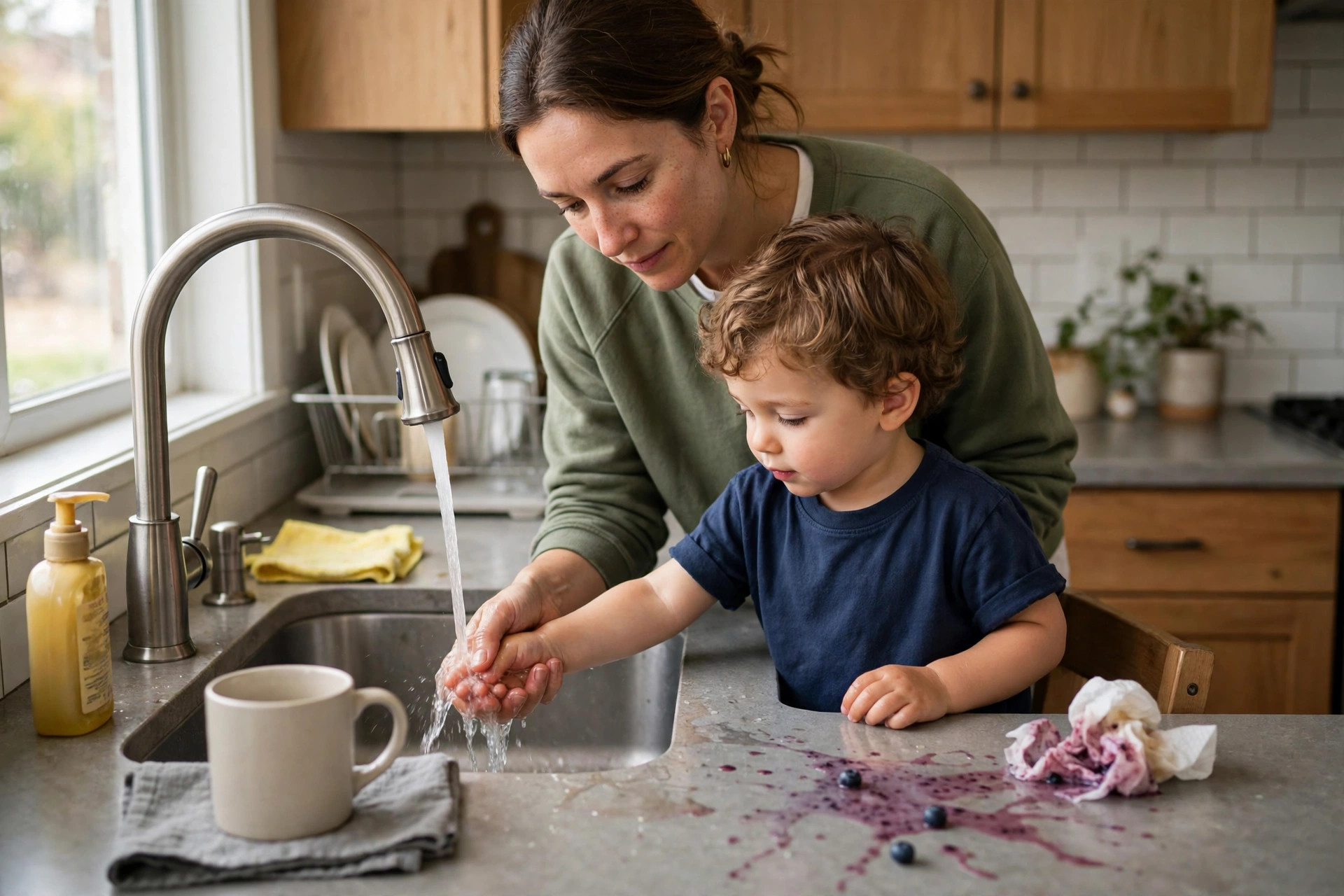
What to do
- Move the person away from the hot liquid or steam and turn off the source if safe.
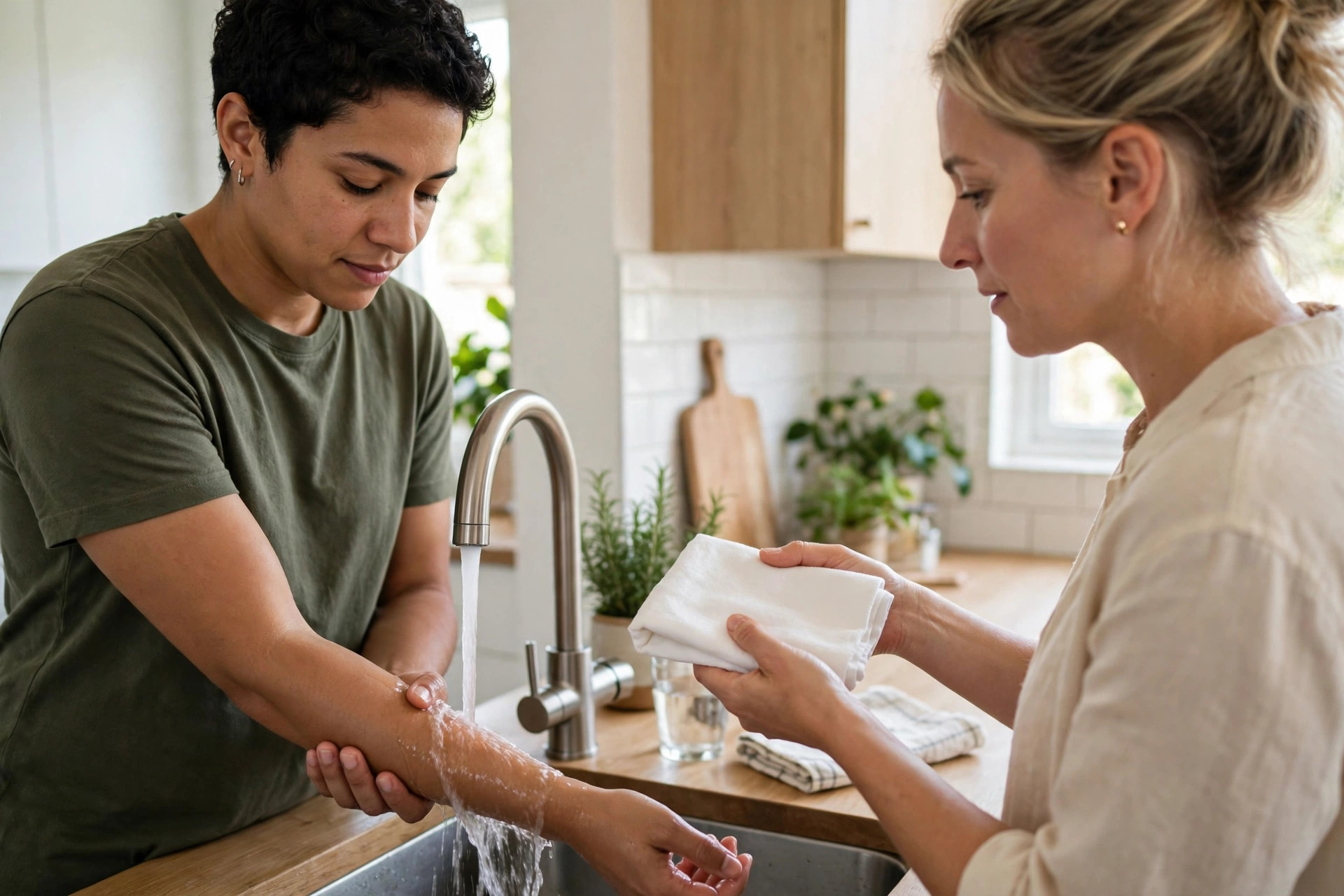
- Cool the scald under cool running water for at least 20 minutes — this is the single most important step, and it works for scalds exactly as for other burns.
- Carefully remove wet clothing and jewellery near the scald while cooling, unless the fabric is stuck to the skin — leave anything stuck in place.
- Cover the cooled scald loosely with cling film or a clean non-fluffy dressing.
- Keep children warm and comforted; watch for shock with large scalds (pale, clammy, faint).
- Arrange urgent medical assessment for any scald that is large, deep, blistered over a wide area, or on the face, hands, feet or nappy area in a child.
What NOT to do
- Do not pull off clothing that is stuck to a scald.
- Do not use ice, butter, oils or creams on the scald.
- Do not burst blisters.
- Do not delay cooling while you look for a first aid kit.
When to get medical care
Scalds in babies and young children should always be assessed promptly, because their skin is thinner and burns go deeper. Seek urgent care for scalds larger than the child's hand, any scald on the face, hands, feet, joints or genitals, deep or white patches, or if the child is unusually drowsy or unwell.
Related symptoms
Frequently asked questions
How quickly can a hot drink scald a child?
A freshly made hot drink can scald a child's skin in seconds, and drinks stay hot enough to scald for many minutes after being made. Keep hot drinks out of reach, never hold a child and a hot drink together, and use back rings on the stove with pan handles turned in.
Is a scald treated differently from a flame burn?
The first aid is identical: cool running water for at least 20 minutes, remove unstuck clothing and jewellery, cover with cling film, and assess the size and depth. Scalds often cover a larger area, especially in children, which is why assessment matters.
In an emergency, call 911 (or your local emergency number) first — do not delay a call to read a guide. These pages are educational first-aid information in general terms; they are not a substitute for emergency services, first-aid training, or assessment by a qualified clinician.