- Physical Examination
- Surgical Examination
- Ophthalmology
- Clinical Skills
- Orthopedics
- Surgery Videos
- Laparoscopy
- Pediatrics
- Funny Videos
- Cardiothoracic Surgery
- Nursing Videos
- Plastic Surgery
- Otorhinolaryngology
- Histology and Histopathology
- Neurosurgery
- Dermatology
- Pediatric Surgery
- Urology
- Dentistry
- Oncology and Cancers
- Anatomy Videos
- Health and Fitness
- Radiology
- Anaesthesia
- Physical Therapy
- Pharmacology
- Interventional Radiology
- Cardiology
- Endocrinology
- Gynecology
- Emergency Medicine
- Psychiatry and Psychology
- Childbirth Videos
- General Medical Videos
- Nephrology
- Physiology
- Diet and Food Health
- Diabetes Mellitus
- Neurology
- Women Health
- Osteoporosis
- Gastroenterology
- Pulmonology
- Hematology
- Rheumatology
- Toxicology
- Nuclear Medicine
- Infectious Diseases
- Vascular Disease
- Reproductive Health
- Burns and Wound Healing
- Kidney Zone Podcast
- Other
Smoke Inhalation — First Aid
What to do
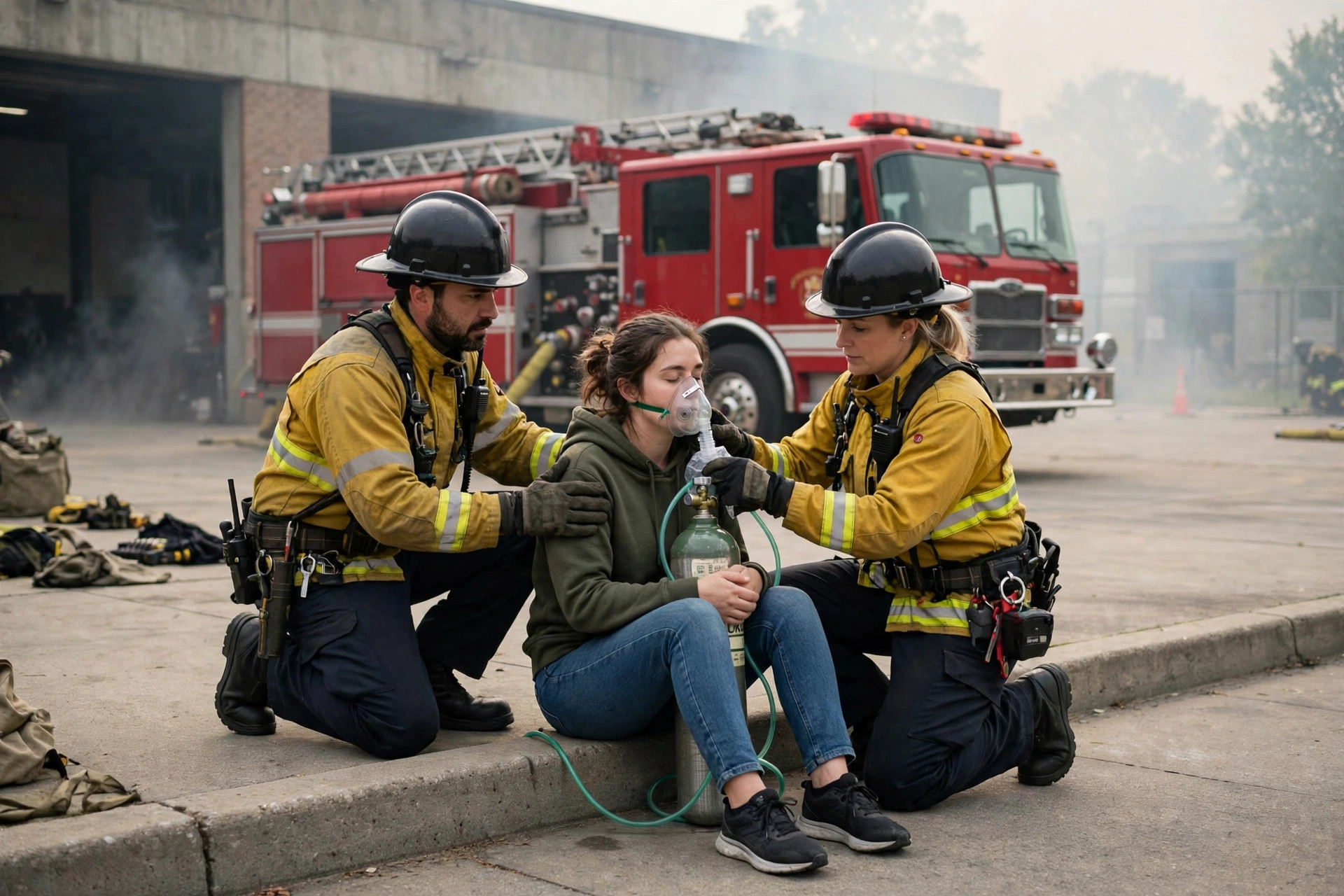
- Do not enter a smoke-filled building to rescue someone — call 911 and let firefighters with breathing apparatus go in. Smoke incapacitates rescuers within breaths.
- Move anyone who has escaped the fire well away into fresh air, upwind of the smoke.
- Call 911 for the fire service and an ambulance for anyone who has breathed in smoke.
- Sit the person upright if they are conscious — this makes breathing easier. Loosen tight clothing around the neck and chest.
- Check response and breathing continuously. If they become unresponsive and stop breathing normally, start CPR.
- Keep them warm and still, give nothing to eat or drink, and tell responders how long they were in the smoke and whether the fire involved chemicals, plastics or gas.
What NOT to do
- Do not re-enter a burning or smoky building for people, pets or belongings.
- Do not dismiss coughing or a hoarse voice after smoke exposure — airway swelling can worsen over hours.
- Do not give drinks or food to someone with breathing difficulty.
- Do not drive a smoke-affected person to hospital yourself if they are deteriorating — call an ambulance.
When to get medical care
Call 911 for anyone who has inhaled smoke in a fire and has coughing, hoarseness, soot around the mouth or nose, singed nasal hair, headache, confusion, drowsiness, chest pain or any breathing difficulty. All people trapped in an enclosed-space fire need hospital assessment, even if symptoms seem mild at first.
Related symptoms
Frequently asked questions
Why is smoke more dangerous than the flames?
Most fire deaths are from smoke, not burns. Smoke contains carbon monoxide and other toxic gases, and hot smoke can burn and swell the airway. Effects can be delayed, which is why assessment is needed even when someone 'feels okay' after getting out.
What are the signs of carbon monoxide poisoning after a fire?
Headache, dizziness, nausea, confusion, chest pain and collapse. Carbon monoxide is colourless and odourless, so any of these symptoms after smoke exposure should be treated as an emergency — move to fresh air and call 911.
In an emergency, call 911 (or your local emergency number) first — do not delay a call to read a guide. These pages are educational first-aid information in general terms; they are not a substitute for emergency services, first-aid training, or assessment by a qualified clinician.