- Physical Examination
- Surgical Examination
- Ophthalmology
- Clinical Skills
- Orthopedics
- Surgery Videos
- Laparoscopy
- Pediatrics
- Funny Videos
- Cardiothoracic Surgery
- Nursing Videos
- Plastic Surgery
- Otorhinolaryngology
- Histology and Histopathology
- Neurosurgery
- Dermatology
- Pediatric Surgery
- Urology
- Dentistry
- Oncology and Cancers
- Anatomy Videos
- Health and Fitness
- Radiology
- Anaesthesia
- Physical Therapy
- Pharmacology
- Interventional Radiology
- Cardiology
- Endocrinology
- Gynecology
- Emergency Medicine
- Psychiatry and Psychology
- Childbirth Videos
- General Medical Videos
- Nephrology
- Physiology
- Diet and Food Health
- Diabetes Mellitus
- Neurology
- Women Health
- Osteoporosis
- Gastroenterology
- Pulmonology
- Hematology
- Rheumatology
- Toxicology
- Nuclear Medicine
- Infectious Diseases
- Vascular Disease
- Reproductive Health
- Burns and Wound Healing
- Kidney Zone Podcast
- Other
Electrical Burns — First Aid
What to do
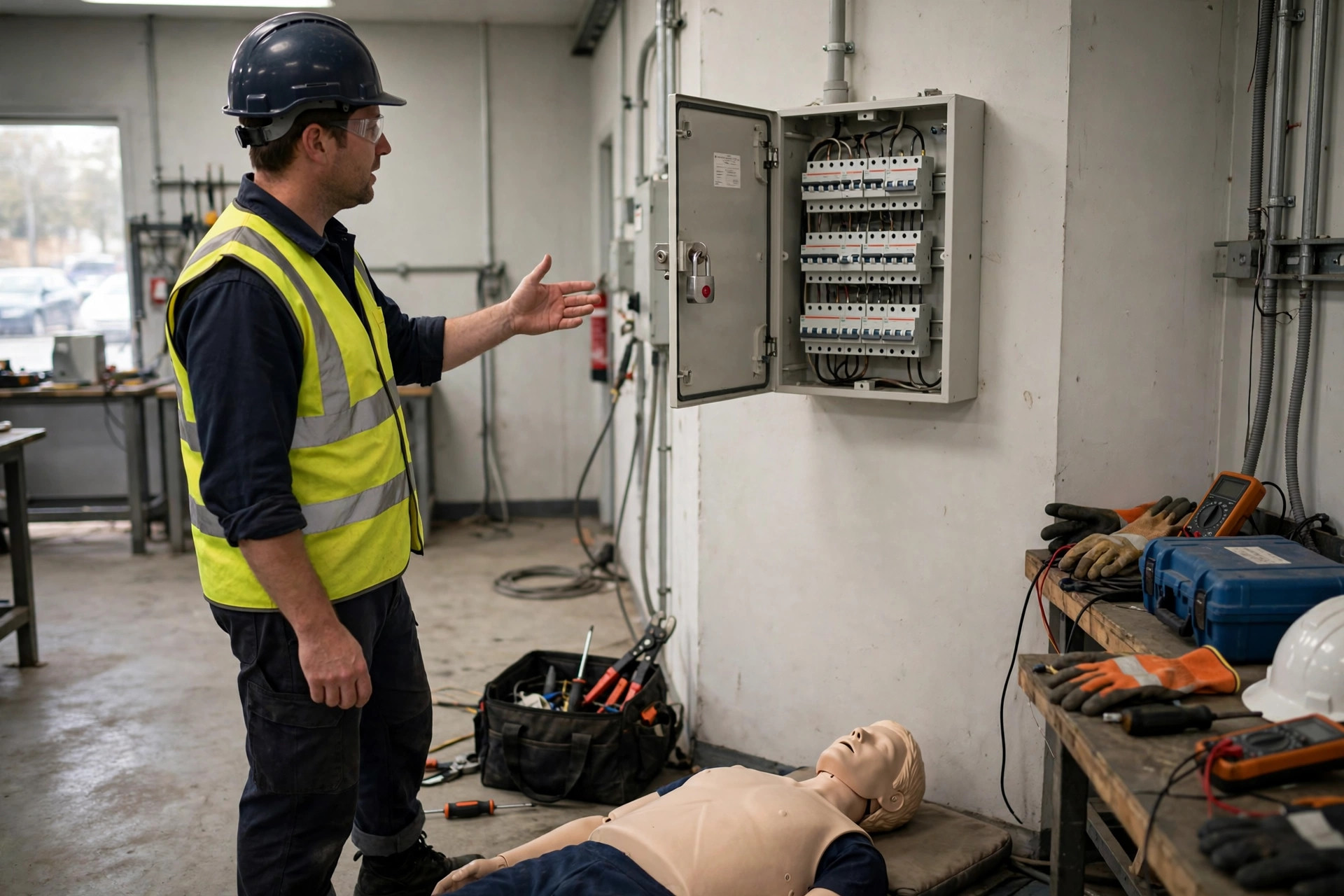
- Do not touch the person while they are still in contact with the electrical source — you could be shocked too. Switch off the power at the mains or breaker first. For high-voltage sources (power lines, substations), keep well back and call 911 — do not approach.
- Once the power is off and the scene is safe, check the person's response and breathing. Call 911 if not already done.
- If they are unresponsive and not breathing normally, start CPR and use an AED — electric shocks commonly disturb the heart rhythm.
- Cool any burns under cool running water for at least 20 minutes once it is safe, then cover with a clean non-fluffy dressing or cling film.
- Keep the person still and warm. Electrical injuries can include fractures from the jolt or falls, so avoid unnecessary movement if spinal injury is possible.
- Stay with them until the ambulance arrives and report the voltage and duration of contact if known.
What NOT to do
- Do not touch a person still connected to a live source, and do not use metal or wet objects to move cables.
- Do not underestimate electrical burns — skin damage may look small while deeper tissues and the heart are injured.
- Do not delay CPR to cool burns; breathing and circulation come first.
- Do not re-enter an area with fallen power lines.
When to get medical care
Every electrical burn or significant electric shock needs emergency assessment, even if the person feels well: the current can disturb heart rhythm hours later and damage deep tissue. Call 911 for any shock from mains voltage or above, any loss of consciousness, chest pain, palpitations, burns, confusion or weakness.
Related procedures & tests
Related symptoms
Frequently asked questions
Why do electrical injuries need hospital checks even when the burn looks tiny?
Electric current travels through the body between entry and exit points and can injure muscle, nerves and the heart along the way. The skin wound may be small while internal damage is extensive, and rhythm problems can appear later — hence monitoring in hospital.
What should I do about a fallen power line?
Stay at least several metres away, keep others back, and call 911. Do not touch the line, the vehicle or anything it rests on. If you are in a car struck by a line, stay inside unless fire forces you out — then jump clear without touching car and ground together.
In an emergency, call 911 (or your local emergency number) first — do not delay a call to read a guide. These pages are educational first-aid information in general terms; they are not a substitute for emergency services, first-aid training, or assessment by a qualified clinician.