- Physical Examination
- Surgical Examination
- Ophthalmology
- Clinical Skills
- Orthopedics
- Surgery Videos
- Laparoscopy
- Pediatrics
- Funny Videos
- Cardiothoracic Surgery
- Nursing Videos
- Plastic Surgery
- Otorhinolaryngology
- Histology and Histopathology
- Neurosurgery
- Dermatology
- Pediatric Surgery
- Urology
- Dentistry
- Oncology and Cancers
- Anatomy Videos
- Health and Fitness
- Radiology
- Anaesthesia
- Physical Therapy
- Pharmacology
- Interventional Radiology
- Cardiology
- Endocrinology
- Gynecology
- Emergency Medicine
- Psychiatry and Psychology
- Childbirth Videos
- General Medical Videos
- Nephrology
- Physiology
- Diet and Food Health
- Diabetes Mellitus
- Neurology
- Women Health
- Osteoporosis
- Gastroenterology
- Pulmonology
- Hematology
- Rheumatology
- Toxicology
- Nuclear Medicine
- Infectious Diseases
- Vascular Disease
- Reproductive Health
- Burns and Wound Healing
- Kidney Zone Podcast
- Other
Heart Attack — First Aid
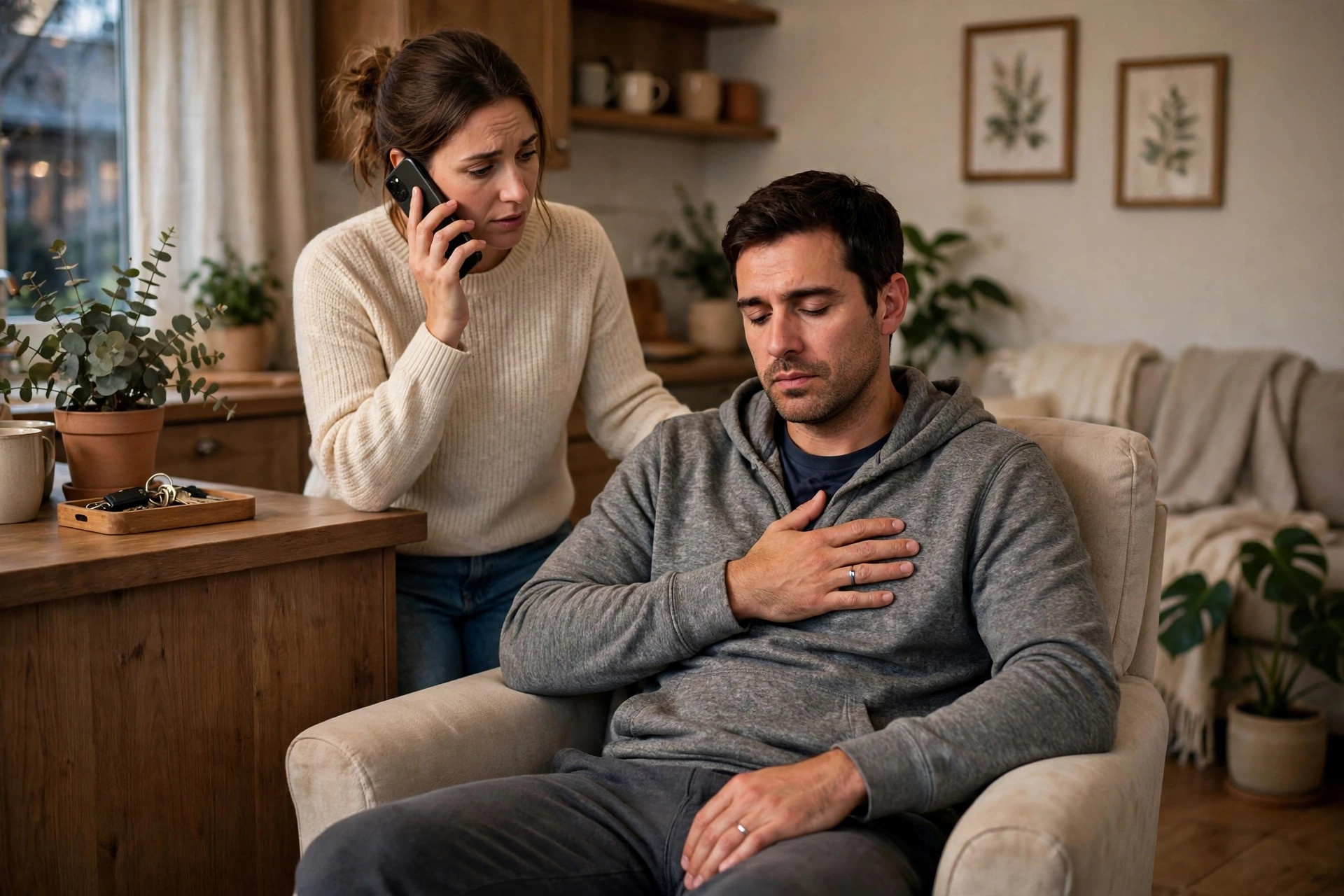
What to do
- Recognise the signs: central chest pain or tightness that may spread to the arm, neck, jaw or back; breathlessness; sweating; nausea; pale or clammy skin; a sense of dread. Symptoms can be subtler in women and older people.
- Call 911 immediately — do not drive the person (or yourself) to hospital. Treatment works best the sooner it starts.
- Sit the person down in a comfortable, rested position — usually half-sitting with knees bent and supported, or on the floor against a wall. Loosen tight clothing.
- Keep them calm and still; any exertion increases the heart's workload. Reassure them that help is coming.
- If the person has medication prescribed for chest pain (such as a nitrate spray or tablets), help them take it as they normally would. An emergency dispatcher may advise aspirin if the person is not allergic — follow the dispatcher's instructions rather than self-prescribing.
- Monitor response and breathing continuously. If they become unresponsive and stop breathing normally, start CPR and use an AED if available.
What NOT to do
- Do not drive yourself to hospital with suspected heart attack symptoms.
- Do not dismiss chest pain as indigestion — if in doubt, call 911.
- Do not give food or drink, or medication belonging to someone else.
- Do not let the person walk around, climb stairs or exert themselves while waiting.
When to get medical care
Call 911 immediately for chest pain or pressure lasting more than a few minutes, chest pain spreading to the arm, jaw, neck or back, or chest discomfort with breathlessness, sweating, nausea or faintness. Heart attacks can present without severe pain — unexplained breathlessness, exhaustion and upper-body discomfort in someone at risk also warrant an emergency call.
Related conditions
Related procedures & tests
Related symptoms
Frequently asked questions
How do I tell a heart attack from indigestion or heartburn?
You often cannot reliably. Heart attack pain is typically central, heavy or squeezing, may radiate to the arm or jaw, comes with sweating, breathlessness or nausea, and is not clearly linked to food. The safe rule: treat new, unexplained central chest pain as an emergency and call 911.
What does the hospital do for a heart attack?
The priority is restoring blood flow to the heart muscle — commonly with a procedure to open the blocked artery (angioplasty and stent) or clot-busting medication, alongside rhythm and blood-pressure monitoring. Calling 911 early brings this treatment sooner and also brings a defibrillator to you if the rhythm becomes dangerous.
In an emergency, call 911 (or your local emergency number) first — do not delay a call to read a guide. These pages are educational first-aid information in general terms; they are not a substitute for emergency services, first-aid training, or assessment by a qualified clinician.