- Physical Examination
- Surgical Examination
- Ophthalmology
- Clinical Skills
- Orthopedics
- Surgery Videos
- Laparoscopy
- Pediatrics
- Funny Videos
- Cardiothoracic Surgery
- Nursing Videos
- Plastic Surgery
- Otorhinolaryngology
- Histology and Histopathology
- Neurosurgery
- Dermatology
- Pediatric Surgery
- Urology
- Dentistry
- Oncology and Cancers
- Anatomy Videos
- Health and Fitness
- Radiology
- Anaesthesia
- Physical Therapy
- Pharmacology
- Interventional Radiology
- Cardiology
- Endocrinology
- Gynecology
- Emergency Medicine
- Psychiatry and Psychology
- Childbirth Videos
- General Medical Videos
- Nephrology
- Physiology
- Diet and Food Health
- Diabetes Mellitus
- Neurology
- Women Health
- Osteoporosis
- Gastroenterology
- Pulmonology
- Hematology
- Rheumatology
- Toxicology
- Nuclear Medicine
- Infectious Diseases
- Vascular Disease
- Reproductive Health
- Burns and Wound Healing
- Kidney Zone Podcast
- Other
Jellyfish Stings — First Aid
What to do
- Get the person out of the water and keep them calm and still.
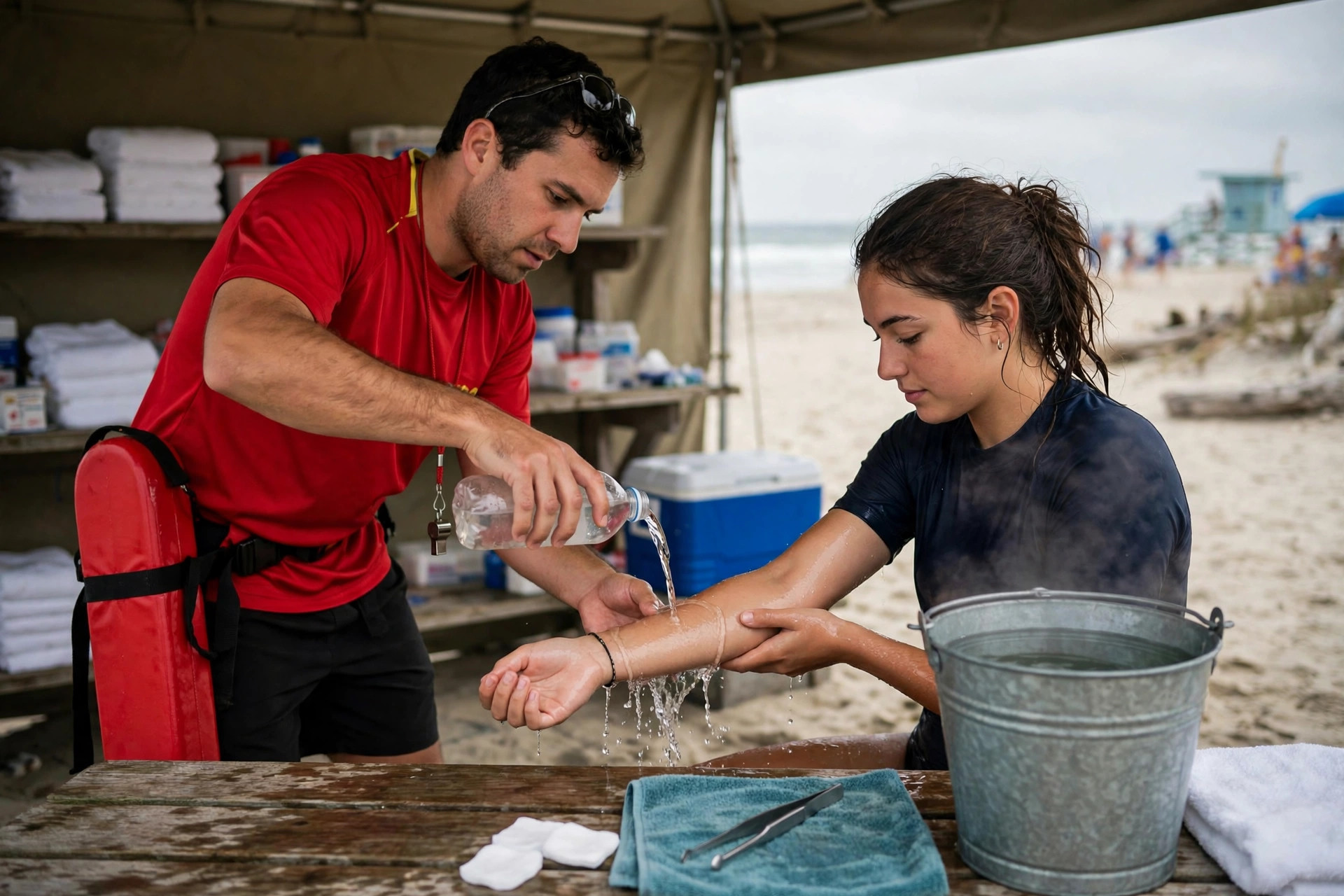
- Rinse the stung area with seawater (not fresh water, which can trigger more stings from attached tentacle cells). Do not rub the area.
- Carefully lift off any visible tentacles with tweezers, a gloved hand or the edge of a card — avoid bare fingers.
- For pain relief for most common jellyfish stings, immerse the area in water as hot as can be tolerated (not scalding) for about 20 to 45 minutes, topping up the heat as needed. A hot shower works too.
- In tropical regions where dangerous box jellyfish occur, follow local signage and lifeguard advice — vinegar is stocked on many such beaches to inactivate stinging cells, and those stings are emergencies.
- Watch for a severe reaction: difficulty breathing, chest pain, widespread rash, vomiting or collapse means call 911.
What NOT to do
- Do not rinse with fresh water, urine, alcohol or cola — these can worsen stinging or are ineffective myths.
- Do not rub or apply pressure bandages to the sting (except where local box-jellyfish guidance says otherwise).
- Do not use hot water hot enough to scald — test it on unaffected skin first, especially for children.
- Do not ignore stings to the eyes or large areas of the body — these need medical assessment.
When to get medical care
Call 911 for stings with breathing difficulty, chest pain, severe pain, collapse, stings covering a large area, stings to the face or eyes, or any sting in tropical waters known for box jellyfish or Irukandji. Seek medical care for stings that blister, become infected, or pain that hot water does not control.
Related symptoms
Frequently asked questions
Does urine help a jellyfish sting?
No — urine is a persistent myth and its composition is unpredictable; it can even trigger more stinging cells to fire. Seawater rinsing followed by hot water immersion is the evidence-based approach for most common stings.
Why hot water for jellyfish stings?
Heat deactivates many jellyfish venoms and is an effective pain reliever for common species. Water as hot as can be comfortably tolerated (around bath-hot, never scalding) for 20 to 45 minutes outperforms ice packs for pain in studies of common stings.
In an emergency, call 911 (or your local emergency number) first — do not delay a call to read a guide. These pages are educational first-aid information in general terms; they are not a substitute for emergency services, first-aid training, or assessment by a qualified clinician.