- Physical Examination
- Surgical Examination
- Ophthalmology
- Clinical Skills
- Orthopedics
- Surgery Videos
- Laparoscopy
- Pediatrics
- Funny Videos
- Cardiothoracic Surgery
- Nursing Videos
- Plastic Surgery
- Otorhinolaryngology
- Histology and Histopathology
- Neurosurgery
- Dermatology
- Pediatric Surgery
- Urology
- Dentistry
- Oncology and Cancers
- Anatomy Videos
- Health and Fitness
- Radiology
- Anaesthesia
- Physical Therapy
- Pharmacology
- Interventional Radiology
- Cardiology
- Endocrinology
- Gynecology
- Emergency Medicine
- Psychiatry and Psychology
- Childbirth Videos
- General Medical Videos
- Nephrology
- Physiology
- Diet and Food Health
- Diabetes Mellitus
- Neurology
- Women Health
- Osteoporosis
- Gastroenterology
- Pulmonology
- Hematology
- Rheumatology
- Toxicology
- Nuclear Medicine
- Infectious Diseases
- Vascular Disease
- Reproductive Health
- Burns and Wound Healing
- Kidney Zone Podcast
- Other
Panic Attacks and Hyperventilation — First Aid

What to do
- First, rule out emergencies: chest pain, severe breathlessness, fainting or other worrying symptoms should be treated as medical emergencies (call 911) — panic is a diagnosis made after dangerous causes are considered, especially for a first episode.
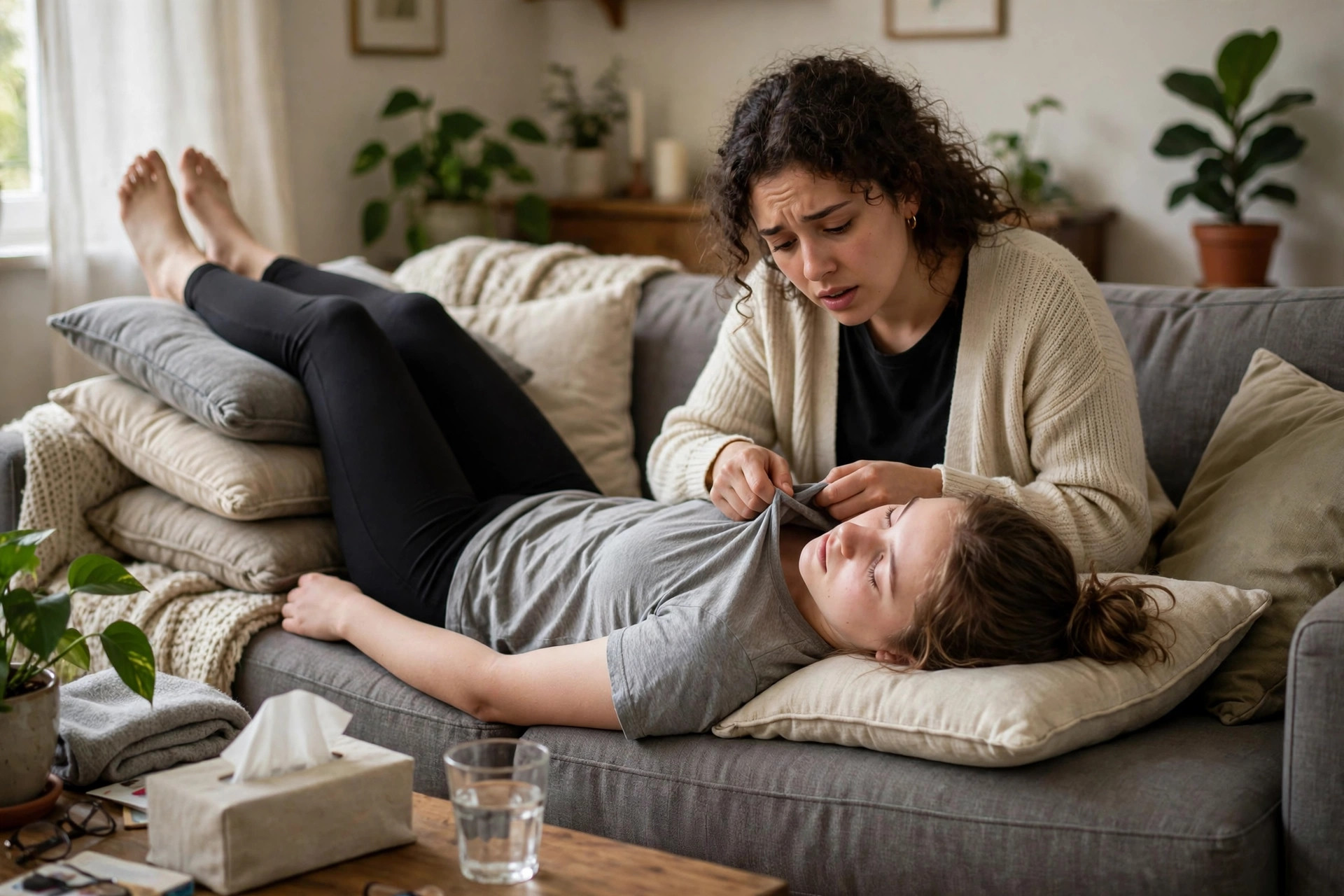
- If the person knows their symptoms are a panic attack, stay with them and speak calmly. Move to a quieter place if possible.
- Guide slow breathing: breathe in slowly through the nose for about 4 counts, and out slowly through pursed lips for about 6 counts. Breathing with them, visibly and audibly, helps.
- Do not use a paper bag — rebreathing can be dangerous if the cause is actually a heart or lung problem, and guidelines no longer recommend it.
- Reassure them factually: 'This is a panic attack. It feels awful but it will pass, usually within 10 to 20 minutes. I am staying with you.'
- As symptoms ease, offer small sips of water and sit with them until they feel steady. If attacks recur, encourage a medical review — effective treatments exist.
What NOT to do
- Do not tell the person to 'calm down' or dismiss their fear — the sensations are real and frightening.
- Do not use the paper-bag technique.
- Do not assume chest pain is panic in someone with risk factors or a first episode — get it checked as a possible heart problem.
- Do not leave the person alone mid-attack if they ask you to stay.
When to get medical care
Call 911 for a first episode of chest pain or severe breathlessness, pain spreading to arm or jaw, fainting, blue lips, or symptoms that do not settle. Anyone with recurrent panic attacks should see a clinician — panic disorder is treatable, and physical causes such as thyroid problems or anaemia should be excluded.
Related conditions
Related procedures & tests
Related symptoms
Frequently asked questions
Why do fingers tingle and hands cramp during a panic attack?
Fast over-breathing (hyperventilation) lowers carbon dioxide in the blood, which causes tingling, light-headedness, chest tightness and sometimes hand spasm. Slowing the out-breath reverses it — which is why paced breathing is the core first-aid technique.
How long does a panic attack last?
Symptoms typically peak within about 10 minutes and fade over 20 to 30 minutes, leaving tiredness and shakiness. Attacks lasting much longer, or with physical red flags, should be medically assessed.
In an emergency, call 911 (or your local emergency number) first — do not delay a call to read a guide. These pages are educational first-aid information in general terms; they are not a substitute for emergency services, first-aid training, or assessment by a qualified clinician.