
- Physical Examination
- Surgical Examination
- Ophthalmology
- Clinical Skills
- Orthopedics
- Surgery Videos
- Laparoscopy
- Pediatrics
- Funny Videos
- Cardiothoracic Surgery
- Nursing Videos
- Plastic Surgery
- Otorhinolaryngology
- Histology and Histopathology
- Neurosurgery
- Dermatology
- Pediatric Surgery
- Urology
- Dentistry
- Oncology and Cancers
- Anatomy Videos
- Health and Fitness
- Radiology
- Anaesthesia
- Physical Therapy
- Pharmacology
- Interventional Radiology
- Cardiology
- Endocrinology
- Gynecology
- Emergency Medicine
- Psychiatry and Psychology
- Childbirth Videos
- General Medical Videos
- Nephrology
- Physiology
- Diet and Food Health
- Diabetes Mellitus
- Neurology
- Women Health
- Osteoporosis
- Gastroenterology
- Pulmonology
- Hematology
- Rheumatology
- Toxicology
- Nuclear Medicine
- Infectious Diseases
- Vascular Disease
- Reproductive Health
- Burns and Wound Healing
- Kidney Zone Podcast
- Other
Cardiopulmonary exercise test (CPET / CPEX)
Category: Lung & Breathing Tests · All lung & breathing tests
What it is
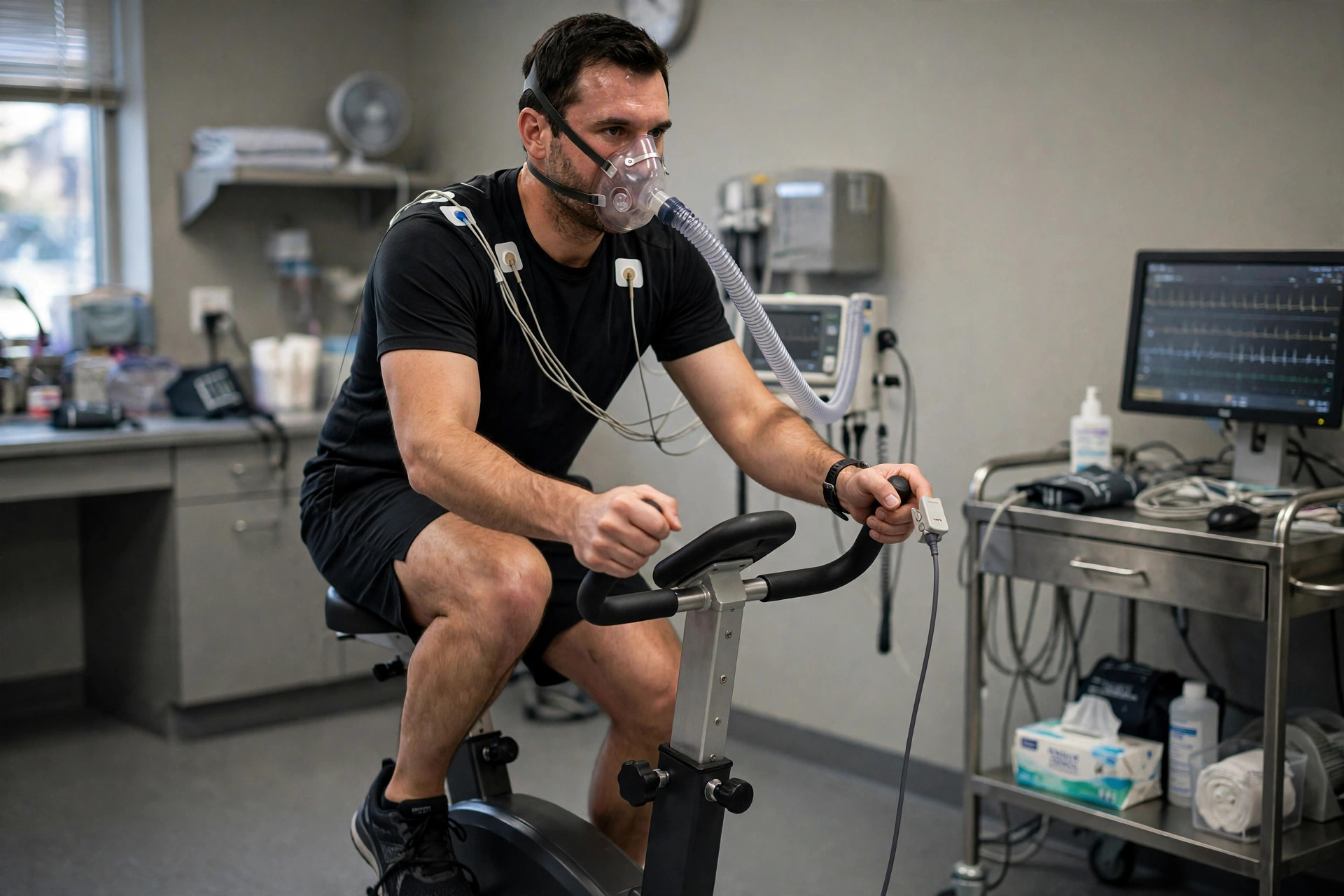
A cardiopulmonary exercise test measures breathing, heart and blood pressure responses while you exercise on a bike or treadmill with gradually increasing difficulty, breathing through a mask that analyses the gases you breathe in and out.
Why it is done
It pinpoints why someone is breathless (heart, lungs, circulation, muscle fitness or breathing pattern), measures fitness objectively, and assesses risk before major surgery — helping decide on operations and plan peri-operative care.
How to prepare
Wear exercise clothing and trainers. You may be told to take your usual medicines and eat lightly a few hours before. Tell the team about joint problems, chest pain history and inhaler use. Baseline spirometry and an ECG are usually done first.
What happens during the procedure
With ECG leads, a blood pressure cuff and the mask fitted, you pedal (or walk) as the resistance rises steadily. The team encourages you to keep going as long as you safely can — typically 8 to 12 minutes of exercise. You can stop at any time. Monitoring continues into recovery.
Afterwards — recovery & results
You rest until heart rate and breathing settle, then go home or back to clinic the same day. Tired legs and breathlessness are expected; report any chest pain during the test to the team at once. Results are analysed and explained in clinic, often as part of a surgical or breathlessness assessment.
Risks & considerations
Serious events are rare; the test is supervised with emergency equipment present. Risks include abnormal heart rhythms, blood pressure changes, and asthma symptoms in susceptible people — the team stops the test if any concern arises.
Related guides on MedicalVideos.com
Frequently asked questions
Why not just do a walking test?
Simple walk tests measure distance only. CPET measures oxygen use and gas exchange directly, which separates heart-limited from lung-limited from unfit — the distinction treatment decisions depend on.
What if I can't cycle?
A treadmill or arm ergometer can be used in many centres. Tell the team about your limitations when booking.
Related procedures — Lung & Breathing Tests
Browse the C section of the A–Z list or return to the Procedures & Tests hub.