
- Physical Examination
- Surgical Examination
- Ophthalmology
- Clinical Skills
- Orthopedics
- Surgery Videos
- Laparoscopy
- Pediatrics
- Funny Videos
- Cardiothoracic Surgery
- Nursing Videos
- Plastic Surgery
- Otorhinolaryngology
- Histology and Histopathology
- Neurosurgery
- Dermatology
- Pediatric Surgery
- Urology
- Dentistry
- Oncology and Cancers
- Anatomy Videos
- Health and Fitness
- Radiology
- Anaesthesia
- Physical Therapy
- Pharmacology
- Interventional Radiology
- Cardiology
- Endocrinology
- Gynecology
- Emergency Medicine
- Psychiatry and Psychology
- Childbirth Videos
- General Medical Videos
- Nephrology
- Physiology
- Diet and Food Health
- Diabetes Mellitus
- Neurology
- Women Health
- Osteoporosis
- Gastroenterology
- Pulmonology
- Hematology
- Rheumatology
- Toxicology
- Nuclear Medicine
- Infectious Diseases
- Vascular Disease
- Reproductive Health
- Burns and Wound Healing
- Kidney Zone Podcast
- Other
Methacholine challenge test (bronchial provocation)
Category: Lung & Breathing Tests · All lung & breathing tests
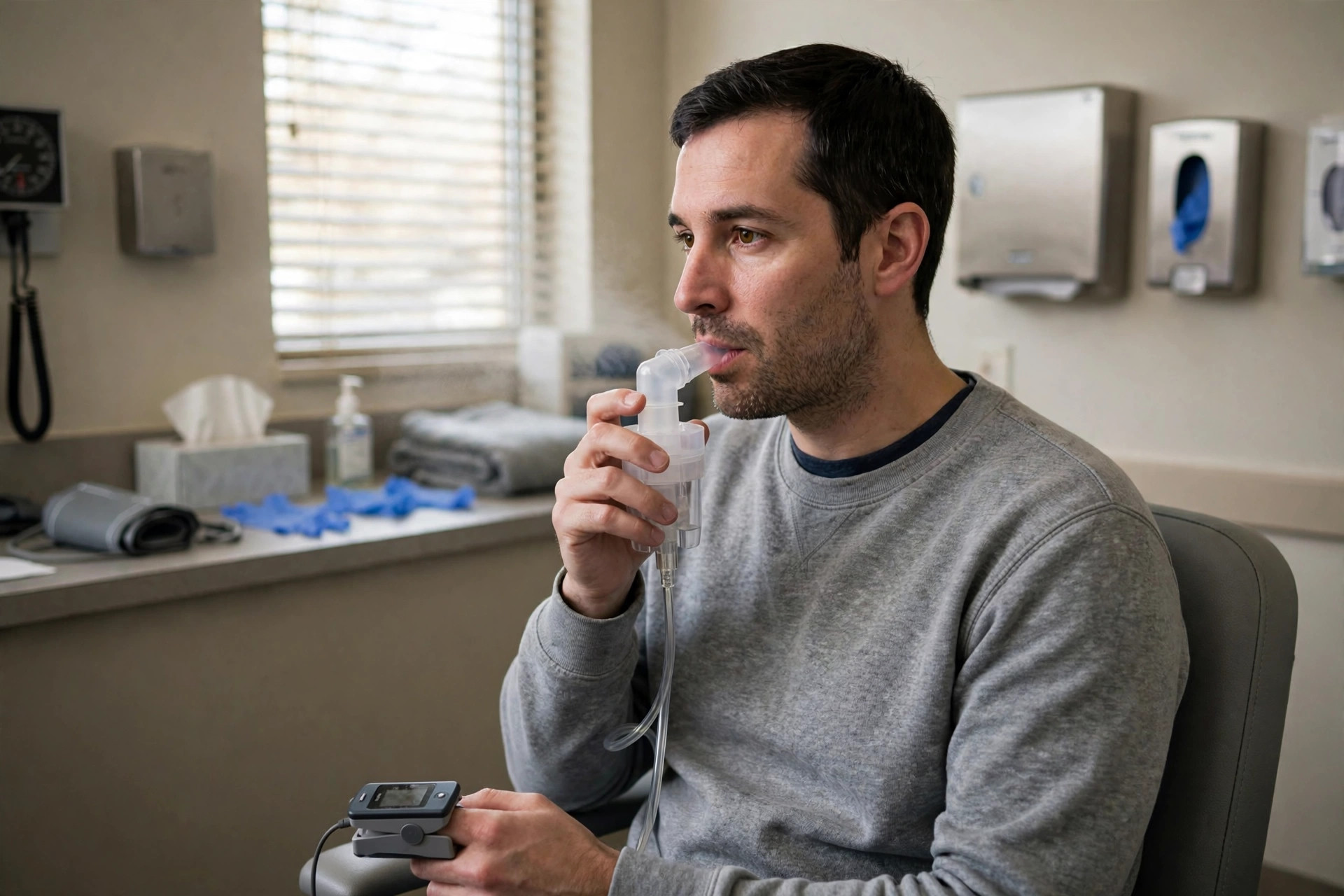
What it is
A bronchial challenge test measures how twitchy the airways are. You inhale increasing doses of methacholine (a mild airway irritant) with spirometry after each dose; a significant fall in lung function at a low dose indicates airway hyper-responsiveness, supporting asthma.
Why it is done
It is used when asthma is suspected but spirometry is normal — a negative challenge makes current asthma unlikely, which is diagnostically valuable when symptoms could come from another cause.
How to prepare
Inhalers must be withheld for specified periods beforehand (your letter lists them, since they blunt the response). Avoid smoking and caffeine on the day. Tell the team about recent heart attack or stroke, high blood pressure, pregnancy and any aneurysm history — these may rule the test out. A baseline spirometry must be adequate on the day.
What happens during the procedure
You inhale a saline control, then doubling doses of methacholine through a nebuliser, repeating breathing tests after each. If lung function falls by the target amount (usually 20%), the test stops, a bronchodilator inhaler reverses the effect, and tests repeat until you are back near baseline. Allow about 90 minutes in total.
Afterwards — recovery & results
You stay until your breathing tests have recovered, which the bronchodilator usually achieves quickly. Mild cough, chest tightness or wheeze during the test are the intended, controlled effects and settle afterwards. Results are reported to your clinic team.
Risks & considerations
The test deliberately provokes temporary bronchospasm, so it is done with full monitoring and reversal inhalers at hand. Severe reactions are uncommon with careful dose escalation and patient selection.
Related guides on MedicalVideos.com
Frequently asked questions
Why provoke an attack on purpose?
In a controlled setting with tiny doses and immediate reversal, it safely demonstrates airway behaviour that happens unpredictably in daily life — and a negative result can redirect the search for your symptoms.
My test was negative but I still wheeze — now what?
Current asthma becomes unlikely; your team will investigate other causes such as reflux, breathing pattern disorders, upper airway problems or heart causes.
Related procedures — Lung & Breathing Tests
Browse the M section of the A–Z list or return to the Procedures & Tests hub.