
- Physical Examination
- Surgical Examination
- Ophthalmology
- Clinical Skills
- Orthopedics
- Surgery Videos
- Laparoscopy
- Pediatrics
- Funny Videos
- Cardiothoracic Surgery
- Nursing Videos
- Plastic Surgery
- Otorhinolaryngology
- Histology and Histopathology
- Neurosurgery
- Dermatology
- Pediatric Surgery
- Urology
- Dentistry
- Oncology and Cancers
- Anatomy Videos
- Health and Fitness
- Radiology
- Anaesthesia
- Physical Therapy
- Pharmacology
- Interventional Radiology
- Cardiology
- Endocrinology
- Gynecology
- Emergency Medicine
- Psychiatry and Psychology
- Childbirth Videos
- General Medical Videos
- Nephrology
- Physiology
- Diet and Food Health
- Diabetes Mellitus
- Neurology
- Women Health
- Osteoporosis
- Gastroenterology
- Pulmonology
- Hematology
- Rheumatology
- Toxicology
- Nuclear Medicine
- Infectious Diseases
- Vascular Disease
- Reproductive Health
- Burns and Wound Healing
- Kidney Zone Podcast
- Other
EEG (electroencephalogram)
Category: Brain, Nerve & Sleep Tests · All brain, nerve & sleep tests
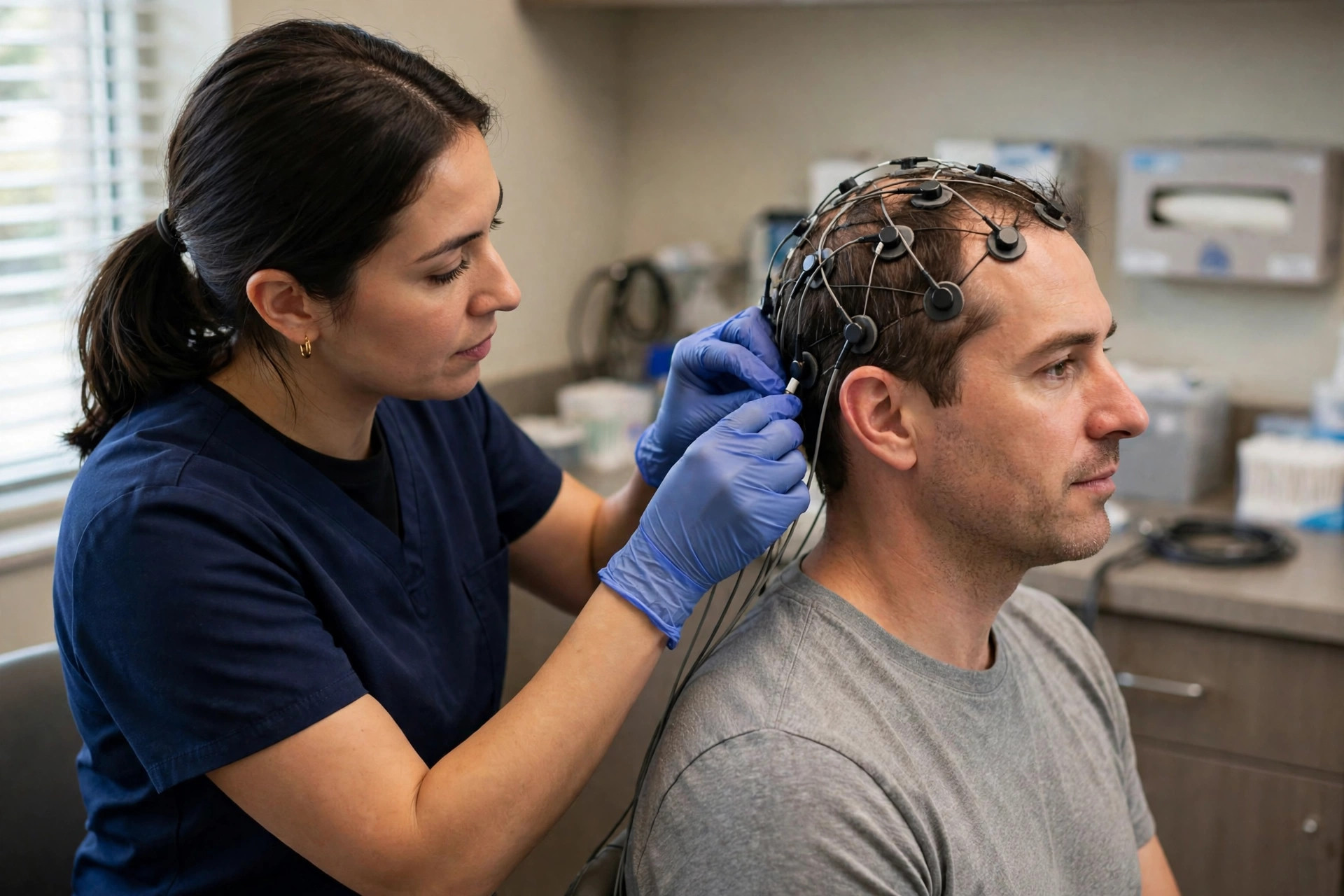
What it is
An EEG records the brain's electrical activity through small electrodes placed on the scalp. It looks for abnormal patterns that help classify seizures and epilepsy, and assess some other brain conditions.
Why it is done
It investigates blackouts and suspected seizures, monitors known epilepsy, and helps assess encephalitis, some sleep disorders and unexplained confusion. A normal EEG does not exclude epilepsy, and an abnormal one is interpreted with the clinical story.
How to prepare
Wash your hair beforehand and avoid oils and sprays. Take medicines as usual unless told otherwise (the team will advise). You may be asked to be sleep-deprived (staying up late and rising early) before the test to encourage drowsiness and increase the chance of recording abnormalities. Bring a list of medicines.
What happens during the procedure
Electrodes are attached with paste at measured positions — painless. You lie still with eyes closed while recordings run; you will be asked to breathe deeply for a few minutes (hyperventilation) and to watch flashing lights (photic stimulation), both of which can reveal patterns. Sleep may be recorded if you drift off. A routine study takes about 30 to 60 minutes.
Afterwards — recovery & results
The paste washes out of your hair afterwards and you can go home or back to the ward. If you were sleep-deprived, arrange not to drive home. Results are reported by a neurophysiologist to your clinic team, usually within a few weeks unless urgent.
Risks & considerations
There are no risks from the recording itself. The activation procedures (deep breathing, flashing lights) can occasionally provoke a seizure in susceptible people — the team is trained and equipped for this, and you are monitored throughout.
Related guides on MedicalVideos.com
Frequently asked questions
Why didn't my EEG show my seizures?
EEG samples a short window; between seizures the record is often normal. Longer recordings (24–72 hour ambulatory or inpatient video-EEG) increase the chance of capturing events.
Do the flashing lights affect everyone?
No — a photosensitive response occurs in a small minority, mainly of people with certain epilepsy types. It is diagnostically useful and the technician stops as soon as a response appears.
Related procedures — Brain, Nerve & Sleep Tests
Browse the E section of the A–Z list or return to the Procedures & Tests hub.