
- Physical Examination
- Surgical Examination
- Ophthalmology
- Clinical Skills
- Orthopedics
- Surgery Videos
- Laparoscopy
- Pediatrics
- Funny Videos
- Cardiothoracic Surgery
- Nursing Videos
- Plastic Surgery
- Otorhinolaryngology
- Histology and Histopathology
- Neurosurgery
- Dermatology
- Pediatric Surgery
- Urology
- Dentistry
- Oncology and Cancers
- Anatomy Videos
- Health and Fitness
- Radiology
- Anaesthesia
- Physical Therapy
- Pharmacology
- Interventional Radiology
- Cardiology
- Endocrinology
- Gynecology
- Emergency Medicine
- Psychiatry and Psychology
- Childbirth Videos
- General Medical Videos
- Nephrology
- Physiology
- Diet and Food Health
- Diabetes Mellitus
- Neurology
- Women Health
- Osteoporosis
- Gastroenterology
- Pulmonology
- Hematology
- Rheumatology
- Toxicology
- Nuclear Medicine
- Infectious Diseases
- Vascular Disease
- Reproductive Health
- Burns and Wound Healing
- Kidney Zone Podcast
- Other
Evoked potentials (VEP / SSEP / BAEP)
Category: Brain, Nerve & Sleep Tests · All brain, nerve & sleep tests
What it is
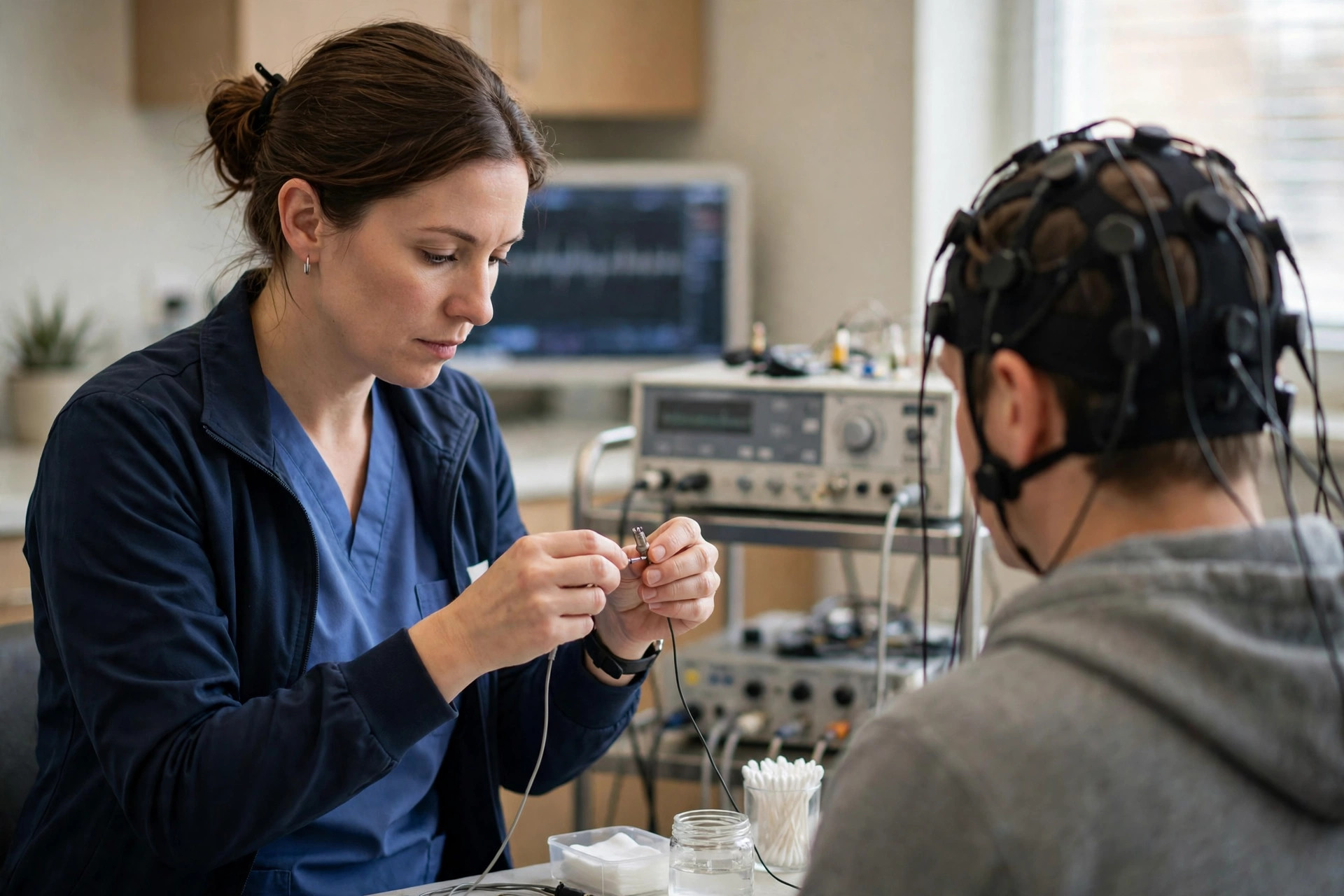
Evoked potential tests measure how fast signals travel along specific pathways: visual (VEP — eyes to brain, using a chequerboard screen), auditory (BAEP — clicks to the brainstem), and somatosensory (SSEP — limb nerves through the spinal cord to the brain). Slowing reveals damage such as demyelination.
Why it is done
They support diagnosis of multiple sclerosis and other demyelinating conditions (for example detecting past optic neuritis), assess spinal cord pathways, and are used in some intensive care and surgical monitoring settings.
How to prepare
Bring your glasses for VEP (vision must be corrected). Wash hair for scalp electrodes. Take medicines as usual. Tell the team about severe visual problems or hearing loss, which affect test choice.
What happens during the procedure
Electrodes are placed on the scalp (and limbs for SSEP). For VEP you watch a reversing chequerboard pattern on a screen, one eye at a time. For BAEP, clicks are delivered through headphones. For SSEP, small electrical pulses stimulate a wrist or ankle nerve while scalp responses are recorded. Painless; allow 45 to 90 minutes depending on the combination.
Afterwards — recovery & results
You can go home immediately afterwards. Results are analysed and reported to your neurology team, usually within a few weeks, and interpreted alongside MRI and clinical findings.
Risks & considerations
No significant risks. The tests measure pathway speed, not the cause — abnormal results support but do not by themselves prove a specific disease.
Related guides on MedicalVideos.com
Frequently asked questions
My MRI is normal — why do VEPs?
VEP can detect a previous episode of optic nerve inflammation that left no obvious MRI trace, providing evidence that lesions are separated in time — part of how MS is diagnosed.
Does it hurt?
No. The SSEP pulses feel like those in nerve conduction tests; VEP and BAEP are entirely passive.
Related procedures — Brain, Nerve & Sleep Tests
Browse the E section of the A–Z list or return to the Procedures & Tests hub.