
- Physical Examination
- Surgical Examination
- Ophthalmology
- Clinical Skills
- Orthopedics
- Surgery Videos
- Laparoscopy
- Pediatrics
- Funny Videos
- Cardiothoracic Surgery
- Nursing Videos
- Plastic Surgery
- Otorhinolaryngology
- Histology and Histopathology
- Neurosurgery
- Dermatology
- Pediatric Surgery
- Urology
- Dentistry
- Oncology and Cancers
- Anatomy Videos
- Health and Fitness
- Radiology
- Anaesthesia
- Physical Therapy
- Pharmacology
- Interventional Radiology
- Cardiology
- Endocrinology
- Gynecology
- Emergency Medicine
- Psychiatry and Psychology
- Childbirth Videos
- General Medical Videos
- Nephrology
- Physiology
- Diet and Food Health
- Diabetes Mellitus
- Neurology
- Women Health
- Osteoporosis
- Gastroenterology
- Pulmonology
- Hematology
- Rheumatology
- Toxicology
- Nuclear Medicine
- Infectious Diseases
- Vascular Disease
- Reproductive Health
- Burns and Wound Healing
- Kidney Zone Podcast
- Other
Entropion / ectropion repair
Category: Eye Procedures & Tests · All eye procedures & tests
What it is
Entropion is an eyelid (usually lower) that turns inwards so lashes rub the eye; ectropion is a lid that turns outwards, leaving the eye exposed and watery. Both are repaired with small eyelid-tightening operations, usually under local anaesthetic.
Why it is done
Repair is advised when the lid position causes pain, watering, recurrent infection, or risk to the surface of the eye (cornea).
How to prepare
Assessment checks lid laxity, the eye surface and tear drainage. Most surgery is day-case under local anaesthetic; fasting is usually unnecessary unless sedation is planned. Tell the team about blood thinners.
What happens during the procedure
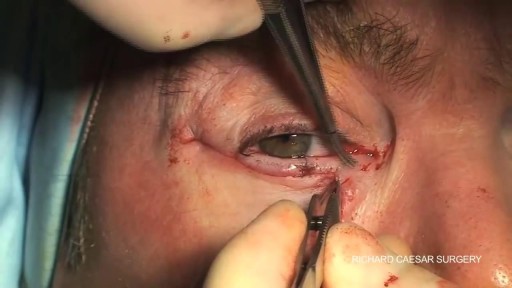
After numbing injections, the surgeon tightens and repositions the lid with a small cut at the outer corner and/or fine stitches that rotate the lid margin to its correct position. It takes about 30 to 45 minutes per lid.
Afterwards — recovery & results
There may be bruising and swelling for a week or two. Drops or ointment are used as directed, and stitches are removed at follow-up. The eye usually feels more comfortable quickly once the lashes no longer rub.
Risks & considerations
Risks include bruising, infection, recurrence over time, over- or under-correction occasionally needing revision, and scarring. Serious complications are uncommon.
Watch: Entropion / ectropion repair videos
Real procedure videos from the MedicalVideos.com library. Some clinical footage is graphic — that is the nature of a medical video library.
Frequently asked questions
Why did my lid turn in?
With age the lid tissues and tendons loosen and the muscle balance changes, so the lid rolls inwards. It is common in older adults and not caused by anything you did.
Can tape or drops fix it?
Lubricants and temporary taping or a stitch can help short term, but lasting correction usually needs the tightening operation.
Related procedures — Eye Procedures & Tests
Browse the E section of the A–Z list or return to the Procedures & Tests hub.