
- Physical Examination
- Surgical Examination
- Ophthalmology
- Clinical Skills
- Orthopedics
- Surgery Videos
- Laparoscopy
- Pediatrics
- Funny Videos
- Cardiothoracic Surgery
- Nursing Videos
- Plastic Surgery
- Otorhinolaryngology
- Histology and Histopathology
- Neurosurgery
- Dermatology
- Pediatric Surgery
- Urology
- Dentistry
- Oncology and Cancers
- Anatomy Videos
- Health and Fitness
- Radiology
- Anaesthesia
- Physical Therapy
- Pharmacology
- Interventional Radiology
- Cardiology
- Endocrinology
- Gynecology
- Emergency Medicine
- Psychiatry and Psychology
- Childbirth Videos
- General Medical Videos
- Nephrology
- Physiology
- Diet and Food Health
- Diabetes Mellitus
- Neurology
- Women Health
- Osteoporosis
- Gastroenterology
- Pulmonology
- Hematology
- Rheumatology
- Toxicology
- Nuclear Medicine
- Infectious Diseases
- Vascular Disease
- Reproductive Health
- Burns and Wound Healing
- Kidney Zone Podcast
- Other
Hip fracture surgery
Category: Bone, Joint & Spine Procedures · All bone, joint & spine procedures
What it is
Hip fracture surgery repairs or replaces the broken top of the thigh bone near the hip. Depending on the fracture pattern, treatment is internal fixation with screws or a sliding screw-and-plate, a half replacement (hemiarthroplasty), or occasionally a total hip replacement.
Why it is done
A hip fracture (often called a broken hip) usually follows a fall in older adults with weaker bones. Surgery is almost always recommended so that pain is controlled and the person can get up and walk again quickly.
How to prepare
Care follows a rapid pathway: pain relief (often including a nerve block), blood tests, an ECG and prompt surgery, usually within a day, alongside specialist care for older patients. You will fast before anaesthesia, which is often spinal.
What happens during the procedure
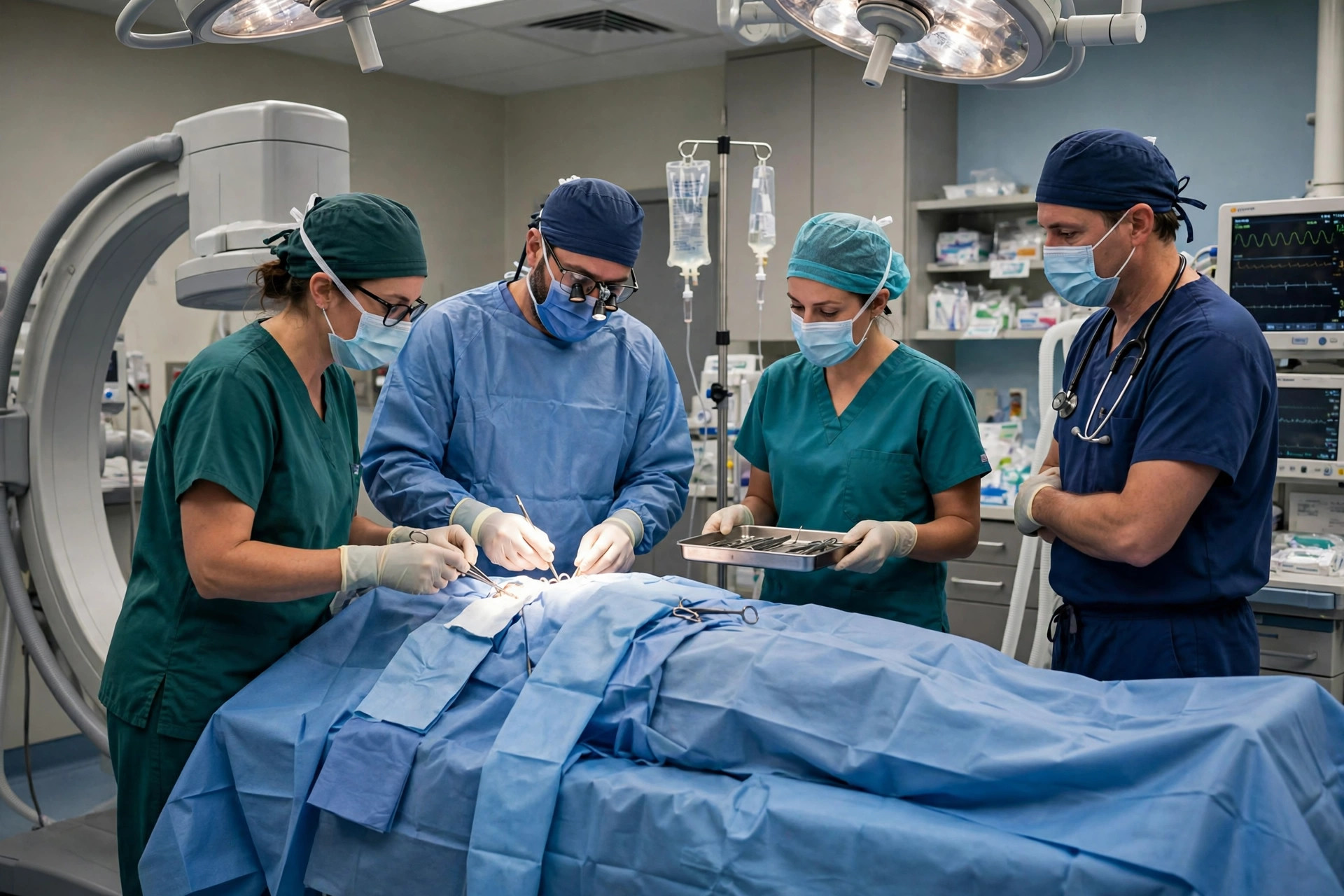
Under spinal or general anaesthetic, the surgeon fixes the fracture with screws/hardware or replaces the broken ball with a prosthesis. Surgery typically takes one to two hours.
Afterwards — recovery & results
The team aims to get you standing and walking with support the day after surgery, because early mobilisation prevents chest infections, clots and loss of independence. Hospital stay is often one to two weeks, sometimes including rehabilitation. Recovery of strength and confidence takes months, with physiotherapy continuing at home.
Risks & considerations
Risks include infection, blood clots, bleeding, dislocation (after replacement), failure of fixation needing further surgery, confusion (delirium) in older patients and the general risks of a major injury in later life. Bone-health assessment and falls prevention are part of follow-up care.
Related guides on MedicalVideos.com
Frequently asked questions
Why is surgery done so quickly?
Delay increases pain, immobility and complications such as chest infection and pressure damage. Operating within about a day, once you are medically ready, is the standard aim.
Will I walk again?
Most people walk with aids initially and many return close to their previous mobility over months. Recovery depends on prior fitness, the fracture and rehabilitation.
Related procedures — Bone, Joint & Spine Procedures
Browse the H section of the A–Z list or return to the Procedures & Tests hub.