
- Physical Examination
- Surgical Examination
- Ophthalmology
- Clinical Skills
- Orthopedics
- Surgery Videos
- Laparoscopy
- Pediatrics
- Funny Videos
- Cardiothoracic Surgery
- Nursing Videos
- Plastic Surgery
- Otorhinolaryngology
- Histology and Histopathology
- Neurosurgery
- Dermatology
- Pediatric Surgery
- Urology
- Dentistry
- Oncology and Cancers
- Anatomy Videos
- Health and Fitness
- Radiology
- Anaesthesia
- Physical Therapy
- Pharmacology
- Interventional Radiology
- Cardiology
- Endocrinology
- Gynecology
- Emergency Medicine
- Psychiatry and Psychology
- Childbirth Videos
- General Medical Videos
- Nephrology
- Physiology
- Diet and Food Health
- Diabetes Mellitus
- Neurology
- Women Health
- Osteoporosis
- Gastroenterology
- Pulmonology
- Hematology
- Rheumatology
- Toxicology
- Nuclear Medicine
- Infectious Diseases
- Vascular Disease
- Reproductive Health
- Burns and Wound Healing
- Kidney Zone Podcast
- Other
Nasal cautery for nosebleeds
Category: Minor Procedures, Injections & Pain Relief · All minor procedures, injections & pain relief
What it is
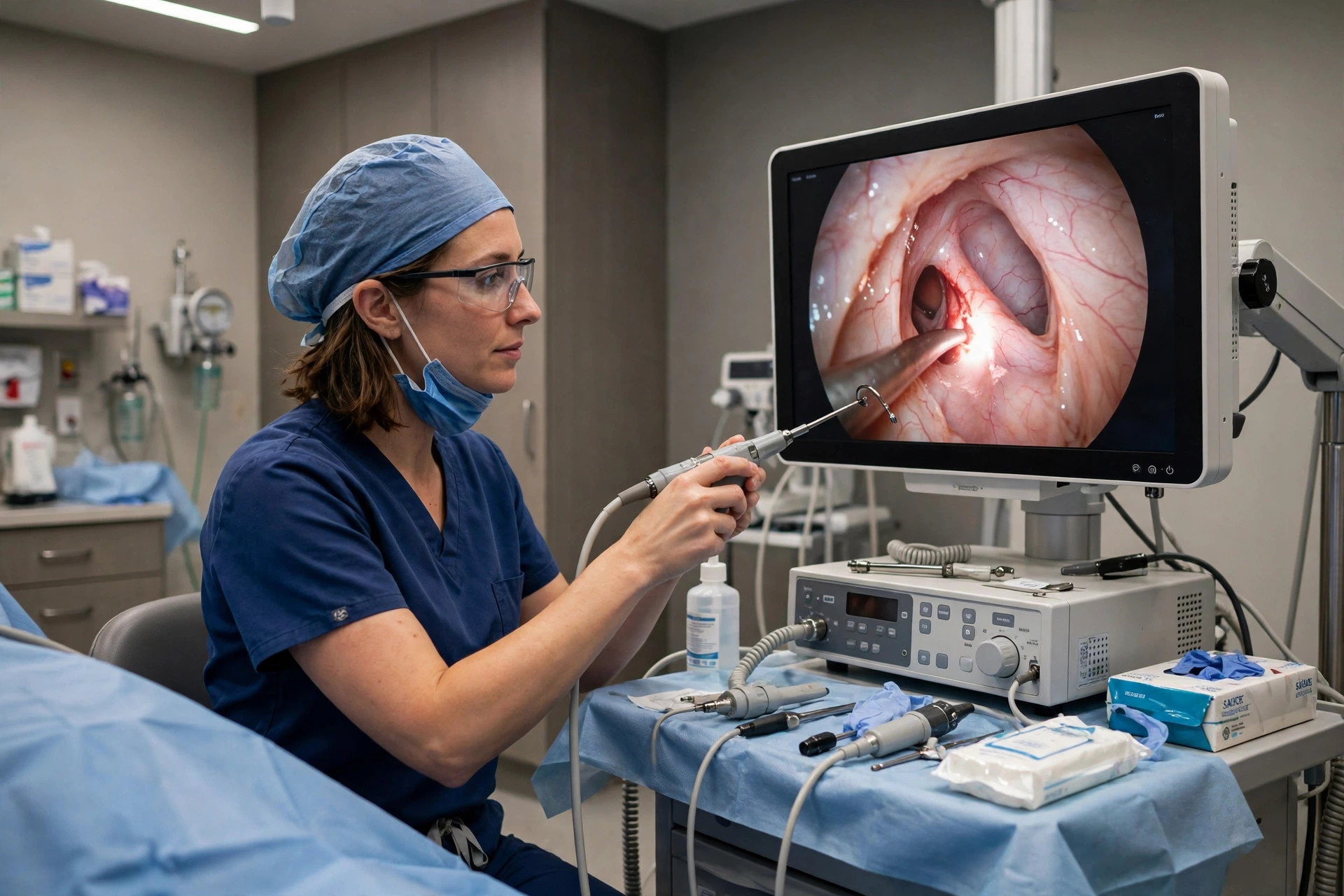
Nasal cautery seals a bleeding blood vessel inside the nose, usually at the front of the nasal septum (Little's area), using a chemical (silver nitrate stick) or an electric/heat cautery device, often under endoscopic view.
Why it is done
It is used for recurrent nosebleeds coming from a visible vessel, when pressure and first aid measures keep failing, and after an acute bleed has been controlled.
How to prepare
You will have your blood pressure checked and medicines reviewed (blood thinners may be continued or adjusted). Tell the clinician about allergies and any previous nasal surgery. No fasting is needed.
What happens during the procedure
The nose is numbed and decongested with sprays; the clinician identifies the vessel (sometimes with a small endoscope) and applies the cautery for a few seconds. You may feel a brief sting or smell. It takes about 10 minutes.
Afterwards — recovery & results
Avoid hot drinks, alcohol, vigorous nose blowing and picking for a few days; use saline spray and a moisturiser (such as petroleum jelly) inside the nostril as advised. A small scab forms and heals over one to two weeks. Return for review if bleeding recurs.
Risks & considerations
Risks include brief pain, crusting, a small perforation of the septum if both sides are cauterised at once (hence usually one side at a time), and recurrence — some vessels need repeat treatment or ENT review for deeper sources.
Frequently asked questions
Why do nosebleeds keep coming from the same spot?
The front septum has a rich, superficial vessel network (Kiesselbach's plexus) that dries and cracks easily, especially in dry air, colds or with nose picking.
When should I go to A&E with a nosebleed?
If bleeding does not stop after 20–30 minutes of firm pressure (leaning forward, pinching the soft part), if you are on blood thinners and bleeding heavily, or if you feel faint or swallow large amounts of blood.
Related procedures — Minor Procedures, Injections & Pain Relief
Browse the N section of the A–Z list or return to the Procedures & Tests hub.